
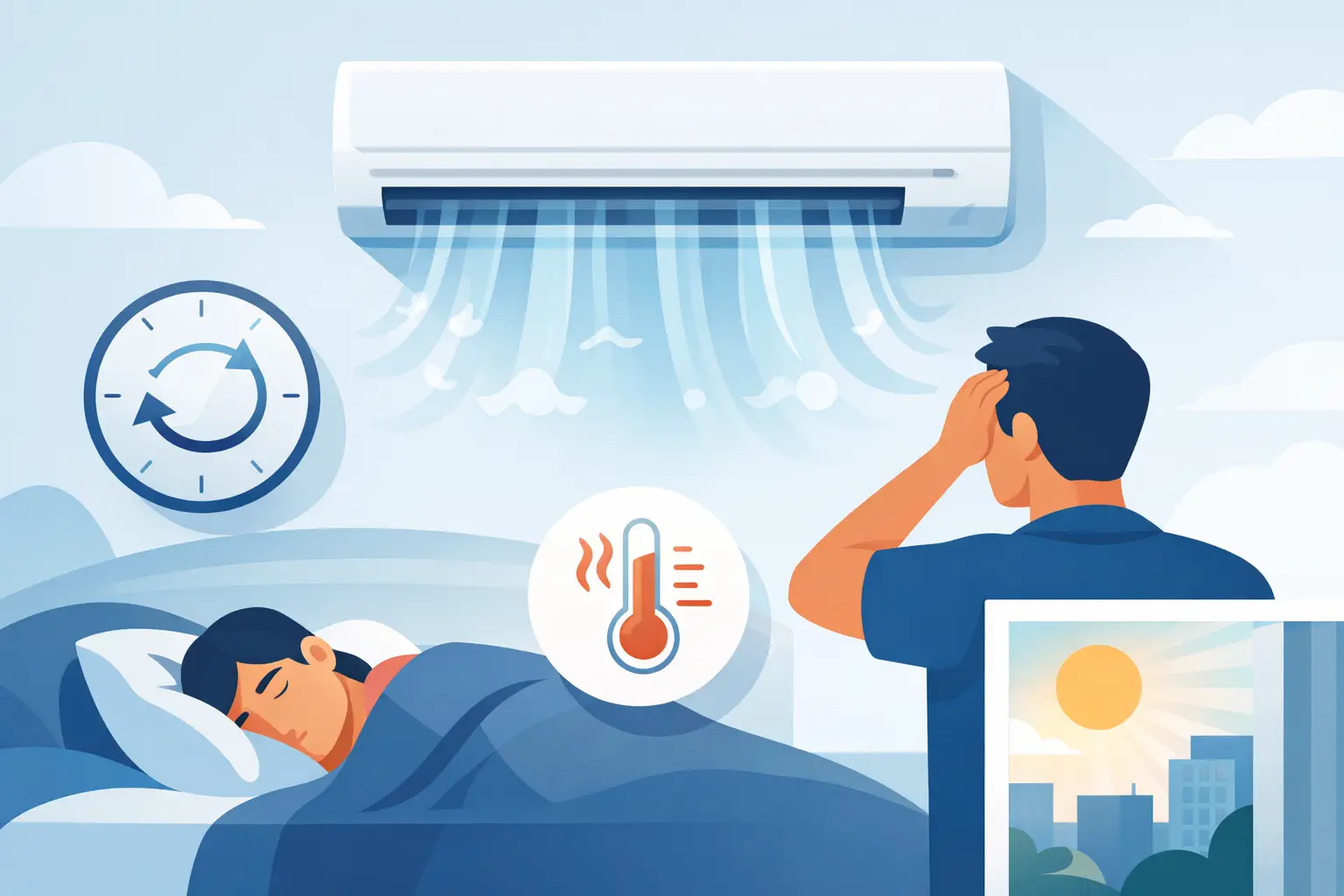
When your AC seems to run all day and never quite catches up, the problem usually shows up in two places first - your comfort and your electric bill. In Houston, that can go from annoying to urgent fast. A system that runs nonstop might be doing exactly what the weather demands, but it can also be warning you that something is off and getting worse.
The key is knowing the difference between normal long run times and a system that is struggling. If you have been wondering why AC keeps running nonstop, there are a handful of common causes, and some are much easier to fix than others.
When nonstop AC operation is normal
On very hot, humid days, it is not unusual for an air conditioner to run for long stretches. That is especially true in the Houston area, where the heat load stays high well into the evening and indoor humidity can make your home feel warmer than the thermostat reading suggests.
A properly sized, well-functioning system may run continuously during extreme temperatures and still be doing its job. In many cases, that steady operation is more efficient than short cycling, because it keeps temperatures more stable and removes more humidity over time.
What is not normal is when the unit runs nonstop and the house still feels warm, some rooms stay muggy, or your utility costs suddenly jump. That usually points to a performance issue, not just summer weather.
Why AC keeps running nonstop even when the thermostat is set correctly
One of the most common reasons is restricted airflow. If the system cannot move enough air across the evaporator coil, it has a harder time cooling your home. A clogged air filter is the simplest example. It sounds minor, but a dirty filter can reduce airflow enough to make the entire system run longer and work harder.
Blocked return vents, closed supply vents, or dirty ductwork can create a similar problem. The AC keeps operating because the thermostat still senses that the set temperature has not been reached. Meanwhile, the equipment is under strain trying to deliver cooling through a restricted path.
Low refrigerant is another likely cause. Air conditioners do not consume refrigerant like fuel, so if levels are low, there is usually a leak. When refrigerant drops below the proper charge, the system loses cooling capacity. It may still run, but it cannot remove heat effectively. You might notice weak airflow, warmer air from the vents, or ice forming on the refrigerant lines or indoor coil.
A dirty outdoor condenser can also keep your AC running longer than it should. The outdoor unit needs to release heat from your home. If the condenser coil is coated in dirt, grass, or debris, that heat transfer becomes less effective. The result is longer run times, reduced efficiency, and added wear on the compressor.
Then there is the thermostat itself. If the thermostat is poorly located, miscalibrated, or malfunctioning, it may keep calling for cooling longer than necessary. A thermostat placed near a sunny window, warm appliance, or drafty area can read the room inaccurately and make the AC run when the rest of the house is already comfortable.
System size plays a bigger role than many homeowners realize
People often assume a larger AC is always better in Texas heat. In reality, system sizing is a balance. An undersized unit may run nearly nonstop because it simply does not have the capacity to cool the home during peak conditions. It might maintain comfort in the morning, then fall behind by late afternoon.
An oversized system creates a different set of problems. It may cool the air quickly but shut off before removing enough humidity. That leaves the home feeling clammy, and homeowners often lower the thermostat to compensate. The result can feel like nonstop operation, even though the root issue is poor humidity control and short, inefficient cycles.
This is one of those situations where it depends on the home, the insulation levels, the duct design, window exposure, and how the building is used throughout the day. Proper sizing is not guesswork. It takes load calculations and a realistic understanding of Houston conditions.
Your home may be making the AC work harder
Sometimes the air conditioner is not the main problem. The house is.
If your attic insulation is inadequate, your ductwork is leaking, or your doors and windows let in a steady stream of hot, humid air, the system has to fight a constant uphill battle. Even a healthy AC can run for long periods when cooled air escapes and outdoor heat keeps pushing in.
Leaky ducts are especially common and often overlooked. Conditioned air may be spilling into the attic or crawlspace before it ever reaches the rooms you need to cool. That wastes energy and makes the thermostat think the system needs to keep running.
Solar gain matters too. Homes with large west-facing windows often heat up dramatically in the afternoon. If blinds are open and the glass is unshaded, indoor temperatures can rise enough to extend cooling cycles by hours.
For small business owners, nonstop operation can also come from occupancy changes or heat-generating equipment. More people, more lighting, and more electronics all increase the cooling load. If your space was comfortable before and suddenly is not, the equipment may not have failed. The demands on it may have changed.
Warning signs that point to a repair need
If your AC runs all the time but still cannot hold the set temperature, that is a clear sign it needs attention. The same goes for warm supply air, weak airflow, ice buildup, unusual noises, or a spike in your electric bill without a clear explanation.
Humidity is another big clue. In Houston, indoor comfort depends on both temperature and moisture removal. If the house feels sticky even while the AC runs nonstop, the system may have airflow issues, refrigerant problems, or sizing and control issues that need a trained diagnosis.
Age matters as well. Older systems naturally lose efficiency over time. A unit that is 12 to 15 years old and running constantly may be telling you that repairs alone will not restore reliable performance. In that case, it makes sense to compare the cost of repeated service calls against a replacement that delivers better comfort and lower operating costs.
What you can check before calling for service
There are a few practical steps worth taking first. Check the thermostat setting and fan mode. If the fan is set to ON instead of AUTO, air will continue circulating even when active cooling is not needed, which can make it seem like the system never shuts off.
Take a look at the air filter. If it is dirty, replace it. Make sure supply and return vents are open and not blocked by furniture or rugs. Outside, clear leaves, grass clippings, and debris from around the condenser so it has room to breathe.
If those basics do not change anything within a reasonable amount of time, it is best not to keep guessing. Continued operation under the wrong conditions can increase wear on major components and turn a manageable repair into a more expensive one.
Why professional diagnosis matters
A nonstop-running AC can come from several overlapping issues at once. A slightly low refrigerant charge, a dirty coil, and duct leakage may all be contributing. Replacing a filter helps, but it will not solve the deeper problem if the system is losing capacity elsewhere.
That is where a full diagnostic inspection makes a difference. A technician can measure airflow, check refrigerant levels, test electrical components, inspect coils, evaluate thermostat performance, and look at the condition of the duct system. That tells you whether the issue is a straightforward repair, a maintenance problem, or a sign that the system is nearing replacement.
For Houston homeowners and business owners, quick response matters because extended strain in extreme heat can lead to a complete breakdown at the worst time. Elisee HVAC and Home Services Houston helps customers address those problems with repair, maintenance, system optimization, and replacement options when needed.
The bigger cost of letting it run nonstop
An AC that never seems to shut off does more than raise your monthly bill. It increases wear on motors, compressors, capacitors, and contactors. It can worsen indoor humidity, reduce comfort, and shorten the useful life of the entire system.
Waiting too long can also limit your options. A small issue caught early may be fixed with a routine repair or maintenance visit. If the system is forced to run under stress for weeks, the result may be a larger failure and a bigger interruption to your home or business.
If your AC is running nonstop, trust what your home is telling you. Sometimes the answer is as simple as a filter or thermostat adjustment. Sometimes it is a sign that the system needs prompt professional attention before comfort, efficiency, and reliability slip even further.