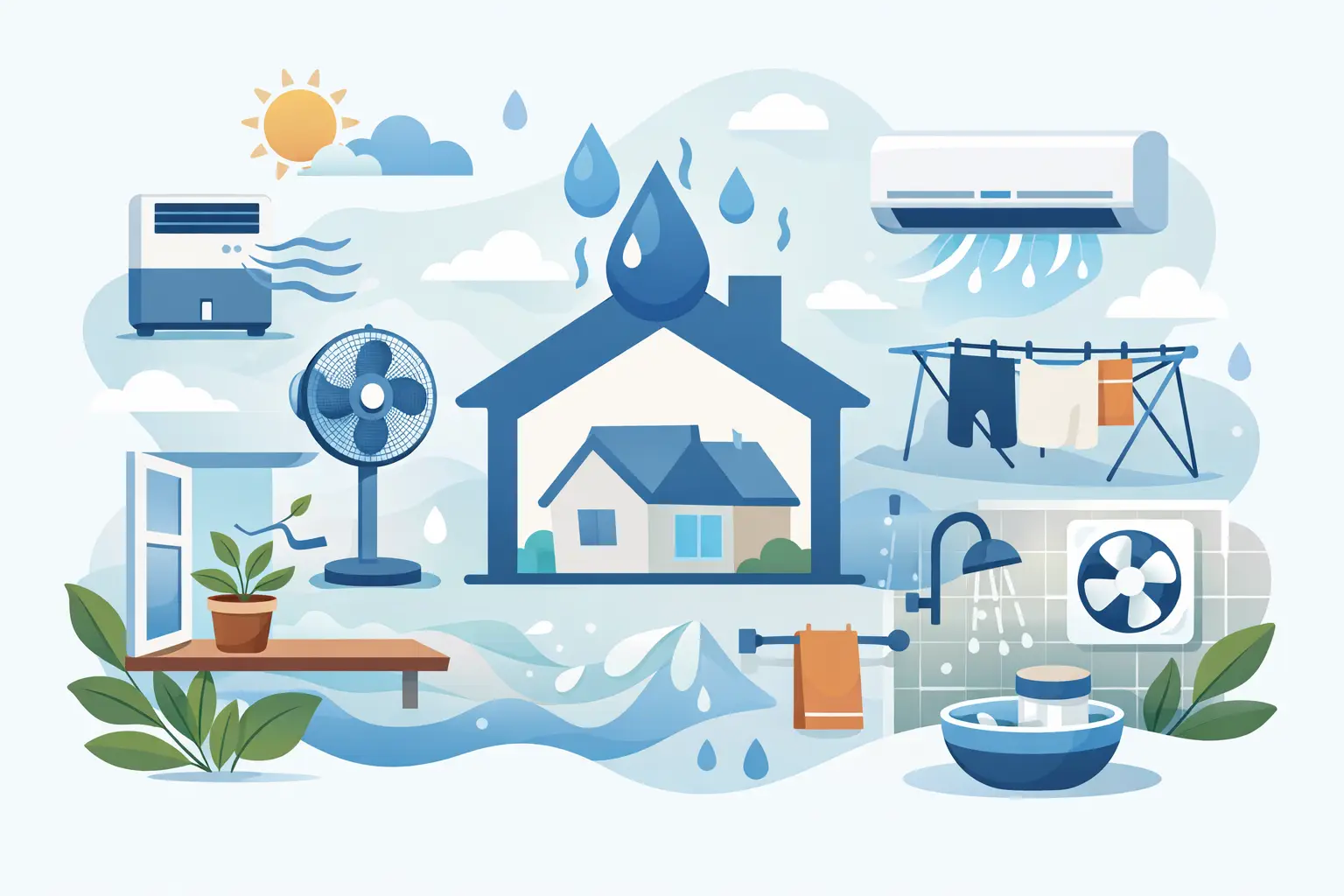

When a Houston summer settles in, the question is not whether your cooling system will be tested. It is how hard. That is why summer cooling trends 2026 matter for homeowners, landlords, and business owners who cannot afford downtime, uneven temperatures, or runaway utility bills.
This year’s trends are less about flashy gadgets and more about practical performance. People want systems that cool faster, waste less energy, hold up under long heat stretches, and give earlier warning before a breakdown turns into an emergency call. In a market like Houston, where cooling is a necessity for much of the year, the smartest upgrades are the ones that protect comfort and reduce surprises.
What summer cooling trends 2026 are really pointing toward
The biggest shift is simple. Cooling decisions are becoming more data-driven and more whole-home focused. A few years ago, many property owners only paid attention when the AC stopped working. Now, they are looking at monthly operating costs, indoor humidity, duct performance, insulation, thermostat behavior, and system age as parts of the same comfort equation.
That is a healthy change. An air conditioner does not perform in isolation. Even a newer system can struggle if airflow is restricted, ducts leak into hot attic space, or humidity stays too high. On the other hand, an older but well-maintained system can often deliver stable comfort longer than people expect. The trend is not just replacing equipment. It is optimizing the full cooling setup.
Smarter controls are becoming standard
One of the clearest summer cooling trends 2026 is wider use of intelligent thermostats and system monitoring. That does not mean every building needs a complicated smart-home setup. It means more people want clear temperature control, better scheduling, and alerts that help them catch problems early.
For homeowners, smart thermostats are attractive because they reduce guesswork. You can manage temperature by time of day, avoid overcooling an empty house, and spot unusual runtime patterns. If your system suddenly runs longer than normal to maintain the same temperature, that is often an early sign that something is off.
For small businesses, smarter controls can help protect comfort during operating hours while limiting waste after closing. The value is not in technology for its own sake. The value is in fewer hot spots, better consistency, and more predictable energy use.
Still, this is one of those areas where it depends. A smart thermostat will not fix poor duct design, low refrigerant, or a failing blower motor. It works best when paired with a system that is already in good mechanical shape.
High-efficiency replacement is rising, but not every property is ready
A lot of property owners are looking harder at higher-efficiency AC systems in 2026, especially after several summers of elevated energy costs. Newer equipment can offer meaningful savings, quieter operation, and improved humidity control. Variable-speed systems in particular are gaining attention because they adjust output more precisely instead of constantly cycling at full blast.
That matters in Houston. Humidity can make a space feel uncomfortable even when the thermostat says the temperature is fine. Systems that run more steadily at lower speeds often do a better job removing moisture from the air, which can improve comfort without forcing the thermostat lower.
But efficiency upgrades are not automatic wins in every case. If a building has poor insulation, leaky ductwork, or oversized equipment, simply installing a premium new unit may not deliver the expected result. The best outcomes usually come from matching the system to the building, not from picking the highest-rated equipment on paper.
This is where technician-led guidance matters. A proper load calculation, airflow check, and duct evaluation can prevent expensive mistakes. For some properties, targeted repairs and maintenance may make more sense in the short term than full replacement. For others, replacement is the more cost-effective move because repair frequency and operating costs are already too high.
Indoor air quality is now part of cooling conversations
Another trend gaining ground is the connection between cooling and indoor air quality. More customers are asking how their HVAC system handles dust, airflow cleanliness, and humidity, not just temperature. That is especially common in homes with allergies, pets, older duct systems, or rooms that always seem stuffy.
Cooling systems influence more than comfort. They affect how air moves through the property and how moisture is managed. Dirty ducts, neglected filters, or poor circulation can make a building feel less comfortable even when the AC is technically working.
That is why duct cleaning, duct sealing, and filter strategy are getting more attention in 2026. Leaky ducts can pull in dust from attics or crawl spaces and send cooled air where it is not needed. Sealing those leaks often improves both efficiency and comfort. It is not the most glamorous upgrade, but it can have a real impact.
There is a trade-off here too. Not every airflow complaint means the ducts need full cleaning or replacement. Sometimes the real issue is an undersized return, a dirty evaporator coil, or a blower problem. Good diagnostics matter more than assumptions.
Preventive maintenance is shifting from optional to expected
Houston’s climate has a way of exposing deferred maintenance. Systems that seem fine in spring can start showing strain once temperatures stay high day after day. That is why one of the most practical summer cooling trends 2026 is a stronger focus on preventive service.
Routine maintenance is no longer just a recommendation people hear and ignore. More customers are treating it as a basic cost-control measure. They have seen what happens when a capacitor fails on a Sunday afternoon, when a drain line clogs during peak humidity, or when a neglected system loses efficiency right when the electric bill is already high.
A well-timed seasonal tune-up can catch worn parts, refrigerant issues, drainage problems, dirty coils, and airflow restrictions before they trigger a breakdown. It can also help the system cool more effectively under heavy demand. In practical terms, that means shorter runtimes, fewer emergency calls, and less stress during the hottest weeks of the year.
For landlords and business owners, the benefit is also operational. Fewer surprise failures mean fewer tenant complaints, less business disruption, and better control over maintenance budgets.
Faster repair response matters more than ever
As systems become more expensive and heat waves more intense, response time is becoming part of the value equation. People are not only asking whether a company can fix the system. They want to know how quickly someone can diagnose the issue, explain the options clearly, and restore cooling.
That makes sense in this region. In Houston, a cooling outage is not a minor inconvenience for long. It can disrupt sleep, affect employees and customers, strain sensitive equipment, and create serious discomfort fast. The ability to get responsive service is becoming just as important as the technical repair itself.
This trend also reflects a more realistic mindset. Customers know no system lasts forever and no equipment is immune to failure. What they want is support they can count on when something does go wrong.
Financing and phased upgrades are shaping decisions
In 2026, more customers are balancing immediate needs against long-term efficiency. They may want a full upgrade, but timing and budget still matter. That is why financing options and phased improvement plans are becoming part of the conversation.
A homeowner might replace a failing condenser now, then address duct sealing and thermostat upgrades after peak season. A small business might move ahead with a full installation because rising repair costs are already hurting the bottom line. Neither approach is wrong. The right path depends on system condition, building demands, and how much risk the owner is willing to carry into the next heat wave.
For a local service company like Elisee HVAC and Home Services Houston, the real job is helping customers make that decision with clear information, not pressure. If a repair is the sensible move, say so. If replacement will likely save money and headaches over the next few years, explain why.
What Houston property owners should do next
If you are looking at summer cooling trends 2026 and wondering what actually applies to your property, start with the basics. Pay attention to rising utility bills, uneven cooling, excess humidity, frequent repairs, and systems that run constantly without keeping up. Those are not small annoyances. They are signals.
The best next step is not guessing. It is having the system evaluated as a complete setup - equipment, airflow, ducts, controls, and maintenance history. That gives you a clearer picture of whether you need a repair, a tune-up, an efficiency upgrade, or a replacement plan.
In Houston, comfort is not something to leave to chance. The properties that stay coolest through summer are usually not the ones with the fanciest equipment. They are the ones with systems that are correctly matched, properly maintained, and backed by responsive service when it counts.