
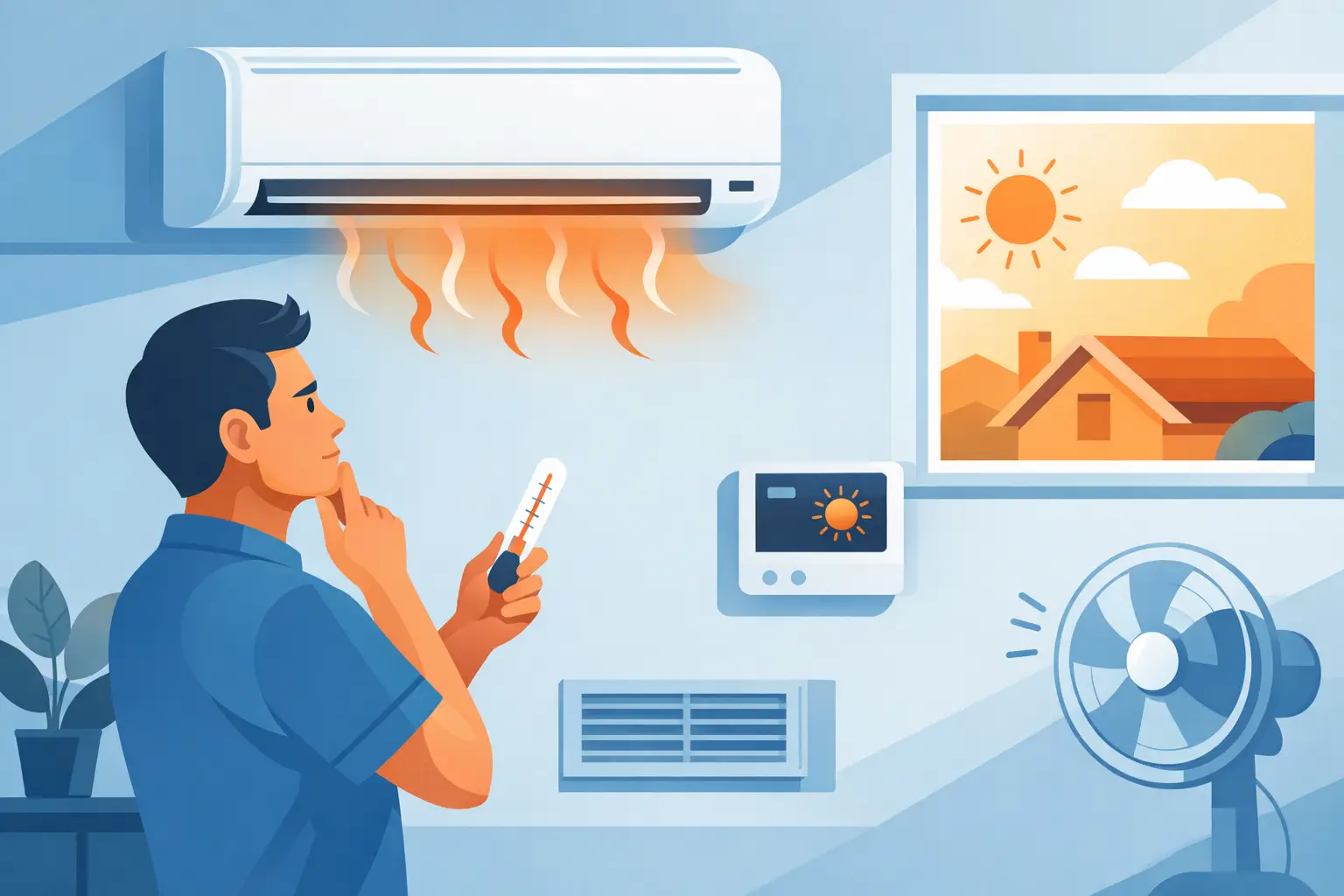
When your AC starts pushing out warm air in a Houston summer, it stops being a small annoyance and becomes a real problem fast. A house can heat up quickly, a business can get uncomfortable for staff and customers, and what seemed like a minor issue can turn into a full system breakdown if it is ignored.
The tricky part is that AC blowing warm air causes are not all the same. Sometimes the fix is simple, like a thermostat setting that got changed by accident. Other times, warm air is a warning sign of restricted airflow, electrical trouble, or a refrigerant issue that needs professional repair. Knowing the difference can help you avoid extra damage and get cooling restored sooner.
The most common AC blowing warm air causes
Most warm-air complaints come back to one of a handful of system problems. The challenge is that several different issues can produce the same symptom, so the air coming out of the vents may feel similar even when the repair is very different.
A thermostat problem is often the first place to look. If the system is set to "fan" instead of "cool," the blower can keep circulating air without actually cooling it. That air may feel warm, especially during the hottest part of the day. Incorrect temperature settings, dead thermostat batteries, or a thermostat that is not reading indoor temperature accurately can all cause confusion and poor cooling performance.
A dirty air filter is another common reason. When airflow gets choked off, your system cannot move enough air across the evaporator coil to cool properly. That can make the supply air feel warmer than normal and also put extra strain on the equipment. In some cases, restricted airflow can contribute to coil icing, which creates an entirely different set of cooling problems.
Low refrigerant is a more serious issue. Refrigerant does not get "used up" like fuel, so if levels are low, there is usually a leak somewhere in the system. Low refrigerant can reduce cooling capacity, lead to longer run times, and eventually cause the system to blow warm or barely cool air. This is not a DIY repair. It needs proper diagnosis, leak detection, and recharge to manufacturer specifications.
A dirty outdoor unit can also be to blame. Your condenser needs to release heat outside. If it is clogged with dirt, grass, leaves, or other debris, that heat transfer process suffers. The result can be weak cooling, warm air at the vents, or a system that runs constantly without catching up.
Electrical issues show up more often than many property owners expect. A failed capacitor, damaged contactor, tripped breaker, or wiring problem can keep the outdoor unit from running even though the indoor blower still works. When that happens, the vents may still push air, but it will not be cooled.
What you can check before calling for service
There are a few safe first steps that make sense before scheduling a repair call. Start with the thermostat. Make sure it is set to "cool" and not just "fan," and verify that the target temperature is lower than the current room temperature. If the thermostat uses batteries, replace them if needed.
Next, check the air filter. If it looks clogged, dusty, or overdue for replacement, install a clean one. In many homes and light commercial spaces, this simple step can improve airflow right away. It will not solve every cooling problem, but it is one of the easiest issues to rule out.
You should also inspect the breaker panel. If the AC breaker has tripped, reset it once. If it trips again, stop there and call a professional. Repeated trips usually point to an underlying electrical or mechanical issue, not a one-time glitch.
Take a look at the outdoor unit as well. If the area around it is packed with leaves, weeds, or debris, clear enough space for proper airflow. Do not open the equipment or attempt internal cleaning if you are not trained to do it. Basic clearing around the cabinet is fine, but deeper cleaning should be done carefully to avoid damage.
If those checks do not restore cooling, the next step is service. Running the system too long while it is malfunctioning can increase wear and may turn a repairable issue into a larger, more expensive one.
When warm air points to a bigger HVAC problem
Some AC blowing warm air causes are more urgent because they suggest active system stress. If you notice ice on the refrigerant line, weak airflow from multiple vents, unusual buzzing or clicking, or water pooling near the indoor unit, it is time to stop guessing.
Warm air combined with ice often means restricted airflow or refrigerant problems. It may seem strange that ice would form when the house feels hot, but that is a common pattern in struggling AC systems. If the coil freezes, cooling drops and the system can no longer do its job effectively.
Warm air with a loud outdoor unit can point to failing components or compressor trouble. Warm air with no outdoor unit operation at all often suggests a capacitor, contactor, disconnect, or breaker-related issue. Each of these problems needs a different repair path, which is why accurate diagnosis matters.
For older systems, warm air can also be a sign that the equipment is simply nearing the end of its service life. Repairs may still be possible, but the cost-benefit equation changes when a unit is aging, inefficient, and requiring frequent service. In those situations, replacement can sometimes be the better long-term decision, especially if utility bills have also been climbing.
Why this happens so often in Houston
Houston-area systems work hard for long stretches of the year. High heat, long cooling seasons, humidity, and heavy run times all put pressure on AC equipment. That does not automatically mean your system is failing, but it does mean small maintenance issues can become major performance problems faster than they might in milder climates.
A clogged filter that might cause minor airflow trouble elsewhere can become a much bigger comfort issue during a Texas heat wave. A weak capacitor may hold on for a while in spring, then fail when the system is cycling constantly in extreme temperatures. Refrigerant and airflow problems also tend to become more obvious as outdoor demand rises.
That is why preventive maintenance matters so much in this market. A tune-up can catch worn parts, dirty coils, drainage issues, and airflow restrictions before they turn into a no-cooling call on a 100-degree afternoon.
Repair or replace - it depends on the system
Not every warm-air issue means you need a new AC. In many cases, the fix is straightforward and cost-effective. Replacing a capacitor, correcting a thermostat problem, clearing a drain issue, sealing a refrigerant leak, or cleaning a heavily impacted condenser can often restore normal performance without major disruption.
Still, there are situations where replacement deserves a serious look. If your system is older, uses outdated refrigerant, breaks down repeatedly, or struggles to cool evenly even after repairs, putting more money into it may not be the best move. Homeowners and business owners usually want the same thing here - dependable cooling, predictable costs, and less downtime.
A good HVAC contractor should walk you through both options clearly. That means explaining what failed, what the repair would accomplish, how much life is realistically left in the equipment, and whether a newer system could improve efficiency enough to justify the investment. If financing is available, that can also make replacement easier to consider when a major component fails.
How to reduce the chances of warm air from your AC
The best way to avoid losing cooling during peak season is to stay ahead of the common failure points. Replace filters on schedule, keep the outdoor unit clear, and do not ignore changes in airflow, noise, humidity, or run time. Small shifts in performance often show up before a complete loss of cooling.
Seasonal maintenance is where many of these problems get caught early. During a professional inspection, a technician can test electrical components, inspect refrigerant pressures, clean critical parts, verify airflow, and spot wear before it turns into an emergency. For property owners trying to avoid surprise breakdowns, that kind of routine service is often the difference between a planned fix and a same-day crisis.
If your AC is already blowing warm air, quick action matters. Waiting can put extra stress on the compressor and other major components, especially when the system keeps trying to cool against Houston heat. At that point, the goal is not just comfort. It is protecting the equipment from further damage and getting your space back to normal as quickly as possible.
For homeowners and businesses across the area, Elisee HVAC and Home Services Houston provides repair, maintenance, system replacement, and emergency support when cooling problems cannot wait. If your vents are blowing warm air, treat it as an early warning, not something to power through. A fast, accurate diagnosis now can save time, money, and a much hotter day tomorrow.