
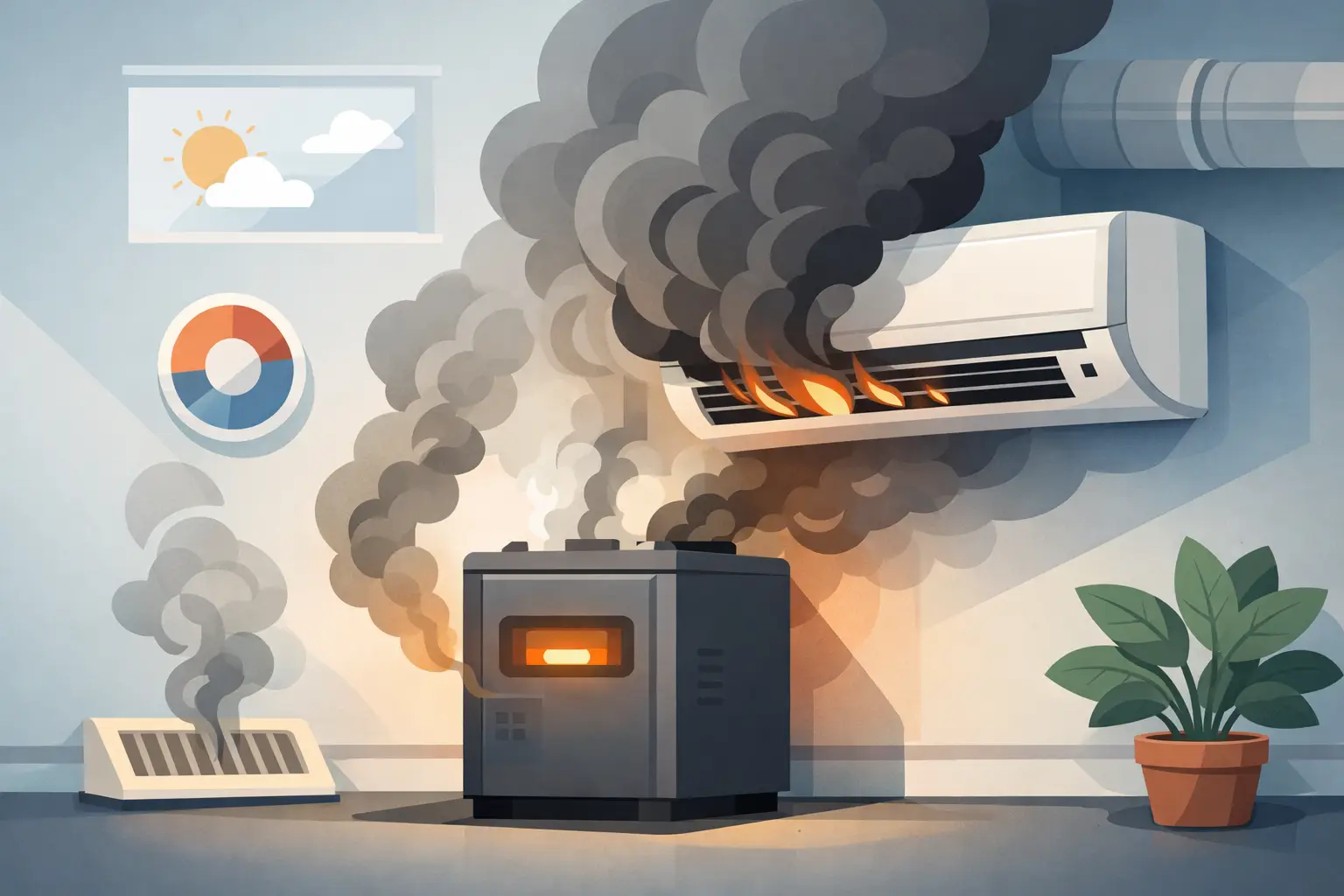
If you switch on your heat or AC and catch a burning smell, your system has your attention for a reason. Sometimes it is harmless, like dust burning off after a long stretch without use. Other times, it points to an electrical problem, an overheating motor, or a clogged component that needs service before it turns into a breakdown.
In Houston-area homes and businesses, HVAC systems work hard for most of the year. That heavy use means unusual smells should never be brushed off, especially when comfort, indoor air quality, and equipment safety are all on the line. If you are trying to figure out why HVAC smells like burning, the answer depends on when the smell appears, how strong it is, and whether it goes away quickly or keeps coming back.
Why HVAC smells like burning in the first place
A burning odor usually means one of two things is happening. Either something is getting hot that should not be hot, or something ordinary is burning off that has collected inside the system.
The most common example of the harmless kind is dust. When a furnace or heating element comes on for the first time in months, built-up dust can burn away and create a dry, slightly scorched smell. That odor often fades within a short time.
The more concerning category includes overheating electrical parts, worn blower motors, slipping belts in older systems, blocked airflow, or damaged wiring. Those issues tend to produce a sharper smell, and they often return every time the system runs. If the odor is strong, persistent, or paired with unusual noises or weak airflow, it is time to stop guessing and have the system checked.
A brief burning smell after turning on heat
This is the situation where many property owners get lucky. If you have not used your heating system in a while, a light burning smell for the first cycle or two can be normal. Dust settles on burners, heat exchangers, and other internal parts. When the system fires up, that dust burns off.
The key detail is duration. If the smell clears out fairly quickly and does not return, it was probably seasonal dust. If it lingers, grows stronger, or fills multiple rooms, that is no longer something to chalk up to first-use conditions.
For businesses and homes with high dust levels, overdue filter changes, or renovation debris, this odor may be more noticeable. Even then, it should be temporary.
When the smell points to an electrical issue
A burning smell that reminds you of hot plastic, melting insulation, or scorched wire is a different matter. That kind of odor can come from electrical components such as capacitors, contactors, relays, circuit boards, or wiring connections.
These parts can overheat from age, loose connections, power fluctuations, or strain caused by other system problems. In some cases, the blower motor draws too much power because airflow is restricted. In others, damaged wiring is the issue itself.
This is not a wait-and-see situation. Turn the system off and arrange service as soon as possible. Electrical smells can move from minor repair to major damage fast, and they can create real safety risks.
Burning rubber or oil smells from moving parts
If the odor smells more like burning rubber than dust or wire, the problem may involve the blower motor or other moving parts. Older HVAC systems may have belts that wear down, slip, or overheat. Motor bearings can also fail, creating friction and a hot, mechanical smell.
Newer systems do not all use the same belt-driven setup, so the exact cause depends on the equipment. But the general rule stays the same: a mechanical burning smell usually means a component is under stress. If you keep running the system, you risk a full motor failure instead of a smaller repair.
In commercial settings, where systems may run longer hours and serve larger spaces, wear on motors and moving parts can show up quickly once maintenance falls behind.
Restricted airflow can make parts overheat
A clogged air filter seems simple, but it can start a chain reaction. When airflow is restricted, the system has to work harder to move air through the ductwork. That extra strain can cause components to overheat, especially during heavy demand.
Blocked vents, dirty evaporator coils, and buildup in ductwork can contribute too. In heating mode, poor airflow may cause the system to cycle improperly or run hotter than it should. In cooling mode, airflow problems can still overwork motors and electrical parts.
This is one reason regular maintenance matters so much in Houston. Long cooling seasons put continuous load on HVAC equipment, and small airflow issues have more time to become expensive ones.
Why HVAC smells like burning when the AC is running
People often expect burning smells from the furnace, but air conditioning systems can create them too. If the smell appears while the AC is on, dust on electrical components is less likely to be the only explanation.
An AC-related burning odor may come from the indoor blower assembly, the capacitor, the control board, or wiring. It can also come from the outdoor unit if electrical parts are overheating there. Sometimes homeowners describe the smell as burning plastic when a fan motor is struggling or insulation is getting too hot.
If the odor shows up in cooling mode, especially during a Houston heat wave when the system is already under pressure, shut the unit off and have it inspected. Continuing to run it can turn a repair call into a compressor or motor replacement.
What you can check safely before calling
There are a few basic things you can look at without opening equipment panels or touching electrical parts. Start with the air filter. If it is dirty, replace it. Check that supply and return vents are open and not blocked by furniture, boxes, or rugs. If the smell happened when you first turned on the heat for the season, give it a short window to clear.
You can also pay attention to the type of smell and timing. Does it happen only at startup, or every cycle? Is it fading, or getting stronger? Are you hearing buzzing, screeching, or rattling at the same time? Those details help a technician narrow down the issue faster.
What you should not do is keep resetting the system and hoping the smell works itself out. Burning odors tied to electrical or motor problems usually do not fix themselves.
Signs you should turn the system off immediately
Some situations call for immediate shutdown. If the smell is strong and sharp, like melting plastic or burnt wire, turn the HVAC system off at the thermostat. If you see smoke, shut off power to the unit if it is safe to do so and call for service right away.
The same goes for any burning odor that appears with sparking sounds, tripped breakers, weak airflow, or sudden loss of heating or cooling. Those combinations usually mean the problem is active, not just leftover dust.
For businesses, acting quickly matters even more. A small issue during operating hours can become a comfort complaint for customers, a productivity problem for staff, or an after-hours emergency if the equipment fails completely.
Professional diagnosis saves time and larger repairs
Burning smells are one of those HVAC symptoms where precision matters. Two systems can produce a similar odor for very different reasons. One may need nothing more than a filter change and cleaning. Another may have a failing blower motor or damaged wiring.
A professional inspection can confirm whether the source is dust, restricted airflow, a motor issue, an electrical component, or a larger system problem. It also helps catch related wear before it spreads to other parts of the equipment.
That is especially important for older systems or units that have skipped seasonal maintenance. Problems tend to stack. A dirty filter can stress the blower. A stressed blower can affect electrical draw. What starts as a smell can end with no cooling when you need it most.
If you are in the Houston area and need a fast, clear answer, Elisee HVAC and Home Services Houston can inspect the system, identify the cause, and help restore safe, dependable operation.
The best way to prevent burning odors
Prevention is usually less expensive than emergency repair. Routine maintenance keeps dust buildup, airflow restrictions, worn parts, and electrical trouble from going unnoticed. Regular filter changes also make a bigger difference than many people realize, especially in homes with pets, high traffic, or indoor air quality concerns.
For commercial properties, preventive service is even more valuable because downtime affects more than comfort. It can disrupt tenants, customers, employees, and day-to-day operations.
If your HVAC smells like burning, the safest approach is to treat it like a warning, not a mystery. Some causes are minor. Some are not. The difference usually comes down to how quickly the smell clears, what it smells like, and whether the system is showing other signs of strain. When in doubt, shut it down and get it checked before a preventable issue turns into a bigger one.