
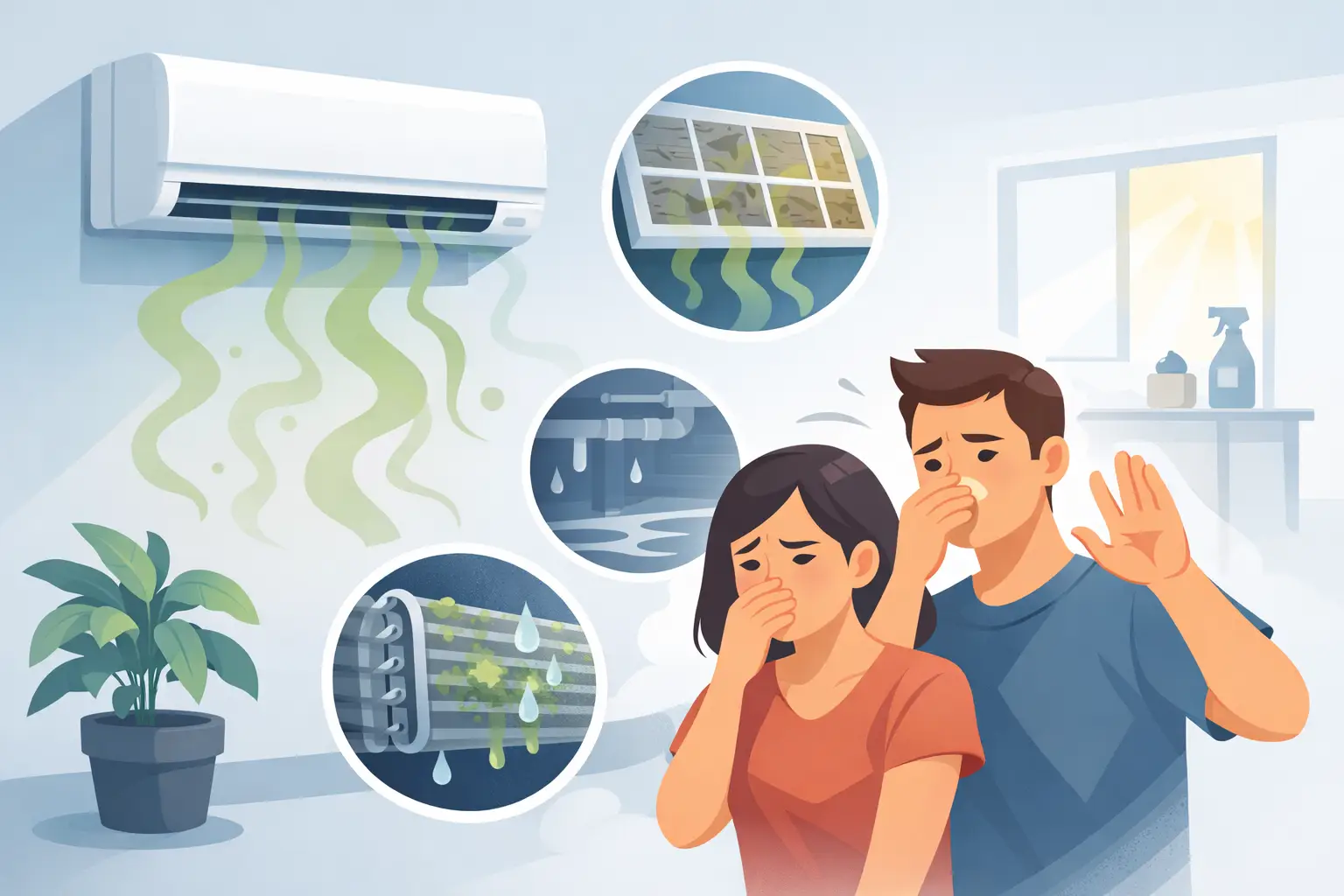
You turn on the AC, expecting relief from the Houston heat, and instead get hit with an odor that smells damp, stale, or like an old basement. If you’re asking, why does AC smell musty, the short answer is usually moisture where it should not be. Air conditioners remove humidity as they cool, and when that moisture does not drain or dry out properly, it creates the right conditions for mold, mildew, and bacteria.
A musty AC smell is more than an annoyance. It often points to a maintenance issue that can affect indoor air quality, system performance, and in some cases the lifespan of your equipment. In Houston’s climate, where humidity stays high for much of the year, small moisture problems can turn into bigger HVAC problems quickly.
Why does AC smell musty in the first place?
Your AC naturally produces condensation during normal operation. Warm indoor air passes over the evaporator coil, moisture gets pulled from that air, and the water is supposed to drain away through the condensate line and drain pan. When any part of that process is disrupted, damp surfaces can stay wet long enough for growth to develop.
That growth may be on the evaporator coil, inside the drain pan, in the condensate line, on insulation near the air handler, or inside ductwork. In some homes and small commercial buildings, the smell is strongest right when the system starts because air is pushing past microbial buildup that has been sitting undisturbed between cycles.
The tricky part is that “musty” can describe a few different situations. Sometimes it is a mild mildew smell from a clogged drain line. Sometimes it is a stronger odor caused by mold inside ducts or around the indoor unit. And sometimes customers call it musty when the real issue is a dirty filter or excess indoor humidity. The odor alone gives a clue, but it does not always give a full diagnosis.
The most common causes of a musty AC smell
Clogged condensate drain line
This is one of the most common causes. Dust, algae, and sludge can build up in the condensate drain line and keep water from draining properly. Once water backs up, the drain pan stays wet or overflows, and that standing moisture can create a musty smell.
In Houston, this happens often because AC systems run hard for long stretches. More runtime means more condensation, and more condensation means more opportunity for buildup in the line.
Dirty evaporator coil
Your evaporator coil stays cold and damp during operation, which makes it a natural place for debris to stick. If dust and organic particles collect on the coil, moisture can combine with that buildup and create odors over time.
This problem is not always visible to a homeowner because the coil is usually tucked inside the air handler or furnace cabinet. Even if the system still cools, the smell can be your first sign that the coil needs professional cleaning.
Mold or mildew in ductwork
If ducts have excess dust, moisture intrusion, or air leaks, mold and mildew can develop inside them. A musty odor that seems to come from several vents at once may point to a duct-related issue rather than one isolated to the indoor unit.
It depends on the home and the duct design. Older ducts, poorly sealed ducts, or ducts in hot, humid attics are more vulnerable to moisture problems, especially when insulation has deteriorated or condensation forms around leaks.
Dirty air filter
A clogged air filter does not usually create a strong mildew smell by itself, but it can contribute to the conditions that allow odors to develop. Restricted airflow can make the system work harder, affect how moisture moves through the equipment, and let dust circulate where it should not.
This is one of the easier issues to rule out. If the filter looks loaded with dust, replacing it may improve airflow and reduce odor, though it may not solve the root cause if mold or moisture is already present elsewhere.
Oversized system or short cycling
An air conditioner needs enough runtime to remove humidity effectively. If a system is oversized for the space, it may cool the home quickly and shut off before it dehumidifies properly. That can leave the indoor air clammy and create conditions where musty odors linger.
This is a more technical issue, but it matters in humid climates. A house can feel cool and still feel damp, and that lingering humidity can feed odor problems inside the system and the home.
What you can check before calling for service
There are a few practical things you can inspect safely. Start with the air filter. If it is dirty, replace it with the correct size and type for your system. Then check around the indoor unit for visible water, damp insulation, or signs that the drain pan is holding standing water.
If your system has a visible condensate drain line access point, you may notice obvious blockage or sludge. Some homeowners flush a drain line with vinegar, but that only makes sense if you know where the line is, can access it safely, and are not dealing with a more serious backup. If there is already water around the equipment, it is better not to guess.
Also pay attention to when the smell happens. If it is strongest only when the AC first starts, that may suggest buildup on the coil or in the air handler. If the smell continues through the cooling cycle and comes from multiple vents, duct issues or high indoor humidity may be part of the problem.
When a musty smell means it is time to call a professional
If you replace the filter and the odor stays, it is time for a proper inspection. The same goes for any sign of water leaking, reduced cooling, weak airflow, frequent cycling, or allergy-like symptoms that seem worse when the AC runs.
A professional HVAC technician can inspect the evaporator coil, drain pan, condensate line, blower components, insulation near the air handler, and duct system. That matters because odor problems are often layered. You might have a partially clogged drain line and microbial growth on the coil, or a humidity issue made worse by duct leaks.
Trying to solve a musty smell with sprays or scented filters usually does not fix the source. In some cases, it can even mask a moisture problem long enough for damage to spread. Reliable HVAC service focuses on removing the cause, not covering the symptom.
How the problem is usually fixed
The repair depends on what inspection shows. A clogged condensate line may need to be cleared and tested for proper drainage. A contaminated evaporator coil may need a professional cleaning. If the drain pan is damaged or rusted through, it may need replacement.
For duct-related odor, the answer could involve duct cleaning, duct sealing, insulation repair, or correcting areas where humid attic air is getting pulled into the system. If the home has ongoing humidity issues, the solution may include airflow adjustments, thermostat review, or equipment recommendations that better match the space.
This is where experienced local service matters. In the Houston area, humidity control is not a side issue. It is a major part of comfort and system health. A repair that restores cooling but ignores moisture may not fully solve the odor.
Can a musty AC smell be prevented?
Usually, yes. Routine maintenance is the best defense. Seasonal service helps catch drain line clogs, coil buildup, airflow restrictions, and early signs of moisture trouble before they create noticeable odors.
Changing filters on schedule also helps, but maintenance is broader than filter replacement. The indoor coil, condensate system, blower area, and duct condition all play a role. If your system struggles with humidity or has had odor issues before, it is worth bringing that up during a tune-up so the technician can inspect with that problem in mind.
For homeowners and small business owners who rely on steady cooling, preventive care is often less disruptive than waiting for a smell to become a leak, a mold problem, or a breakdown. If you need a local team to inspect the issue and restore clean, dependable airflow, Elisee HVAC and Home Services Houston can help.
A musty smell coming from your AC is your system’s way of telling you moisture is not being managed the way it should be. The sooner you address it, the easier it usually is to protect your comfort, your air quality, and your equipment from a more expensive problem later.