
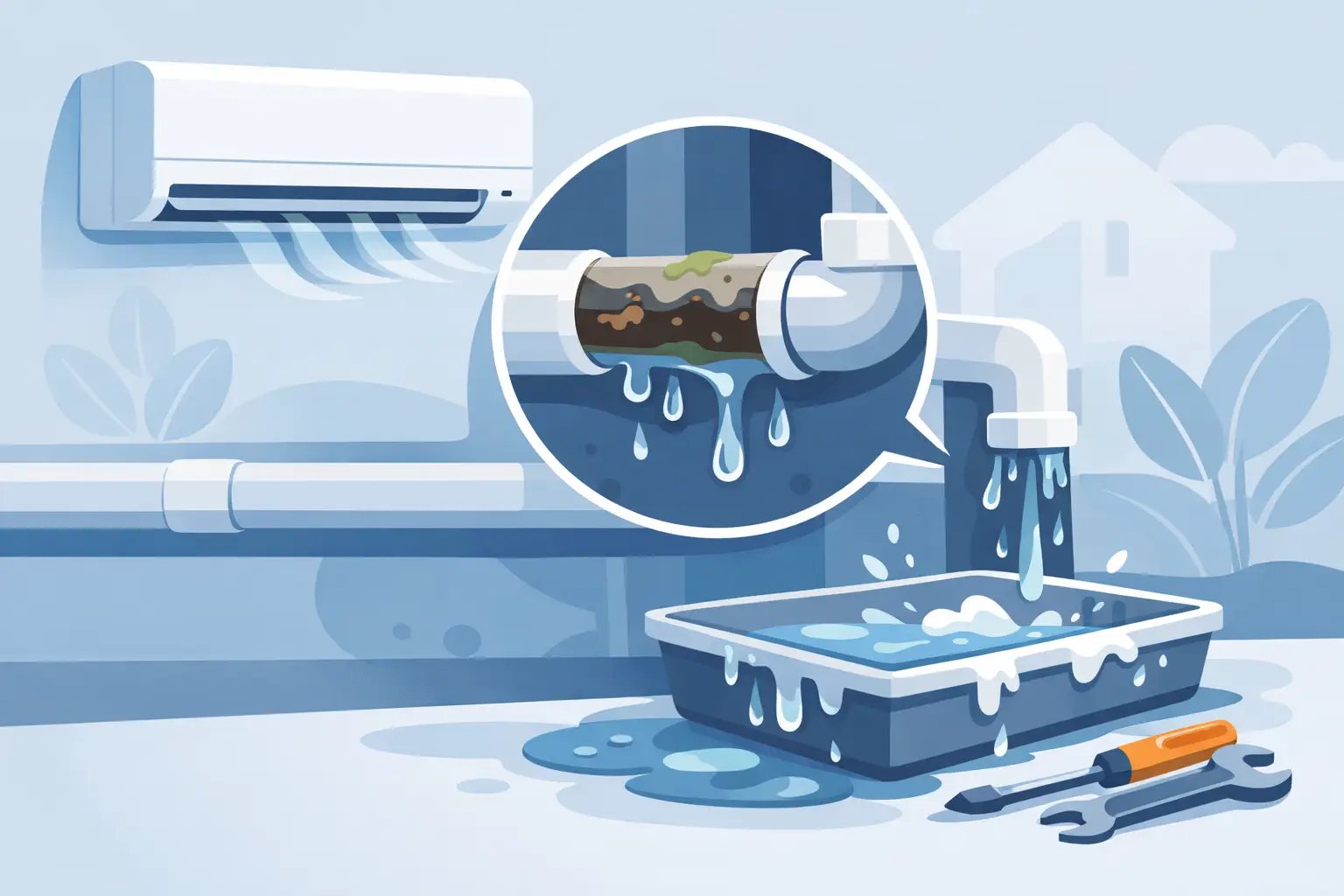
If your AC is cooling fine but you notice water around the indoor unit, a musty smell, or a sudden shutdown, the drain line is often the problem. In Houston, where air conditioners run hard for long stretches, condensate drains do a lot more work than most people realize. When that line clogs, the issue can go from minor nuisance to ceiling stains, mold growth, and an emergency service call fast.
So why does AC drain clog in the first place? Usually, it is not one dramatic failure. It is a buildup problem. Moisture moves through the system every day, and over time that damp environment can collect debris, support algae growth, and trap anything that should have stayed out of the line.
Why does AC drain clog over time?
Your air conditioner does more than cool the air. It also removes humidity. As warm indoor air passes over the evaporator coil, condensation forms and drips into the drain pan. From there, the water is supposed to flow through the condensate drain line and safely out of the home or building.
That sounds simple, but the line stays wet for much of the cooling season. In a climate like Houston, that constant moisture creates ideal conditions for slime, algae, mildew, and sediment to build up inside the pipe. Add dust from return air, bits of insulation, rust flakes from an older drain pan, or a poorly maintained filter, and the line can narrow until water stops moving the way it should.
A clog is often gradual. That is why many property owners do not catch it early. The AC may still run for a while, even as the blockage gets worse.
The most common reasons an AC drain line gets blocked
The leading cause is biological growth. Algae and mold thrive in dark, damp spaces, and the condensate line gives them both. Once that growth starts, it can cling to the pipe walls and catch passing debris.
Dust and dirt are also major contributors. Even though the drain line handles water, the system itself is moving air. If the air filter is dirty or missing, more airborne particles can reach the evaporator area. Some of that material mixes with condensation and eventually washes into the drain system as sludge.
In older systems, wear and corrosion can make things worse. A rusting drain pan may shed particles into the line. A sagging or improperly installed drain pipe can slow water flow and create standing water, which encourages buildup faster than a properly pitched line would.
There are also cases where the clog is a symptom, not the root problem. A frozen evaporator coil can thaw and dump an unusual amount of water into the drain pan at once. If the line already has partial buildup, that extra water may be enough to cause an overflow. In that situation, clearing the line matters, but so does figuring out why the coil froze.
Signs your AC drain may be clogged
Some warning signs are obvious, and some are easy to miss. Water around the indoor unit is the most common red flag. If your air handler is in an attic, closet, or utility space, you may instead notice water stains on drywall or ceiling material nearby.
A musty odor is another common clue. When water sits in the drain pan or line instead of draining out, it can create a stale smell that moves through the system. Some homeowners describe it as a damp or dirty-sock odor.
You may also find that your AC stops running unexpectedly. Many newer systems include a float switch that shuts the system down when the drain pan fills up. That safety feature helps prevent water damage, but it can be confusing if you are only thinking about cooling performance and not drainage.
Higher indoor humidity can show up too. If moisture is not leaving the system as intended, the home can start to feel clammy even when the thermostat setting looks normal.
Why Houston homes and businesses see this issue more often
This problem tends to show up more often in hot, humid areas for a simple reason: more condensation. The harder and longer your AC runs, the more water it removes from the air. That means more moisture moving through the drain line every day.
In Houston-area homes and light commercial spaces, AC systems often operate for extended periods with very little downtime during peak season. That constant use increases the chances of buildup. If maintenance gets delayed, the drain line does not get inspected or cleaned before the busiest months, and the odds of a clog go up.
Buildings with older ductwork, inconsistent filter changes, or high indoor dust levels can see the issue even more often. Restaurants, retail spaces, rental properties, and busy family homes all create different operating conditions, but the result is similar - the drain line has to keep up with a heavy moisture load.
Can you clear a clogged AC drain yourself?
Sometimes, yes. If the clog is minor and accessible, a wet/dry vacuum at the outdoor drain termination can remove some buildup. In some systems, a technician or homeowner can also flush the line through the cleanout access point.
But this is where it depends. A simple surface blockage is one thing. A deeper clog, repeated backups, or a system that has already caused overflow is another. If the drain line is cracked, poorly sloped, disconnected, or tied to a larger maintenance issue, clearing the visible blockage may only give you a short break before it happens again.
There is also the risk of focusing on the drain and missing the reason the problem developed. If the evaporator coil is dirty, the filter is restricting airflow, or the system has a freezing issue, the drain clog may be only part of the service call.
What a professional AC drain service should check
A thorough service visit should do more than vacuum out the pipe. The drain line needs to be cleared, but the full condensate system should also be inspected. That includes the drain pan, the safety switch, the evaporator coil condition, and the line routing itself.
If the line keeps clogging, the technician should look for contributing causes such as poor installation, excessive debris in the air handler, biological growth, or signs of neglect in routine maintenance. In some cases, the best fix is not repeated drain cleaning. It may be correcting slope, replacing damaged piping, or addressing system performance issues that are causing unusual moisture behavior.
For businesses, that diagnostic step matters even more. A recurring drain problem can interrupt operations, affect indoor air quality, and create avoidable repair costs if water reaches ceilings, inventory, or finished spaces.
How to reduce the chances of another clog
The most effective step is regular HVAC maintenance. During preventive service, the drain line can be checked and cleaned before it becomes a shutdown issue. That is especially valuable before summer demand peaks.
Filter changes matter too. A clean filter helps reduce the dust and debris that can make its way into the system and contribute to sludge in the drain line. It also supports airflow, which helps the evaporator coil operate the way it should.
Keeping the area around the indoor unit clean can help as well, especially in utility closets, garages, or commercial back-of-house spaces where dust and debris build up. If your system has a history of condensate issues, it is worth having the drain setup evaluated instead of treating each clog as a one-time event.
For homeowners and businesses that want fewer surprises during the hottest months, scheduled maintenance is usually cheaper than dealing with water damage, emergency shutdowns, or after-hours breakdowns. That is one reason many local customers call Elisee HVAC and Home Services Houston before a minor drainage issue turns into a larger repair.
When to call for service right away
If you see active leaking, ceiling staining, repeated system shutdowns, or strong musty odors, it is time to get the system checked. The same goes for any AC that has had more than one drain clog in a season. Repetition usually means there is an underlying problem that needs attention.
Drain clogs are common, but they are not harmless when ignored. A blocked condensate line can affect comfort, damage surrounding materials, and signal that your system needs a more complete inspection. Catching it early is the difference between a routine service call and a much bigger mess.
If your AC drain keeps clogging, treat it as a maintenance warning, not just a plumbing annoyance. The system is telling you moisture is not leaving the way it should, and in Houston heat, that is not something to put off for long.