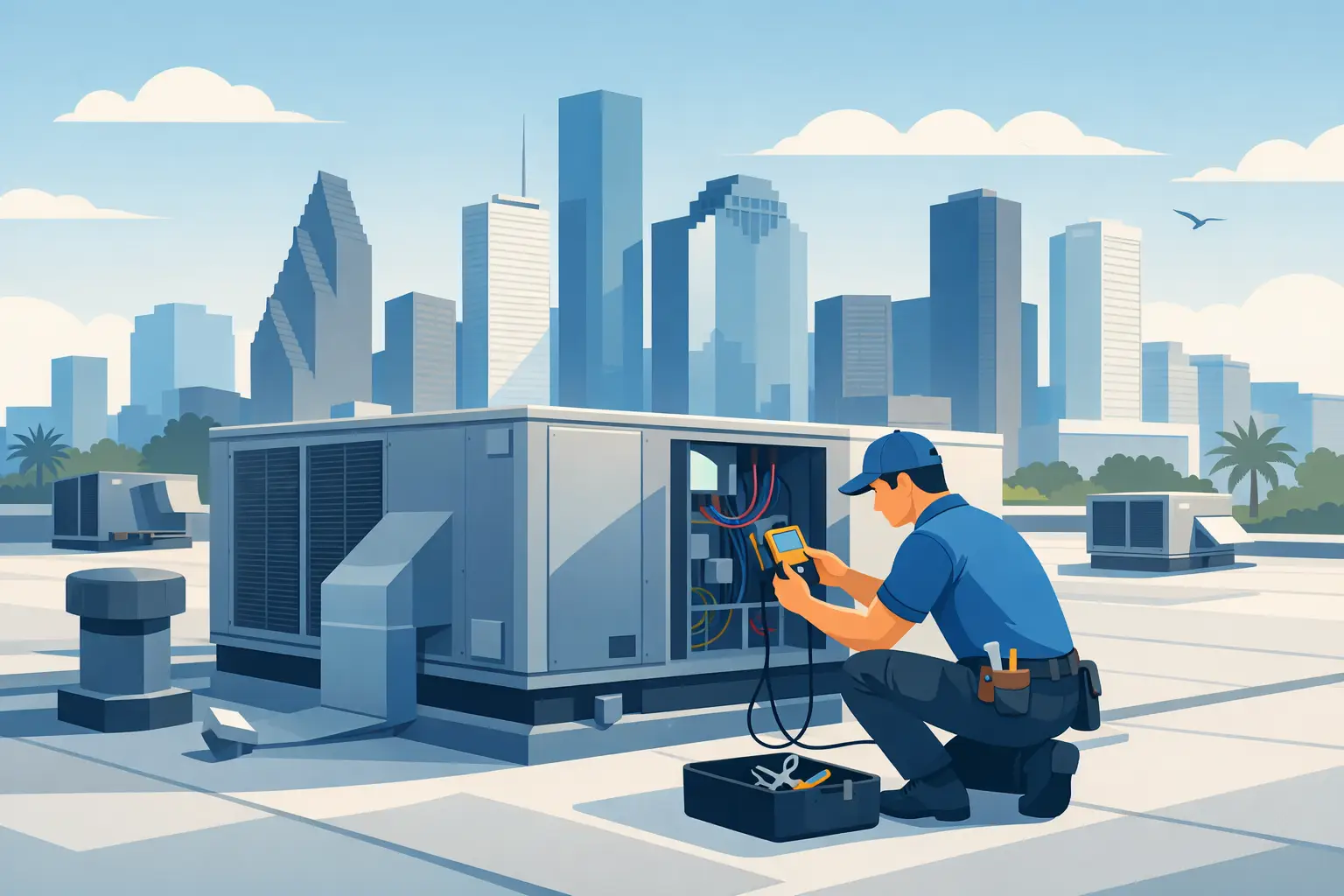
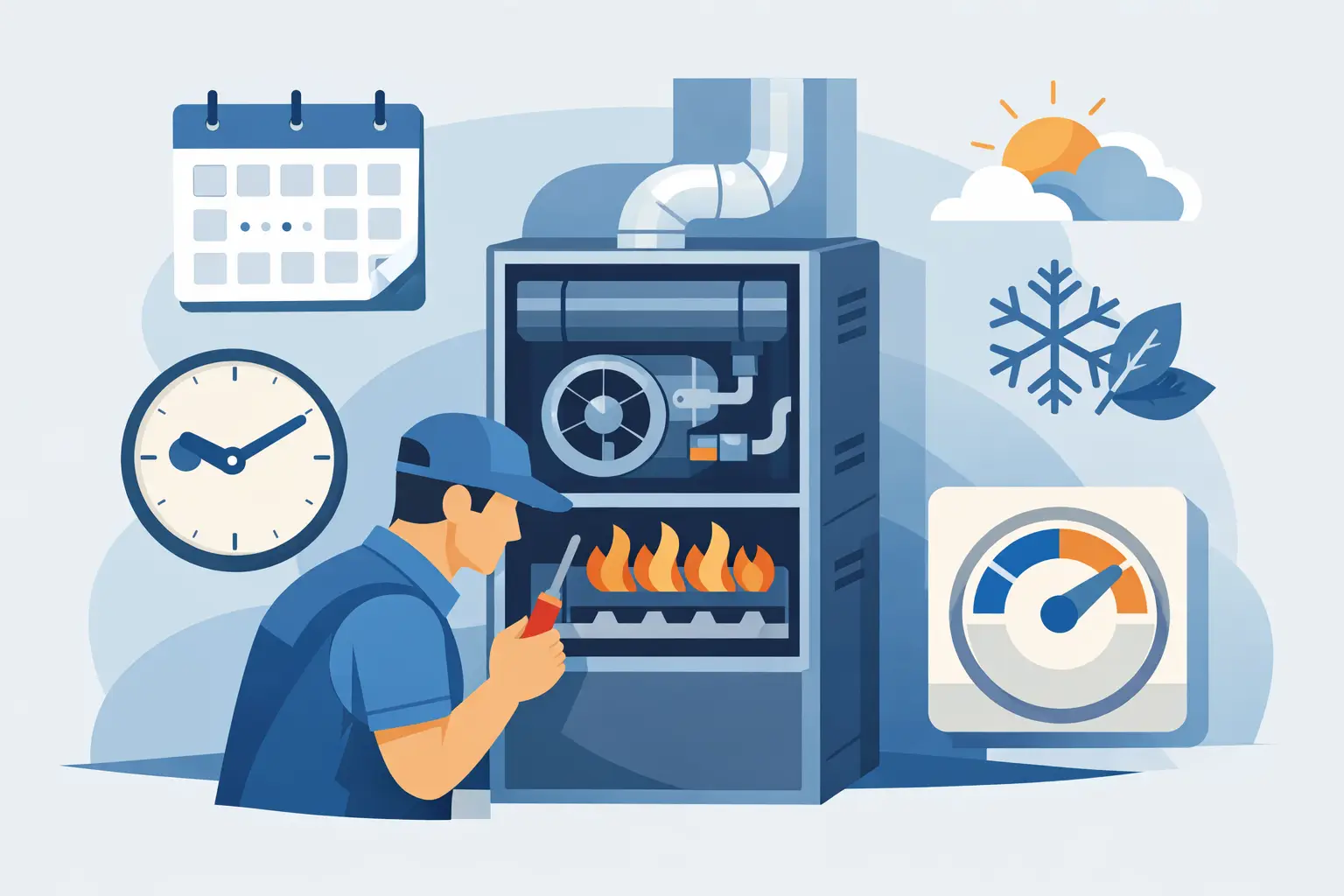
A furnace that starts on the first cold morning of the year is easy to take for granted. A furnace that does not start gets your full attention fast. In Houston, heating season is shorter than cooling season, but that is exactly why furnace maintenance gets overlooked. Systems can sit unused for long stretches, and small issues often stay hidden until the first real cold snap.
If you are asking when should furnace be serviced, the best answer for most homes and small businesses is once a year, ideally in early fall before regular heating use begins. That timing gives you a chance to catch worn parts, airflow problems, ignition issues, or safety concerns before your system is under pressure.
When should furnace be serviced?
For most properties, annual service is the standard. A once-a-year professional tune-up keeps the system cleaner, safer, and more reliable. It also gives a technician time to spot the kind of wear that turns into a no-heat call later.
Early fall is usually the best window. You are ahead of the winter rush, scheduling is often easier, and there is time to address repairs before cold weather arrives. If you wait until the furnace is already struggling on a chilly day, your options are narrower. At that point, you are not planning maintenance - you are reacting to a problem.
That said, there are situations where once a year may not feel like enough. Older furnaces, systems that run heavily, and equipment serving commercial spaces may need closer attention. If your unit has had repeat repairs, inconsistent performance, or noticeable airflow problems, it makes sense to have it evaluated even if it was serviced earlier in the year.
Why annual furnace service matters in Houston
Houston is not known for long, brutal winters, but local weather still creates a maintenance challenge. Furnaces can sit idle for months, which means dust buildup, electrical wear, clogged filters, or ignition problems may go unnoticed until the system suddenly has to work. The first cold front tends to expose weaknesses quickly.
Annual service is about more than comfort. It helps protect efficiency, reduces strain on the system, and lowers the chance of an unexpected breakdown. It also matters for safety. Gas furnaces should be checked for proper combustion and venting, and electric heating systems still need inspection for wiring, components, and airflow issues.
For homeowners, that means fewer surprises and better peace of mind. For landlords, facility managers, and small business owners, it means better uptime and a lower chance of fielding urgent tenant or customer complaints when temperatures drop.
What happens during a furnace tune-up
A proper furnace service visit is not just a quick visual check. It should involve a real inspection, cleaning, and performance review of the heating system. The exact steps vary by furnace type and condition, but a technician typically checks the burner or heating elements, ignition system, blower assembly, thermostat operation, filter condition, airflow, electrical connections, and safety controls.
If the system is gas-fired, testing for safe operation is especially important. That can include checking the heat exchanger for visible concerns, evaluating venting, and confirming the unit is burning fuel correctly. If airflow is restricted or a blower motor is struggling, the furnace may still run, but it will do so less efficiently and with more wear.
This is where preventive service earns its value. Many furnace issues start small. A loose connection, a dirty sensor, or a failing capacitor may not stop the system today, but those problems tend to get worse when ignored.
Signs your furnace should be serviced sooner
Even if you plan annual maintenance, some warning signs mean you should not wait for your usual appointment. If your furnace is making unusual noises, turning on and off too often, blowing cool air, heating unevenly, or causing a sudden jump in energy bills, it is time for service.
Strange odors also matter. A brief dusty smell at startup can be normal after months of inactivity, but persistent burning smells or anything that seems unusual should be checked. The same goes for weak airflow, delayed ignition, or a thermostat that does not seem to match what the system is doing.
For business properties, the threshold for calling is often lower, and for good reason. Comfort complaints affect staff, customers, tenants, and daily operations. It is usually cheaper and less disruptive to address a furnace problem early than to wait for a complete loss of heat.
Newer vs. older furnaces: does timing change?
Yes, sometimes. Newer furnaces still need annual service, but they often have fewer age-related issues if they have been maintained consistently. The main goal is to keep them operating efficiently and protect the investment.
Older furnaces need a closer eye. Components wear down, efficiency drops, and repair frequency can increase over time. If your system is 10 to 15 years old or more, annual service becomes even more valuable because the margin for error is smaller. A tune-up can help you decide whether the unit is still dependable or whether replacement planning would be the smarter move.
This is one of those areas where it depends. A well-maintained older furnace may continue performing well, while a newer unit with poor airflow, neglected filter changes, or installation issues can still develop problems early.
Can you skip service if the furnace seems fine?
You can, but it is a gamble. Furnaces often continue running while efficiency, safety, and reliability quietly decline. By the time there is an obvious issue, you may be dealing with a repair instead of a routine visit.
A system that "seems fine" may still have dirty components, developing electrical issues, or airflow restrictions that shorten equipment life. Regular service is less about fixing obvious problems and more about reducing the chance of avoidable ones.
That is especially true for anyone trying to manage costs. Preventive maintenance is usually more predictable than emergency repairs, and it can help you avoid replacing parts that wore out faster because the system was working harder than it should.
What homeowners can do between service visits
Professional maintenance matters, but day-to-day care still plays a role. The most useful habit is keeping up with filter changes. A clogged filter can restrict airflow, increase strain, and reduce comfort even if the furnace itself is in decent shape.
It also helps to keep vents open and unobstructed, watch for changes in system behavior, and pay attention when the thermostat setting and the actual room temperature do not line up. If you have both heating and cooling equipment under one HVAC system, remember that ductwork and airflow issues affect both sides.
Routine attention does not replace a technician visit, but it does help your system perform more consistently between appointments.
When to schedule service if you missed fall
If fall came and went, do not assume you missed your chance. The best time to service a furnace is before heating season, but the second-best time is when you realize it has been neglected.
A mid-season service is still worthwhile if the system is running. You may catch a problem before it causes a full breakdown, and you can still improve performance for the rest of the colder months. If the furnace is already showing warning signs, waiting longer rarely helps.
For properties across the Houston area, working with a local HVAC company that handles repairs, maintenance, and replacement gives you a clearer path forward if the tune-up uncovers bigger issues. If you need that kind of support, Elisee HVAC and Home Services Houston can help evaluate your system and recommend the next step based on its condition, not guesswork.
The best approach is simple
If you have been wondering when should furnace be serviced, put annual furnace maintenance on the calendar for early fall and treat any unusual system behavior as a reason to call sooner. That one habit goes a long way toward avoiding winter breakdowns, controlling operating costs, and keeping your property comfortable when colder weather shows up.
A furnace does not need much attention to stay dependable, but it does need timely attention. A little planning now is easier than scrambling for heat later.