
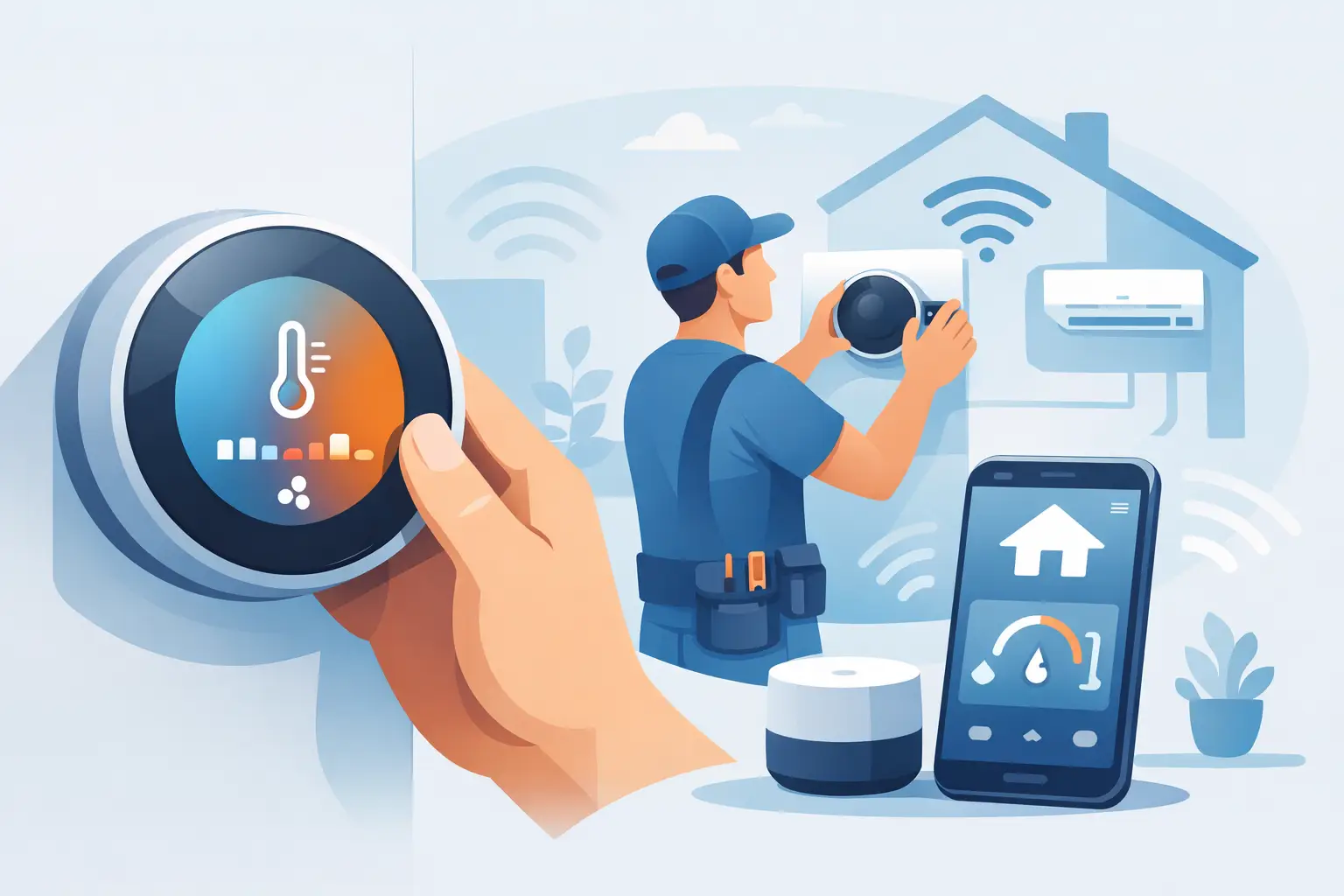
A smart thermostat can look like a small upgrade until your AC starts short cycling in August, your upstairs never cools evenly, or your energy bill jumps for no clear reason. That is where a smart thermostat installation review matters. In Houston-area homes and small commercial spaces, the thermostat is not just a wall control. It is the command point for comfort, runtime, and system efficiency.
The big promise is simple: better control, lower waste, and fewer comfort swings. Sometimes that promise holds up immediately. Sometimes it does not, especially when the thermostat is installed on the wrong system, wired incorrectly, or set up with features that do not match how the building is actually used. A good review has to look past the app and the screen design and focus on what happens once the thermostat is tied into a real HVAC system.
What a smart thermostat installation review should actually cover
Most product writeups spend too much time on brand features and not enough time on installation realities. For homeowners and property managers, the real questions are more practical. Will it work with the existing system? Does the wiring support all functions? Can it manage multi-stage cooling or a heat pump correctly? Will it help reduce costs without creating comfort complaints?
That is why installation matters as much as the thermostat itself. A model with strong scheduling and learning features can still perform poorly if the setup skips equipment configuration, sensor calibration, or airflow-related issues elsewhere in the system. In other words, a thermostat cannot fix duct leakage, an oversized unit, or a failing blower motor. It can only control what the HVAC system is capable of delivering.
Where smart thermostats perform well
In many Houston homes, smart thermostats do a good job in three areas: scheduling, remote access, and reducing unnecessary runtime. If a household has predictable work hours, school routines, or travel days, automated setback schedules can cut waste without much effort. Small business owners often see the same benefit when they stop cooling an empty office overnight or on weekends.
Remote access is also more useful than many people expect. If a tenant reports weak cooling, a landlord can check whether the thermostat is calling for cooling before dispatching service. If a family returns from a trip earlier than planned, they can cool the house before arrival. These are not flashy features, but they are practical.
Some models also provide runtime reports and maintenance reminders. Those are helpful, though they should be treated as guidance, not a full system diagnosis. A thermostat may show heavy runtime, but it will not always tell you whether the cause is dirty coils, low refrigerant, poor insulation, or extreme outdoor heat.
The trade-offs most reviews leave out
A fair smart thermostat installation review has to acknowledge that smart does not always mean better for every building. Older systems can be the biggest variable. Some thermostats need a common wire, and not every older setup has one available. Adapters can solve that in some cases, but not all. If wiring is brittle, mislabeled, or previously modified, installation becomes less of a plug-and-play upgrade and more of a service call.
There is also the issue of equipment compatibility. Single-stage systems are usually the simplest fit. Two-stage systems, variable-speed equipment, heat pumps, dual-fuel setups, and zoned systems require more attention. Install the wrong thermostat or program it incorrectly, and the equipment may still run, but not the way it was designed to. That can mean uneven temperatures, higher utility use, or added wear on the system.
Then there is user behavior. Some people want a thermostat that learns patterns and adjusts automatically. Others prefer full manual control and get frustrated when the system starts making schedule changes on its own. The right choice depends on how the home or business is occupied. A rental property, for example, may need a different setup than an owner-occupied home with a consistent routine.
Smart thermostat installation review for Houston properties
Houston adds its own layer to the conversation. Cooling season is long, humidity matters, and system reliability is not optional. In this climate, a thermostat should do more than switch the AC on and off. It should support stable cooling cycles and help avoid constant adjustments that keep the system running harder than necessary.
For many local properties, the best installation results come when the thermostat is reviewed as part of the full HVAC picture. Thermostat placement matters. If it is installed near a sunny window, a kitchen, or a drafty return area, the readings can be misleading. The thermostat may overcool one part of the building while another room stays warm.
Humidity control is another point worth watching. Some higher-end thermostat and HVAC combinations can better manage dehumidification, but that depends on the equipment. A smart thermostat alone does not guarantee humidity improvement. If humidity is a major complaint, that should be evaluated during installation rather than assumed.
DIY installation versus professional setup
DIY installation can work for straightforward replacements on compatible single-stage systems. If the wiring is clearly labeled, the system type is confirmed, and the new thermostat supports the existing equipment, some owners can handle the install without issue. That is the best-case scenario.
But many installations are not that clean. A missing common wire, unclear terminal labels, jumper wires from an older thermostat, or a heat pump with auxiliary heat can change the job fast. The thermostat may power on and still be set up wrong. That is what causes callbacks and confusion. The screen looks fine, but the system behavior is off.
Professional installation is usually worth it when the equipment is more complex, the property has comfort issues already, or the owner wants confidence that all stages and features are configured correctly. It also helps when there is an opportunity to check the rest of the system at the same time. If a thermostat upgrade is being used to solve a comfort problem, it makes sense to confirm whether the thermostat is really the problem.
What to expect on cost and value
The thermostat itself can range from basic smart models to premium units with room sensors, occupancy features, and more detailed reporting. Installation cost depends on the wiring, system type, and whether troubleshooting is needed. If new wire must be pulled or system settings need advanced configuration, labor will be higher than a simple swap.
That said, value should not be measured by upfront price alone. A correctly installed thermostat can help reduce wasted runtime, improve convenience, and support better temperature consistency. The savings may be modest or meaningful depending on the building and how it is used. If someone already manages temperatures carefully and has a stable routine, the payoff may be slower. If the property is frequently empty or schedules change often, the benefit can be stronger.
Signs a smart thermostat is a good fit
A smart thermostat tends to make the most sense when a property has regular occupancy patterns, the HVAC system is in generally good shape, and the owner wants more control without constant manual changes. It is also a good fit when remote access matters, such as for second homes, rental properties, or small commercial spaces.
It may be less useful if the main issues are mechanical. If rooms are not cooling evenly because of duct design, if the unit is oversized, or if the system struggles to hit setpoint during peak heat, a thermostat upgrade alone is unlikely to solve the real problem. In those cases, installation should be paired with a broader HVAC evaluation.
Our practical take on smart thermostat installation review
From a service standpoint, smart thermostats are usually a worthwhile upgrade when the installation is matched to the equipment and the expectations are realistic. They are not magic, but they are often effective. The best results come from combining the right thermostat with proper setup, correct placement, and a system that is already capable of delivering balanced heating and cooling.
For homeowners and business owners who depend on steady indoor comfort, the smart move is not choosing the thermostat with the longest feature list. It is choosing one that fits the system, the building, and the day-to-day routine. If you are unsure whether your wiring, equipment, or control strategy supports that upgrade, having it reviewed by a local HVAC team such as Elisee HVAC and Home Services Houston can prevent guesswork and save time.
A thermostat should make comfort easier, not add another layer of troubleshooting. When the install is done right, that small device on the wall can make a noticeable difference where it counts most - keeping your space comfortable when Houston weather puts the whole system to work.