
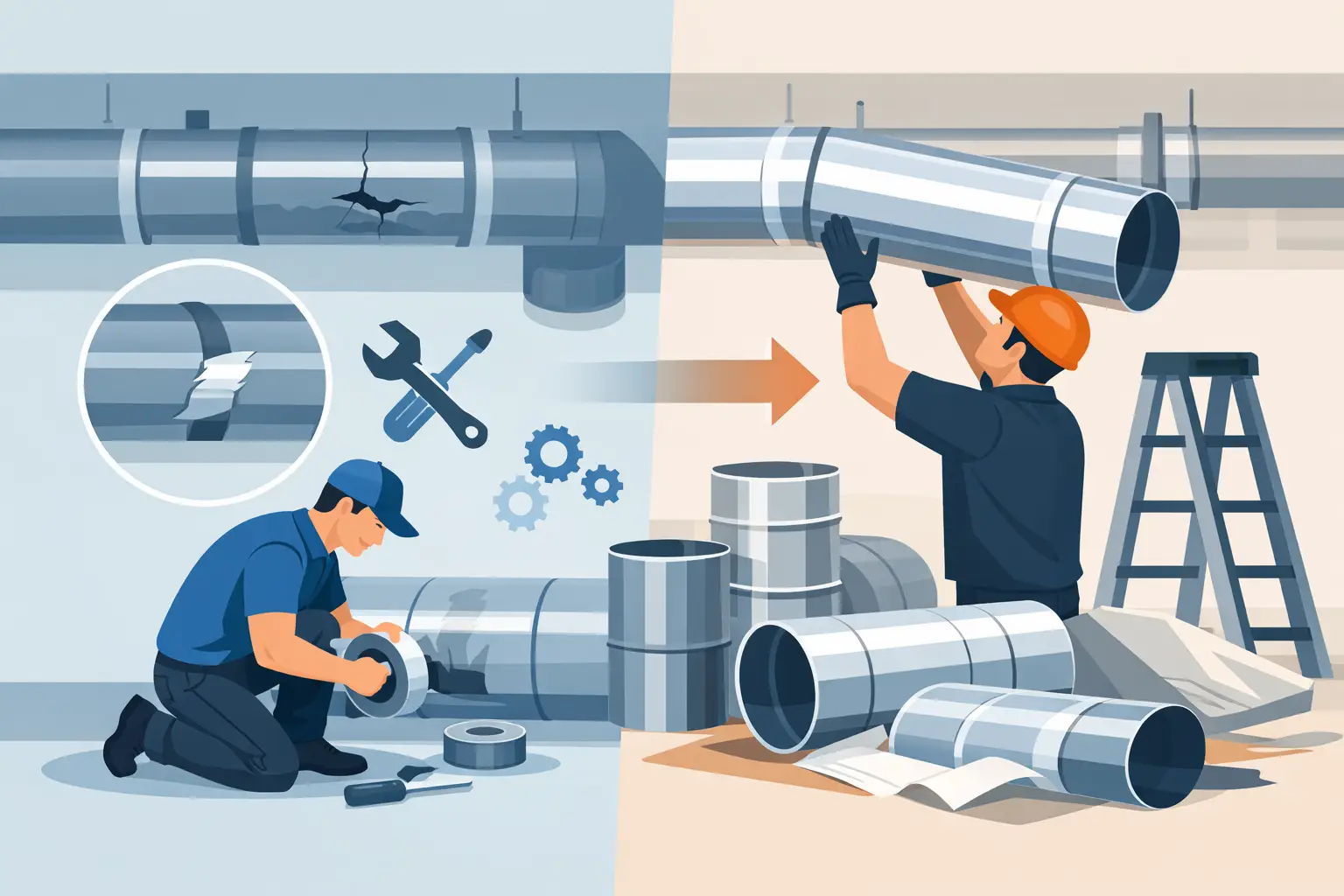
If one room in your home feels like a walk-in freezer and the next feels muggy by midafternoon, your duct system may be the real problem. When homeowners start weighing repairing ductwork vs replacing ducts, the right answer usually comes down to how much damage is hiding behind walls, in attics, or above ceilings - and whether a repair will actually hold up through another Houston summer.
Ductwork does not get much attention until comfort drops and utility bills climb. But your ducts are the delivery system for conditioned air, and when they leak, sag, separate, or collect heavy buildup, your AC and heating equipment has to work harder just to keep up. That means more strain on the system, less consistent airflow, and less predictable energy costs.
Repairing ductwork vs replacing ducts: what changes the answer
There is no one-size-fits-all rule here. Some duct issues are localized and worth fixing. Others point to a system that has aged out, was poorly installed, or no longer fits the airflow needs of the building.
Repair usually makes sense when the problem is limited. A disconnected section, a few leaking joints, damaged insulation, or minor airflow imbalance can often be corrected without tearing out the full system. If the duct layout is fundamentally sound and the materials are still in decent condition, repair can restore performance at a lower upfront cost.
Replacement becomes the better path when problems are widespread. If the ducts are old, crushed, contaminated, undersized, badly routed, or leaking in multiple locations, patching one area after another tends to waste money. In that case, a full replacement can improve comfort, efficiency, indoor air quality, and equipment performance all at once.
For many Houston-area homes and small commercial spaces, the attic environment matters too. Ducts in high-heat attic spaces take a beating over time. Insulation breaks down, flexible ducts sag, tape fails, and connections loosen. What started as a small loss of efficiency can turn into a system-wide problem once the cooling load spikes.
When repairing ductwork is the smart move
A targeted repair is often the right call when the rest of the system still has useful life left. That is especially true if you are dealing with a newer duct system or a single, clearly identified issue.
Air leaks around joints and seams are a common example. Sealing those areas can reduce conditioned air loss and help rooms receive more balanced airflow. If a short section of flex duct has been crushed or torn, replacing only that section may solve the issue without a major project.
Repairs also make sense when comfort complaints are recent and specific. Maybe a renovation disturbed a duct run. Maybe pests damaged insulation. Maybe one branch line came loose and is dumping cooled air into the attic. These are fixable problems, and a repair can be fast and cost-effective if caught early.
The key is whether the repair addresses the root cause. A good duct repair should do more than silence a whistle or improve one room for a few weeks. It should restore proper airflow, reduce leakage, and support overall system performance.
Signs replacing ducts may save more in the long run
Homeowners often hesitate at the idea of duct replacement because the upfront investment is higher. That hesitation is understandable. But there are cases where repeated repairs simply delay a larger issue.
If your ductwork is 15 to 20 years old or older, replacement deserves serious consideration. Aging materials are more likely to crack, collapse, or separate, especially in hot attic conditions. Older ducts may also be poorly insulated by current standards, which means cooled air is warming up before it reaches your living space.
Replacement is also worth considering if you have:
- Multiple rooms with weak or inconsistent airflow
- Visible sagging, kinks, or crushed duct sections
- Persistent dust, odors, or indoor air quality complaints tied to the duct system
- High utility bills with no clear equipment failure
- Ducts that are too small, too long, or poorly laid out for the current system
Bad design matters just as much as bad condition. If your HVAC equipment was replaced at some point but the duct system was left undersized or unbalanced, the system may never perform the way it should. In those situations, repairing obvious damage may help a little, but replacement gives you the chance to correct the layout, sizing, and airflow distribution.
Cost matters, but so does what you get for it
Most property owners start with price, and that makes sense. Repair is usually less expensive today. Replacement may cost more now but deliver a better return over time. The question is not just what the invoice says this week. It is what the duct system will cost you over the next few years in comfort issues, service calls, and energy waste.
A repair is a better value when it solves a contained problem and extends the life of the system without creating repeat visits. A replacement is a better value when the ductwork is causing ongoing inefficiency or putting extra stress on your AC or furnace.
This is where a proper inspection matters. If a technician only quotes the torn section they can see, you may end up fixing symptoms instead of the full issue. A thorough evaluation should look at leakage, insulation condition, airflow, duct sizing, routing, and the overall match between the duct system and the HVAC equipment.
Comfort problems that point back to the ducts
Not every HVAC complaint is an equipment issue. In fact, many comfort calls trace back to poor air delivery rather than a failing condenser or furnace.
If your system runs for long stretches but the house still feels uneven, the ductwork may be losing air before it reaches the rooms that need it. If supply vents have weak airflow, a branch line could be disconnected, restricted, or undersized. If humidity feels high indoors even while the AC runs, leakage and poor distribution may be reducing overall system effectiveness.
Small businesses see similar patterns. Hot offices, back rooms that never cool off, and front areas that feel over-conditioned can all point to duct problems. When airflow is wrong, comfort and operating costs both suffer.
Why Houston conditions make duct decisions more urgent
In the Houston area, duct problems rarely stay minor for long. Long cooling seasons, heavy humidity, and extreme attic heat put more pressure on the full HVAC system. If your ducts are leaking into an attic in July, you are not just losing air. You are paying to condition space that should never receive it.
That extra strain can shorten equipment life and increase the chance of breakdowns during peak demand. For homeowners and business owners alike, that is where a duct issue turns from annoyance to disruption.
A responsive local contractor can help you decide whether repair or replacement is the better investment based on what is happening in the field, not just on paper. If the issue is urgent, especially during severe heat, having access to 24/7 emergency support matters. In many cases, a temporary repair can restore operation while a longer-term replacement plan is scheduled.
Repairing ductwork vs replacing ducts in older homes and buildings
Older properties need a little more caution. Sometimes the duct materials themselves are outdated or deteriorated beyond what sealing can fix. Other times the layout reflects an earlier HVAC setup and no longer supports current performance needs.
If you own an older home, duplex, office suite, or retail space, replacement may provide benefits beyond airflow. It can improve insulation, reduce leakage, support cleaner indoor air, and bring the distribution system in line with newer equipment. That does not mean every older duct system must be replaced. It means age should weigh into the decision alongside visible condition and performance.
This is also where financing can make a difference. If replacement is the right call but budget is the main hesitation, flexible payment options can make it easier to move forward before more energy loss or equipment strain adds to the total cost.
What a good recommendation should sound like
A trustworthy recommendation should be clear, specific, and tied to what the technician found. You should hear where the damage is, how extensive it is, whether the duct design is helping or hurting system performance, and what kind of result to expect from repair versus replacement.
If the answer is repair, it should be because the system is fundamentally sound and the issue is isolated. If the answer is replacement, it should be because the existing ductwork is too compromised, too inefficient, or too poorly configured to justify more patchwork.
At Elisee HVAC and Home Services Houston, that kind of guidance starts with what will restore dependable comfort, not what sounds easiest in the moment. Sometimes that is a targeted duct repair. Sometimes it is a full replacement designed to reduce energy waste and stop recurring comfort problems.
If you are trying to decide between the two, do not wait for the hottest week of the year to force the choice. A careful duct evaluation now can give you a more reliable system, more predictable bills, and a lot fewer surprises when your cooling is needed most.