
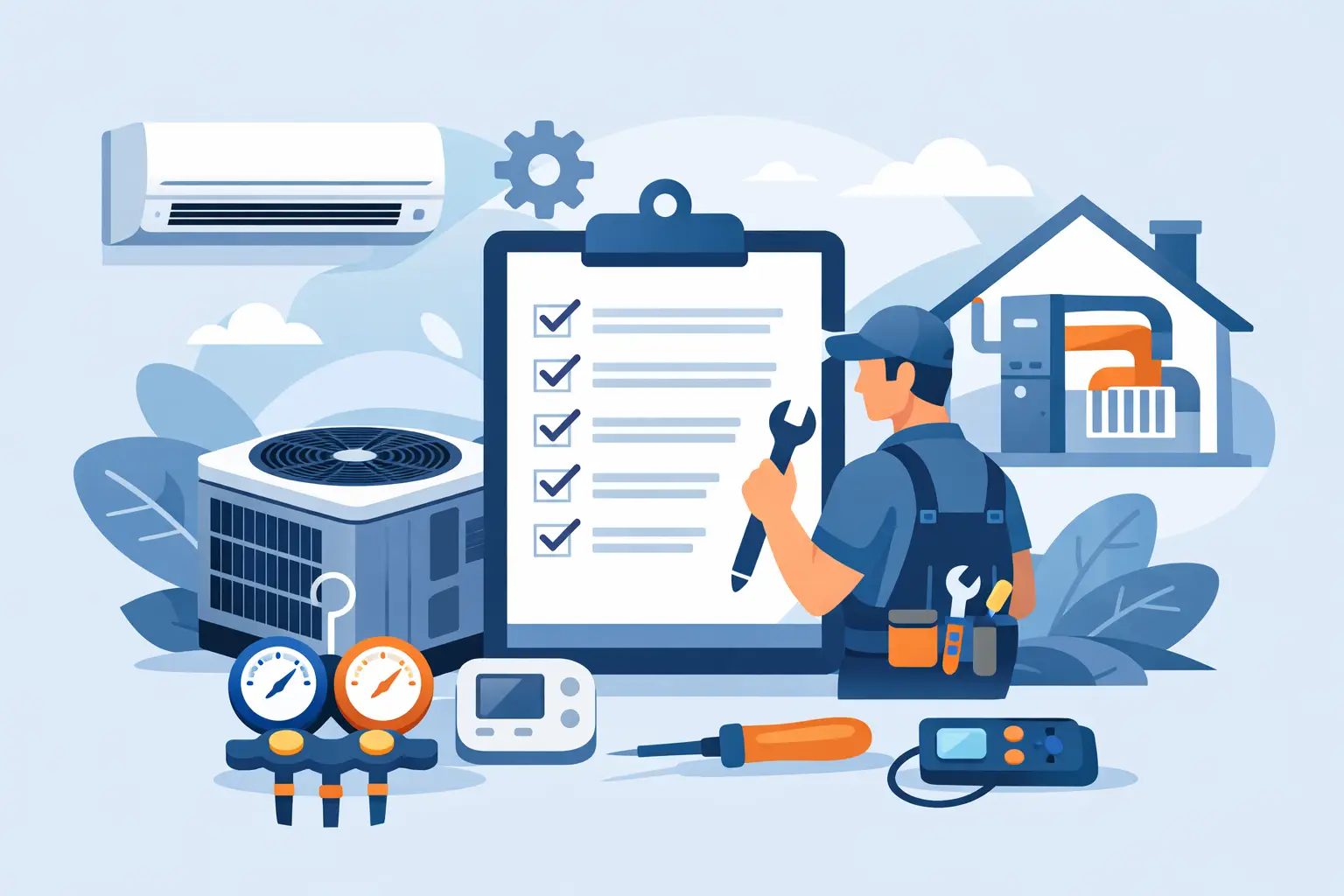
If your AC quits in August in Houston, it does not feel like a minor inconvenience. It feels urgent, expensive, and avoidable. That is why a solid HVAC tune up checklist homeowners can actually use matters more here than it might in milder parts of the country.
A tune-up is not just a quick glance at the thermostat and a fresh filter. A proper maintenance visit is meant to catch wear before it turns into a breakdown, keep airflow where it should be, and help your system run with less strain when the heat and humidity are relentless. For homeowners, the goal is simple - fewer surprises, better comfort, and more control over operating costs.
What an HVAC tune-up should really accomplish
A real tune-up is part inspection, part cleaning, part performance check. The technician is looking for early signs of failure, but also for smaller issues that chip away at efficiency over time. A dirty outdoor coil, a weak capacitor, low airflow, or a clogged drain line may not stop your system today, but each one adds stress to equipment that already works hard in the Houston area.
That is why maintenance is rarely about one dramatic fix. It is usually about several practical corrections that improve reliability. If a company rushes through the visit in a few minutes, homeowners should be cautious. A useful tune-up has enough depth to verify system condition, not just create the appearance of service.
The HVAC tune up checklist homeowners should expect
When a technician arrives for seasonal service, there are a few core items that should be part of the visit. The exact scope can vary by system type, age, and whether you have heating and cooling in one package or separate components. Still, the fundamentals are consistent.
Thermostat and controls
The technician should check thermostat operation, confirm accurate temperature response, and make sure the system starts and shuts down properly. If you have programmable or smart controls, settings may also be reviewed to make sure they support comfort without wasting energy.
This sounds basic, but control issues create a surprising number of comfort complaints. Sometimes the HVAC system is fine and the problem starts with poor scheduling, sensor errors, or a thermostat location that causes bad readings.
Air filter and airflow review
Filter condition should always be checked. A clogged filter can restrict airflow, increase run time, and put stress on components. In some homes, especially those with pets, renovation dust, or heavy use, filters need attention more often than homeowners expect.
Airflow should also be evaluated beyond the filter itself. That can include checking blower performance, visible duct condition, vent obstructions, and return air function. Weak airflow is one of the most common reasons a home feels unevenly cooled even when the AC is running.
Evaporator and condenser coil condition
Indoor and outdoor coils are critical to heat transfer. If they are coated with dirt or debris, efficiency drops and the system has to work harder to deliver the same result. The outdoor condenser coil is especially vulnerable in areas with grass clippings, pollen, and general outdoor buildup.
Cleaning may be part of the tune-up depending on coil condition and service plan details. Light cleaning is often routine. Heavier buildup may require more extensive work. That is one of those situations where it depends - a well-maintained unit may need less attention than one that has gone several seasons without service.
Electrical components and connections
A professional tune-up should include checking electrical connections, contactors, relays, capacitors, and wiring condition. Many no-cool calls start with electrical failure, and some of those parts show warning signs before they fail completely.
Testing matters here. A capacitor can be weak before it dies. A loose connection can create intermittent problems. Catching these during maintenance is usually easier and less disruptive than finding them during an emergency call.
Refrigerant and cooling performance
Refrigerant levels should be checked as part of overall system performance, especially if there are signs of poor cooling. Refrigerant does not get “used up” like fuel, so a low charge can point to a leak or installation issue.
A careful technician is not just topping off refrigerant and moving on. The better approach is to confirm system pressures and temperatures, compare them to expected operation, and look at whether low refrigerant is part of a larger problem.
Condensate drain and drain pan
In Houston, this item deserves extra attention. Air conditioners remove a lot of moisture from indoor air, and that water has to drain away properly. If the condensate line clogs, it can trigger shutoffs or lead to water damage.
A tune-up should include inspecting and clearing the drain line when needed, along with checking the drain pan and any safety switches. This is one of the simplest maintenance steps that can prevent a very frustrating service call.
Blower assembly and motor check
The blower moves conditioned air through the home. If it is dirty or underperforming, comfort suffers and efficiency drops. During a tune-up, the blower motor and related components should be inspected for wear, dirt buildup, and proper operation.
This is especially important when homeowners say rooms feel stuffy, humid, or slow to cool. Sometimes the issue is not the outdoor unit at all. It is the indoor side struggling to move air as designed.
Safety checks for heating season
Even in southeast Texas, heating still needs attention. If your system includes a furnace, seasonal maintenance should include inspection of ignition components, burners, heat exchanger condition, safety controls, and proper venting.
Homeowners sometimes put off heating service because winter is shorter here. That is understandable, but safety-related checks are not something to skip. A heating system that sits unused for months can still develop issues that only show up when temperatures drop.
What homeowners can do between tune-ups
A service visit is important, but it is not the whole picture. Homeowners can reduce strain on the system with a few basic habits. Replace filters on schedule, keep supply and return vents open and unobstructed, and clear leaves or vegetation from around the outdoor unit.
Pay attention to changes in performance. Longer run times, weak airflow, unusual noises, rising humidity, musty smells, or a sudden jump in utility bills are all signs that your system may need attention before the next scheduled tune-up. Waiting rarely makes HVAC problems cheaper.
It also helps to know your system’s age. Maintenance keeps equipment running better and longer, but it does not stop time. If your unit is older and repairs are becoming more frequent, a tune-up may also be the moment to discuss whether continued repair still makes financial sense.
When a checklist turns into a repair call
Not every tune-up ends with a clean bill of health. Sometimes maintenance reveals worn parts, duct leakage, airflow restrictions, or drainage issues that need follow-up. That is not bad news. It is the point of preventative service.
The key is getting clear guidance on what needs immediate attention and what can be planned. For example, a failing capacitor during peak cooling season may be worth replacing right away. Cosmetic rust on a cabinet is a different conversation. Homeowners benefit most when recommendations are practical, prioritized, and easy to understand.
For Houston-area properties, timing matters too. If your AC is already showing signs of stress in spring, it is better to address them before the hottest stretch of summer. Emergency service is valuable when you need it, but preventing that call is usually the better outcome.
How often this HVAC tune up checklist for homeowners should be used
Most homeowners should schedule maintenance twice a year - once before cooling season and once before heating season. For homes with older systems, heavy use, indoor air quality concerns, or past drainage and airflow issues, more attentive maintenance may be worth it.
There is also a difference between remembering a checklist and having a technician apply it consistently. That is where working with a local company that understands Houston conditions makes a real difference. Elisee HVAC and Home Services Houston helps homeowners stay ahead of failures with seasonal maintenance, repairs, and fast response when comfort cannot wait.
A good checklist is not about checking boxes for the sake of it. It is about making sure your system is ready for the next stretch of hot, humid weather before it has a chance to prove otherwise.