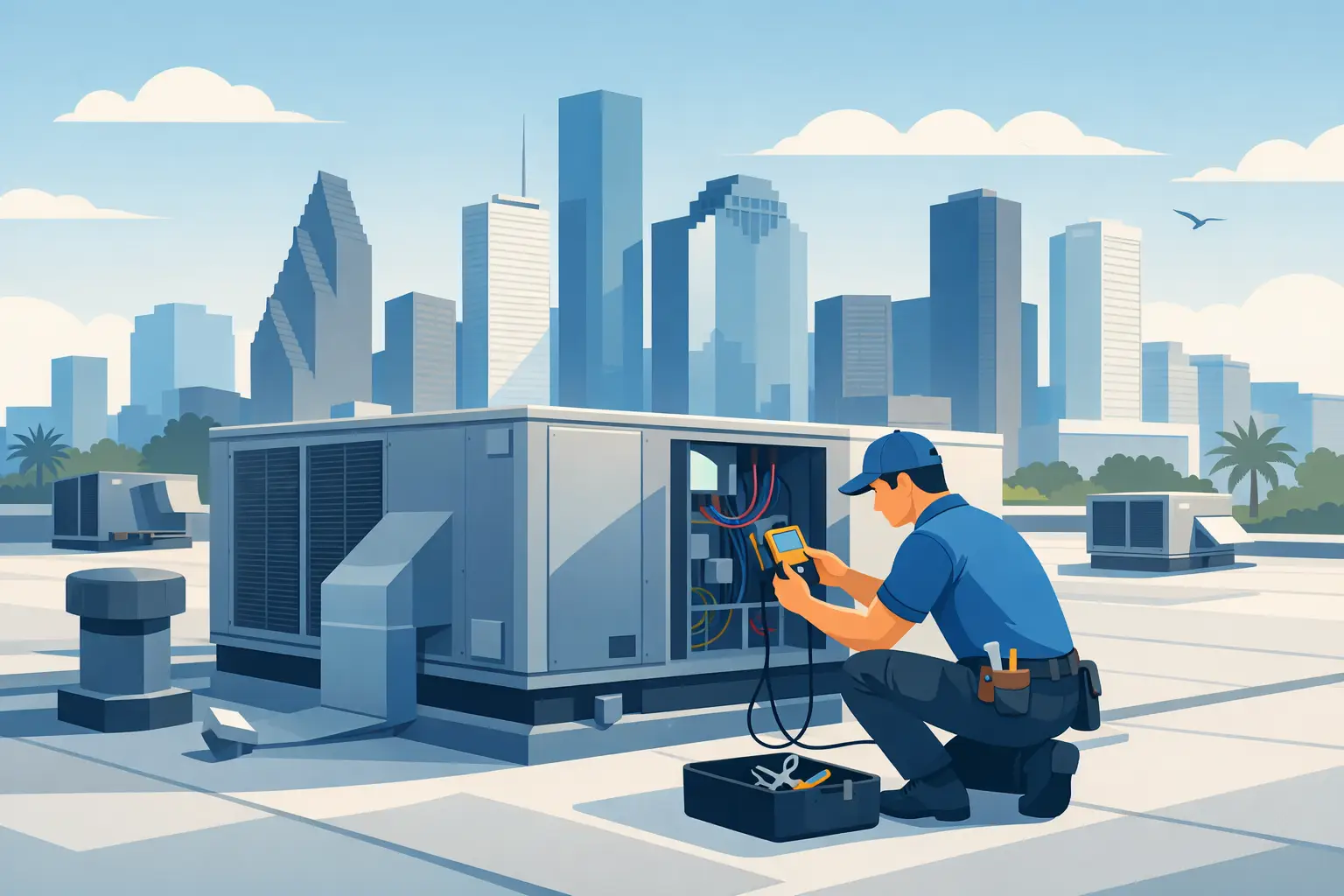

When your AC quits at 8 p.m. in a Houston heat wave, you are not wondering about theory. You want to know how fast someone can get there, what happens next, and whether your home or business will be cool again tonight. That is what HVAC emergency service response time really means in practice - not just a number on a website, but the gap between a breakdown and restored comfort.
In Houston, that gap matters more than it does in milder climates. Extreme summer temperatures, high humidity, and heavy seasonal demand can turn a routine equipment issue into an urgent problem fast. For homeowners, that can mean unsafe indoor temperatures, poor sleep, and stress for children, older adults, or pets. For businesses, it can mean lost productivity, unhappy customers, and downtime that cuts straight into revenue.
What HVAC emergency service response time actually includes
A lot of people hear the phrase HVAC emergency service response time and assume it means the full repair is finished within a certain window. Usually, it means the time between your first call and when a qualified technician arrives or begins active dispatch toward your property. That is an important distinction.
Arrival is not the same as resolution. Some emergency calls are fixed in one visit because the issue is straightforward - a failed capacitor, a tripped safety switch, a clogged drain line, or a thermostat problem. Others take longer because the system needs deeper diagnostics, specialty parts, or a replacement recommendation. A fast response still matters because it shortens the time before the problem is identified and the best next step is clear.
That is also why the best emergency service is not only about speed. It is about speed paired with readiness. A company can answer the phone quickly, but if the technician arrives without the tools, training, or common parts needed for Houston-area systems, you have not gained much.
Why response times vary from one emergency call to another
No honest HVAC contractor should promise the exact same arrival window for every emergency, because real service conditions change by the hour. Traffic, weather, technician availability, and the volume of incoming calls all affect dispatch timing.
Houston summers are the clearest example. During the first major heat spike of the season, emergency demand often surges all at once. Systems that were already under strain finally give out, and service calendars fill quickly. In those moments, even highly responsive companies have to prioritize based on severity, location, and active capacity.
The nature of the issue also matters. A total cooling loss in a home with vulnerable occupants may be treated differently than a system that is still running but not cooling evenly. A commercial no-cool situation in a small retail space may be urgent for business continuity, while a minor airflow complaint may be better suited for the next available standard appointment.
HVAC emergency service response time in Houston: what changes it most
If you are trying to set realistic expectations, a few factors usually have the biggest impact on HVAC emergency service response time in Houston.
The first is seasonality. Late spring through early fall is the busiest period for emergency AC work. The second is call timing. A midday request may move differently than an overnight call, especially if there is a surge in demand after business hours. The third is geography. A local contractor covering the Houston metro area can often move faster than a company dispatching from farther away, but routing still depends on where technicians are already assigned.
Equipment type plays a role too. A standard residential split system is usually quicker to diagnose than a more complex commercial setup, zoned system, or older unit with a hard-to-find part. And then there is the condition of the system itself. Equipment that has gone years without maintenance tends to produce layered problems, not just one clean failure.
What you can do to speed up emergency service
You cannot control traffic or the weather, but you can make your call easier to dispatch and easier to resolve. Clear information saves time.
When you contact an HVAC company, explain whether the system is completely down, blowing warm air, short cycling, leaking, making unusual noises, or tripping breakers. Share the property type, the unit age if you know it, and whether anyone in the home or building has health or safety concerns tied to indoor temperature. If you have already changed the thermostat settings, checked the filter, or reset a breaker, mention that too. It helps the dispatcher and technician prepare.
Access matters as well. Make sure someone can answer the phone, open gates, secure pets, and provide entry to the mechanical area. In commercial settings, letting the service team know about roof access, after-hours entry rules, or locked utility spaces can prevent delays after arrival.
If the system has a maintenance history, keep it handy. Model numbers, past repairs, and warranty details can help narrow the issue. None of this replaces professional diagnosis, but it can shorten the path to it.
Fast response is important, but triage matters too
There is a reason experienced HVAC companies do not treat every emergency exactly the same. Good dispatching is built on triage.
A home with no cooling during extreme heat is urgent. A business with rising indoor temperatures and heat-sensitive equipment may be urgent. A furnace issue during a cold snap can be urgent, especially for families with young children or older adults. On the other hand, a system that is operating with reduced efficiency may still need prompt service without requiring the same response priority as a total shutdown.
That can be frustrating if you are uncomfortable and waiting, but it is the right approach. Reliable service means making room for true emergencies while still moving quickly for everyone else. The goal is not just first-come, first-served. It is getting the most critical situations stabilized as fast as possible.
What happens after the technician arrives
Once the technician is on site, the first priority is verifying the failure and checking for immediate safety concerns. That may include electrical issues, overheating components, refrigerant concerns, frozen coils, blocked drainage, or airflow restrictions.
From there, you should expect a straightforward explanation of the problem and your options. Sometimes the answer is a same-visit repair. Sometimes the best move is a temporary measure to restore partial operation until a part arrives. And sometimes the technician finds that the emergency is a symptom of a larger issue - such as a compressor near failure, duct leakage that is overworking the system, or an aging unit that is no longer cost-effective to keep repairing.
That is where trust matters. The right service call should not leave you guessing whether you are hearing a sales pitch or a real recommendation. It should give you a clear diagnosis, a practical plan, and a realistic timeframe for repair or replacement.
How preventive service changes emergency response outcomes
The fastest emergency is the one you avoid. That may sound simple, but in Houston it is a serious cost and comfort issue.
Routine maintenance does not guarantee your system will never fail, especially during heavy cooling demand. It does reduce the odds of a surprise breakdown, and it often makes emergency visits easier to resolve. A maintained system gives technicians a cleaner starting point. Filters are more likely to be clear, electrical components less stressed, drain lines less likely to be clogged, and performance history easier to track.
It also gives property owners a chance to catch warning signs before they become urgent. Weak airflow, longer run times, uneven cooling, rising utility bills, and unusual noises are often early indicators. Waiting until the system stops completely usually means fewer options and more pressure to make a quick decision.
For homeowners and businesses that want fewer surprises, working with a local team that handles repairs, maintenance, system upgrades, and replacement planning can make a real difference. That continuity matters when time is tight. A contractor who already understands your equipment and service history can often move more efficiently than one starting from zero. For Houston-area customers who want that kind of support, Elisee HVAC and Home Services Houston provides emergency service alongside ongoing maintenance and full-system care.
The real question is not just how fast, but how prepared
When people ask about response time, they are usually asking something deeper: can I count on this company when my system fails at the worst possible moment? That is the standard that matters.
A good emergency HVAC provider responds quickly, communicates clearly, and shows up ready to diagnose the problem correctly. They do not promise impossible timelines just to win the call. They tell you what affects arrival, what can be done right away, and what comes next if the repair is more involved.
In Houston, where HVAC problems are rarely minor for long, that kind of reliability is not a bonus. It is the baseline. If your system is struggling now, the best time to think about emergency response is before the next full shutdown. A quick conversation today can save hours of uncertainty when the temperature inside starts climbing.