Your AC is running, but the house keeps getting warmer. Maybe airflow from the vents has dropped off, or you noticed ice on the indoor unit or refrigerant line. In Houston, that usually means one thing - your system needs attention fast.
A frozen evaporator coil is never just about ice. It is a sign that airflow, refrigerant balance, or system operation is off. If you wait too long, you can end up with water damage, a stressed compressor, and a cooling system that quits when you need it most. Here is how to troubleshoot frozen evaporator coil problems safely and figure out whether this is a simple fix or a service call.
What a frozen evaporator coil actually means
The evaporator coil sits inside your indoor unit and absorbs heat from the air in your home or building. For that process to work correctly, the coil needs the right combination of warm airflow, proper refrigerant pressure, and clean system components.
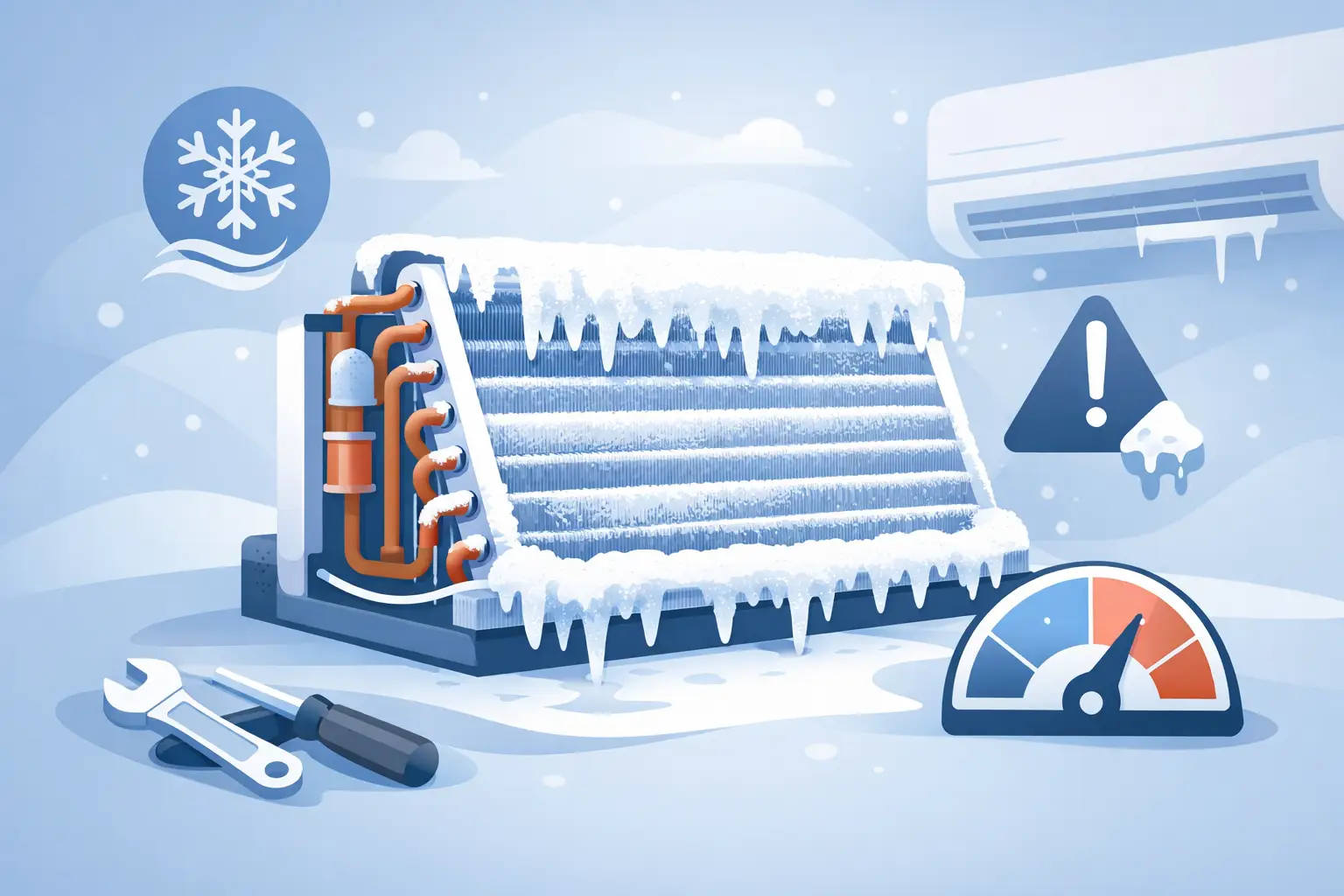
When something interrupts that balance, the coil temperature can drop too low. Moisture in the air then freezes on the coil instead of draining away. At first, it may be a thin layer of frost. If the system keeps running, that frost can build into solid ice and block airflow even more, which makes the problem worse.
That is why frozen coil issues tend to snowball. What starts as a dirty filter or low refrigerant charge can quickly turn into a no-cooling call.
How to troubleshoot frozen evaporator coil safely
Before you do anything else, turn the cooling mode off. If you keep the AC running while the coil is frozen, you can put extra strain on the system and make diagnosis harder. Set the thermostat from cool to off, or switch the fan to on if you want to help thaw the ice faster.
Give the system time to thaw. Depending on how much ice has formed, this can take several hours. You may notice water around the indoor unit as the ice melts, so check that the area drains properly and keep anything water-sensitive away from the unit.
Once the ice is gone, start with the simplest cause.
Check the air filter first
A clogged filter is one of the most common reasons an evaporator coil freezes. If the filter is packed with dust, pet hair, or construction debris, the system cannot pull enough air across the coil. Less warm air moving over the coil means coil temperature drops too far.
Remove the filter and inspect it in good light. If it looks dirty, replace it. If you use a reusable filter, clean it fully and let it dry before reinstalling. Make sure the replacement filter is the correct size and installed facing the right direction.
A higher-priced filter is not always better. Some filters are so restrictive that they reduce airflow in systems not designed for them. If frozen coils have happened before, filter choice is worth reviewing with a technician.
Look at supply and return vents
Closed vents, blocked returns, or furniture pushed over grilles can reduce airflow enough to contribute to freezing. Walk through the property and make sure supply vents are open and return grilles are not obstructed by rugs, boxes, or furnishings.
This matters more than many people realize. Homeowners sometimes close vents in unused rooms hoping to save energy, but that can throw off system airflow. In smaller commercial spaces, inventory or office equipment stacked near returns can create the same issue.
Inspect the blower area if accessible
If your indoor unit has an accessible panel and you are comfortable checking it, look for obvious dirt buildup around the blower compartment. A dirty blower wheel can reduce the amount of air moving through the system even if the filter has been changed.
Do not take apart sealed components or handle wiring. At this point, you are only looking for visible issues. If the blower looks heavily coated or the fan does not seem to be operating normally when the system runs again, that is a repair visit.
Other common causes after airflow problems
If the filter is clean, vents are open, and the coil froze anyway, the issue may be more technical.
Low refrigerant
Low refrigerant is a very common cause of frozen coils. When refrigerant levels drop because of a leak, system pressure changes and the evaporator coil can get too cold. The system may still run for a while, but cooling performance drops and ice forms.
This is not a DIY fix. Refrigerant does not get "used up" like fuel. If levels are low, there is usually a leak that needs to be found and repaired before the charge is corrected. Simply adding refrigerant without addressing the leak is usually temporary and can cost more in the long run.
Signs that point toward low refrigerant include hissing near the indoor or outdoor unit, weak cooling, longer run times, and ice returning soon after thawing.
Dirty evaporator coil
Even with a clean filter, the evaporator coil itself can collect dirt over time. That layer of buildup acts like insulation and interferes with heat transfer and airflow. The result can be the same - the coil gets too cold and starts icing over.
Coil cleaning is one of those jobs that depends on the system layout. In some units, the coil is easy to inspect. In others, it is buried inside a cabinet and should be handled by a technician to avoid damaging fins or creating drainage problems.
Blower motor or fan problems
If the blower motor is weak, failing, or not running at the correct speed, the system may not move enough air across the coil. You might hear unusual sounds, notice inconsistent airflow from room to room, or find that the outdoor unit is running while indoor airflow feels minimal.
A blower issue can look similar to a filter problem from the outside, but the fix is very different. That is why recurring freezing after a fresh filter change should not be ignored.
Thermostat or operating issues
Sometimes the AC simply runs too long under the wrong conditions. A malfunctioning thermostat, a fan setting issue, or trying to cool a space aggressively when outdoor conditions are mild can all contribute in certain setups.
This is more of an it-depends situation. In Houston, freezing is usually tied to airflow or refrigerant problems first. Still, control issues can add to the problem, especially in systems with zoning, variable-speed equipment, or older thermostat wiring.
What to do after the coil thaws
Once the system has completely thawed and you have replaced the filter and checked vents, turn the thermostat back to cool and monitor performance. Give it 15 to 30 minutes.
If airflow returns to normal and the system cools steadily, you may have solved a basic airflow issue. Keep an eye on it over the next day or two. If it freezes again, there is likely a deeper cause that needs professional diagnosis.
If the system starts up but cooling is still weak, the refrigerant line begins frosting again, or you hear unusual noises, shut it down and schedule service. Running a system in that condition can lead to bigger repairs.
When a frozen coil is an emergency
Not every frozen evaporator coil requires after-hours service, but some situations should move to the top of the list.
If you have no cooling during extreme heat, if the unit is leaking water into finished areas, or if the space is a business that depends on reliable indoor conditions, fast response matters. The same is true if the system repeatedly freezes after you have already changed the filter and cleared vents. That usually means the problem is not superficial.
For homes and businesses in the Houston area, Elisee HVAC and Home Services Houston handles urgent AC issues with the same focus customers expect from a local contractor - quick diagnosis, clear recommendations, and practical repair options.
How to keep it from happening again
Frozen coils often grow out of preventable issues. Regular filter changes help, but they are only one part of the picture. Seasonal maintenance gives a technician a chance to check refrigerant levels, inspect the blower, clean components, test drainage, and catch airflow problems before they turn into a breakdown.
That is especially valuable in Houston, where AC systems run hard for long stretches. Heavy usage exposes small weaknesses faster. A system that seems mostly fine in spring can freeze up in the middle of summer when demand peaks.
If you manage rental property or a small commercial space, prevention matters even more. One neglected unit can affect tenants, staff comfort, customer experience, and operating costs all at once.
The bottom line on a frozen evaporator coil
If you are trying to figure out how to troubleshoot frozen evaporator coil problems, start with safety and airflow. Turn the system off, let it thaw, check the filter, and make sure vents and returns are open. If the issue comes back, the cause is usually something that needs a trained HVAC technician, not guesswork.
The good news is that frozen coils usually give warning signs before they become a full system failure. Catching them early is the difference between a manageable repair and losing cooling on the hottest day of the week.