
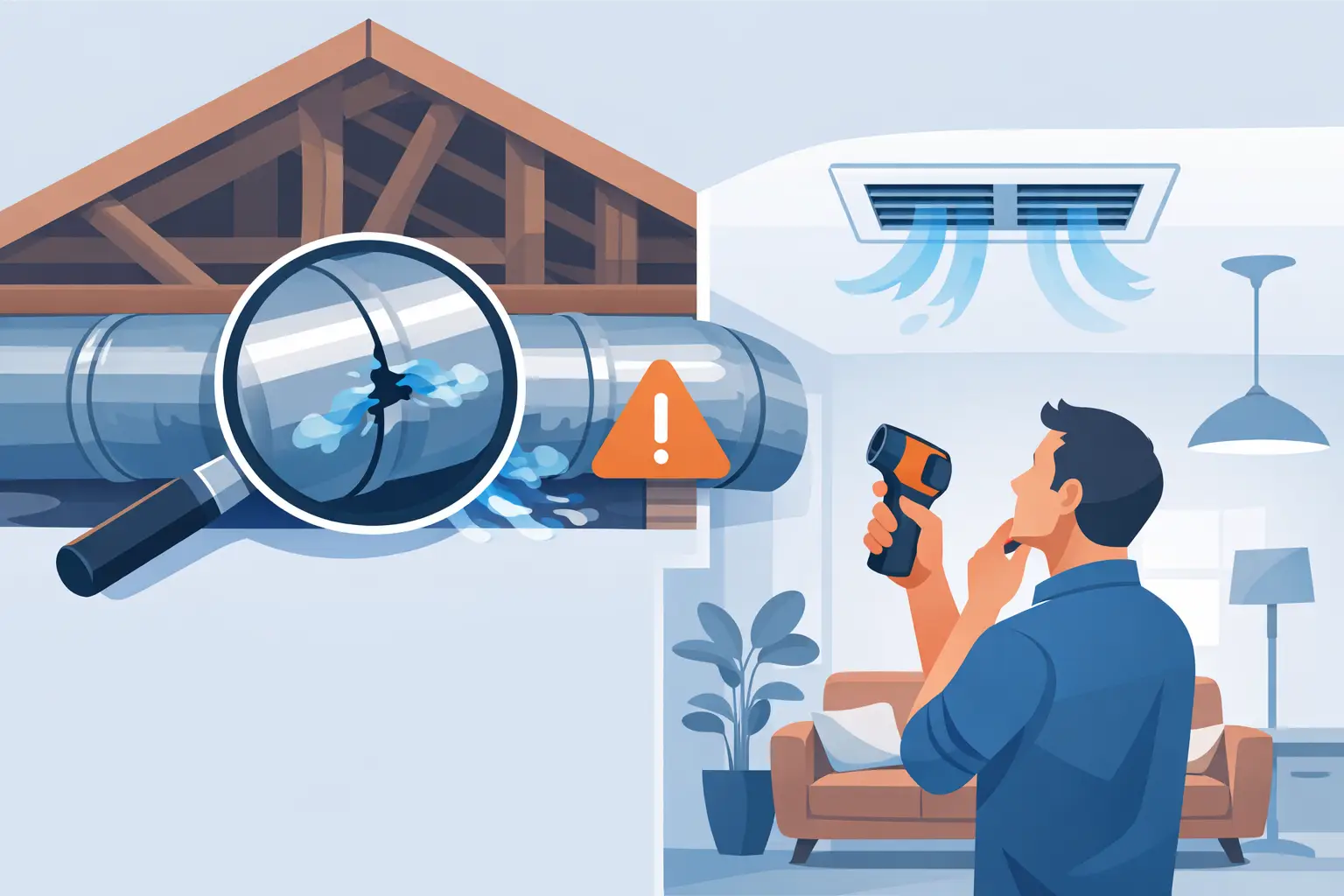
If one room in your home stays muggy while another gets ice cold, your AC may not be the problem. Hidden duct leaks can waste cooled air before it ever reaches the rooms you paid to keep comfortable. In Houston, where your system works hard for much of the year, knowing how to spot duct leaks can help you catch efficiency problems early and avoid bigger repairs later.
Ductwork is easy to ignore because most of it sits behind walls, in attics, or above ceilings. But when those ducts develop gaps, loose connections, or damaged seals, your HVAC system has to work longer to deliver the same result. That means higher utility bills, uneven temperatures, more wear on equipment, and a harder time keeping your space comfortable during peak heat.
The good news is that duct leaks often leave clues. You may not be able to see every damaged section, but you can usually notice the symptoms.
Why duct leaks matter more than most people think
A leaking duct system does more than waste air. It changes how your entire HVAC system performs. Conditioned air can escape into an attic, crawl space, garage, or wall cavity instead of making it into your living or working space. In some cases, the system also pulls in hot, dusty, or humid air from those same areas.
That matters in Southeast Texas. When hot attic air mixes into your duct system, your equipment has to fight both heat and humidity. Comfort drops, run times increase, and indoor air quality can suffer. For business owners, that can also mean uncomfortable tenants, employees, or customers. For homeowners, it often shows up as stubborn hot spots and monthly bills that feel out of line with normal usage.
How to spot duct leaks in everyday use
The first signs are usually performance issues, not visible damage. If your system seems to run normally but comfort keeps slipping, the ductwork deserves a closer look.
Uneven temperatures between rooms
One of the clearest red flags is a room that never seems to match the thermostat setting. If bedrooms upstairs stay warmer than the rest of the house, or a back office in your building always feels stuffy, leaking ducts may be allowing air to escape before it gets there.
This can also happen with poor duct design or restricted airflow, so it is not always a leak. But if the problem developed over time instead of being there from day one, leakage becomes more likely.
Weak airflow from certain vents
Stand near your supply vents while the system is running. If one vent pushes strong air and another barely moves it, that difference can point to a disconnected section, a torn flexible duct, or leaking joints along the line.
Weak airflow does not automatically mean the blower is failing. Sometimes the equipment is fine, but the air is getting lost on the way.
Higher energy bills without a clear reason
When utility costs rise and your thermostat habits have not changed much, duct leakage is worth considering. Your HVAC system may be running longer simply to make up for air that never reaches the rooms it is supposed to cool or heat.
This sign is especially useful when paired with comfort complaints. A bigger bill and worse comfort together usually point to system inefficiency somewhere, and ducts are a common source.
Excess dust or musty smells
Leaky return ducts can pull dust, insulation particles, and stale air into the system from attics or wall spaces. You may notice more dust settling around the home, or a musty odor when the AC starts up.
That does not always mean the ducts themselves are dirty. It can mean they are pulling air from places they were never meant to draw from.
A simple visual check you can do safely
If you can access exposed ductwork in an attic, garage, utility area, or above a drop ceiling, a basic inspection can reveal obvious issues. You do not need to take anything apart to learn a lot.
Look for disconnected sections, crushed flexible ducts, torn insulation, loose joints, or old tape peeling away from seams. Any place where two duct sections meet is a common failure point, especially if the original seal has dried out or separated.
Pay close attention to dark streaks near joints. Those marks can indicate air movement and dust accumulation around a leak. If you see insulation around the duct looking damp or damaged, that may also suggest conditioned air is escaping and causing condensation problems.
Use caution in attic spaces, especially during hot weather. If conditions are unsafe or visibility is poor, it is better to stop and schedule a professional inspection.
How to spot duct leaks with a hands-on test
A practical way to check for leaks is to feel for escaping air while the system is running. Place your hand near accessible duct joints and connections. If you feel cool air blowing out around a seam, there is a leak.
You can also hold a small strip of tissue near suspected problem spots. If the tissue flutters noticeably, that airflow may be coming from a gap in the duct seal. This method works best on exposed sections and larger leaks. Smaller leaks may still be present even if you do not detect them this way.
For return ducts, the effect can be reversed. Instead of blowing air out, a leak may pull nearby air inward. Tissue can still help show that movement.
Signs around vents and ceilings
Sometimes the clues show up inside the room instead of near the main duct lines. Check supply vents for weak delivery, extra dust buildup, or visible gaps where the vent boot meets the ceiling, wall, or floor.
If you notice staining around vent registers, that can point to condensation or air escaping into surrounding materials. In commercial settings, ceiling tiles near vents may show dirt patterns or moisture marks when duct leakage has been present for a while.
These issues are not always major duct failures. Sometimes the leak is at the boot connection or register seal. Even so, small leaks can add up across the system.
When the problem may be something else
Knowing how to spot duct leaks also means knowing when not to blame the ductwork alone. A clogged filter, closed dampers, dirty evaporator coil, undersized system, failing blower motor, or poor insulation can create similar comfort problems.
That is why context matters. If airflow is weak everywhere, the issue may be with the equipment itself. If only one branch of the system is affected, duct leakage or disconnection becomes more likely. If your building has always had one troublesome room, the cause may be design-related rather than a newly formed leak.
This is where professional diagnosis saves time. The goal is not just to find symptoms. It is to identify the source accurately so repairs solve the actual problem.
When to call for professional duct testing
If you suspect leaks but cannot confirm them visually, a professional inspection is the next step. HVAC technicians can evaluate airflow, inspect accessible duct runs, and test for leakage more precisely than a homeowner or facility manager can with a quick walkthrough.
That matters when the duct system runs through hard-to-reach areas, when comfort issues affect multiple rooms, or when your energy bills keep climbing without a clear answer. In those cases, guessing can get expensive. A proper diagnosis helps you avoid replacing parts that are still working while the real issue remains hidden in the ductwork.
For Houston-area properties, this is especially important before summer demand peaks. A system already losing air in spring can struggle much more once outdoor temperatures climb and humidity sets in.
What happens after duct leaks are found
Most duct leaks can be repaired by sealing joints, reconnecting separated sections, replacing damaged flexible ducts, or improving support where sagging has stressed the line. In older systems, several small failures may make sealing and partial replacement the smarter option.
The right fix depends on the age of the ductwork, where the damage is located, and how widespread the leakage has become. A quick patch may help in one area, but a larger repair may be the better long-term choice if the system has multiple weak points.
If you need expert help, Elisee HVAC and Home Services Houston can inspect ductwork, identify airflow losses, and recommend the repair or sealing work that makes the most sense for your home or business.
A comfortable building should not feel like a mystery. If your rooms cool unevenly, your bills keep climbing, or your vents seem weaker than they used to, those are signs worth taking seriously before your HVAC system spends another season working harder than it should.