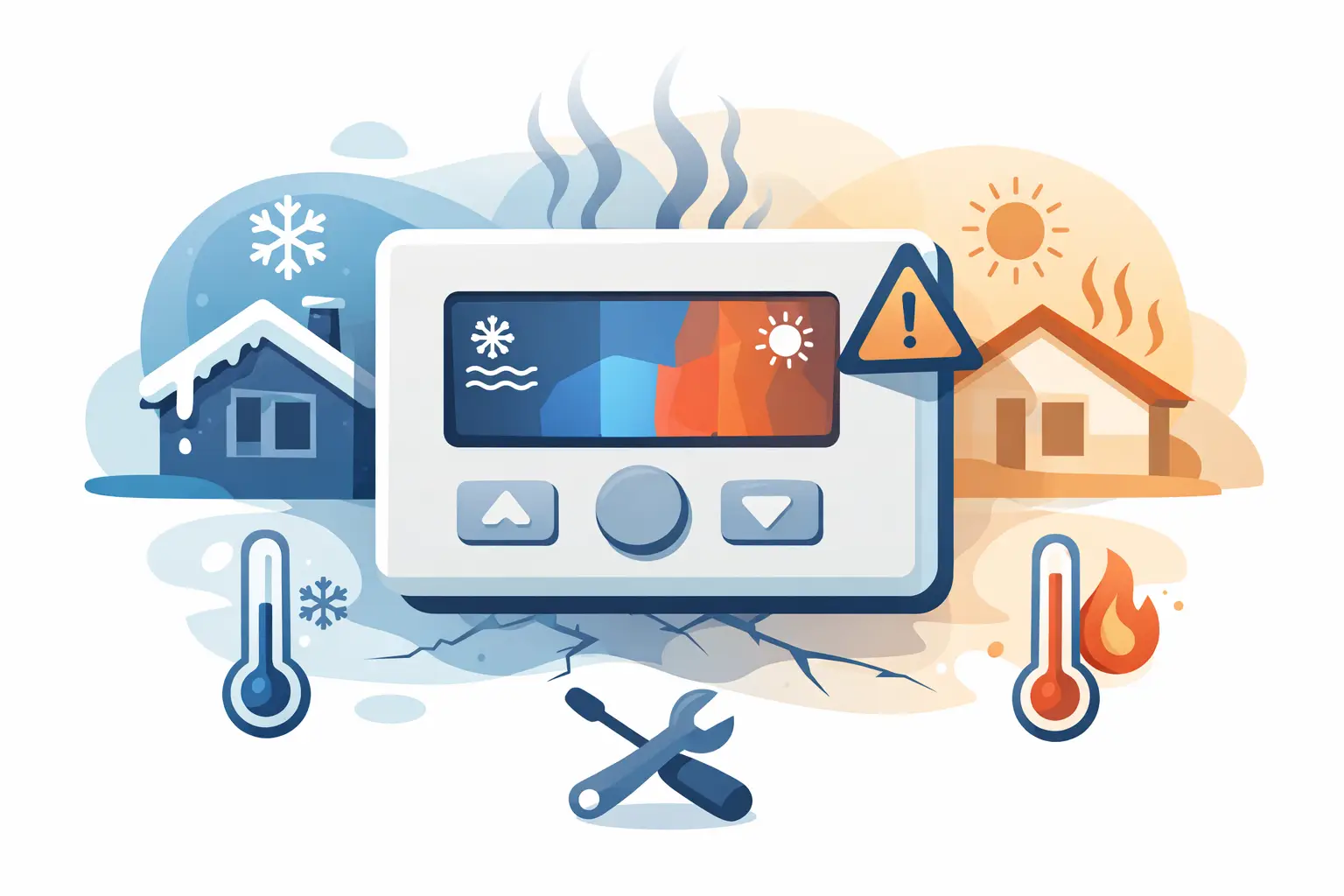
When your AC keeps running even after the house feels cool, or your heater refuses to kick on during a chilly morning, the problem is not always the full HVAC system. Sometimes the issue starts with the control point on the wall. If you are wondering how to spot a failing thermostat, the key is to pay attention to small changes in comfort, system timing, and temperature accuracy before they turn into a full breakdown.
In the Houston area, that matters more than most places. A thermostat that misreads the temperature by even a few degrees can leave a home muggy, push utility bills up, and make your air conditioner work harder than it should. For a business, it can create comfort complaints fast, especially during long stretches of extreme heat.
How to spot a failing thermostat before it causes bigger problems
A failing thermostat usually does not quit all at once. More often, it starts sending mixed signals to the HVAC system. You may notice rooms feel warmer than the setting on the screen, or the system starts and stops at odd times. Those changes can look like an AC problem, a furnace issue, or even poor airflow, which is why thermostat trouble gets missed.
One of the clearest warning signs is a mismatch between the set temperature and how the space actually feels. If the thermostat says 72 but the house feels closer to 78, something is off. That does not always mean the thermostat is defective, since bad insulation, dirty filters, or duct leaks can also affect comfort. Still, when the reading itself seems unreliable, the thermostat deserves a closer look.
Another common sign is short cycling. That happens when the system turns on and off too often without completing a normal cooling or heating cycle. In some cases, the equipment is the problem. In others, the thermostat is reading indoor conditions incorrectly or losing communication with the unit.
You may also see the opposite problem. The system runs too long, overshoots the target temperature, or never shuts off when it should. That can point to a stuck relay, wiring issue, or thermostat sensor problem. Either way, the result is the same - extra wear on your HVAC equipment and higher energy use.
Common signs your thermostat may be failing
If you are trying to separate a thermostat problem from a larger HVAC issue, look at the pattern of symptoms. A thermostat often reveals itself through inconsistent control rather than loud mechanical failure.
An unresponsive display is one of the first things people notice. If the screen is blank, fading, or difficult to read, you could be dealing with dead batteries, a tripped breaker, or internal failure. Replacing batteries is an easy first step if your model uses them. If the display still does not respond, the issue may be deeper than a simple power loss.
Frequent temperature swings are another red flag. Your home should not feel like it is bouncing between too hot and too cold when the thermostat is set to hold a steady temperature. If it does, the thermostat may be misreading the room or cycling the equipment incorrectly.
Delayed response is also worth noticing. When you adjust the thermostat, the HVAC system should react within a reasonable time. If you raise or lower the setting and nothing happens, or the response is inconsistent, there may be a problem with calibration, wiring, or the unit itself.
Listen for unusual clicking from the thermostat as well. A soft click when the system starts is normal on some models. Repeated clicking without the system turning on, or constant clicking during operation, is not.
What causes a thermostat to fail?
Thermostats wear out for a few different reasons, and age is only part of it. Dust buildup inside the device can interfere with sensors and internal contacts, especially in older mechanical thermostats. Loose wiring can interrupt the signal between the thermostat and the HVAC equipment. Battery issues can cause intermittent shutdowns on digital models.
Placement matters too. If the thermostat is installed near a sunny window, supply vent, exterior door, or heat-producing appliance, it may get false readings. In that case, the thermostat may not actually be failing, but it will behave like it is because it is sensing the wrong temperature.
Older thermostats can also lose calibration over time. That means the number on the display no longer matches the actual room temperature. A few degrees may not sound serious, but in Houston heat, that gap can be enough to keep your AC running much longer than necessary.
Smart thermostats add another layer. They can improve efficiency, but they also depend on stable power, proper setup, and reliable communication with the HVAC system. If a smart thermostat starts disconnecting from Wi-Fi or losing programmed settings, the problem could be software related, electrical, or tied to the HVAC control wiring.
How to check whether the thermostat is the problem
Before assuming you need a full HVAC repair, there are a few practical checks you can make. Start with the basics. Make sure the thermostat is set to the correct mode, either cool or heat, and that the temperature setting is actually calling for the system to run. It sounds obvious, but scheduling errors and accidental setting changes happen all the time.
If your thermostat uses batteries, replace them with fresh ones. Then check your breaker panel to make sure the HVAC system and thermostat have power. A blank thermostat can sometimes be the result of an electrical issue rather than a failed device.
Next, compare the thermostat reading to a separate indoor thermometer placed nearby. If there is a meaningful difference, the thermostat may be out of calibration or sensing the room incorrectly. This test is not perfect, but it can help confirm your suspicion.
You should also pay attention to whether the problem happens all the time or only under certain conditions. If cooling issues show up only in the afternoon, for example, thermostat placement or sun exposure may be affecting the reading. If the problem is constant, failure is more likely.
For business owners and property managers, it is smart to act early. Waiting too long can turn a control issue into equipment strain, tenant complaints, or lost productivity in uncomfortable spaces.
When thermostat symptoms point to a bigger HVAC issue
This is where it gets a little nuanced. A thermostat can look like the problem when the real issue is low refrigerant, a dirty evaporator coil, a failing blower motor, or blocked airflow. The reverse is also true. A thermostat can trigger symptoms that make it seem like the air conditioner or furnace is failing.
That is why diagnosis matters. If the thermostat has power, appears accurate, and is sending commands properly, the trouble may be elsewhere in the system. If the thermostat is clearly not responding, reading temperatures wrong, or cycling the unit erratically, replacing or repairing it may solve the issue quickly.
In many homes and commercial spaces, both issues are present at once. An aging thermostat paired with an overdue maintenance schedule can create overlapping symptoms. That is one reason seasonal service is so valuable. It helps catch control problems before they lead to emergency calls during peak demand.
When to call for professional help
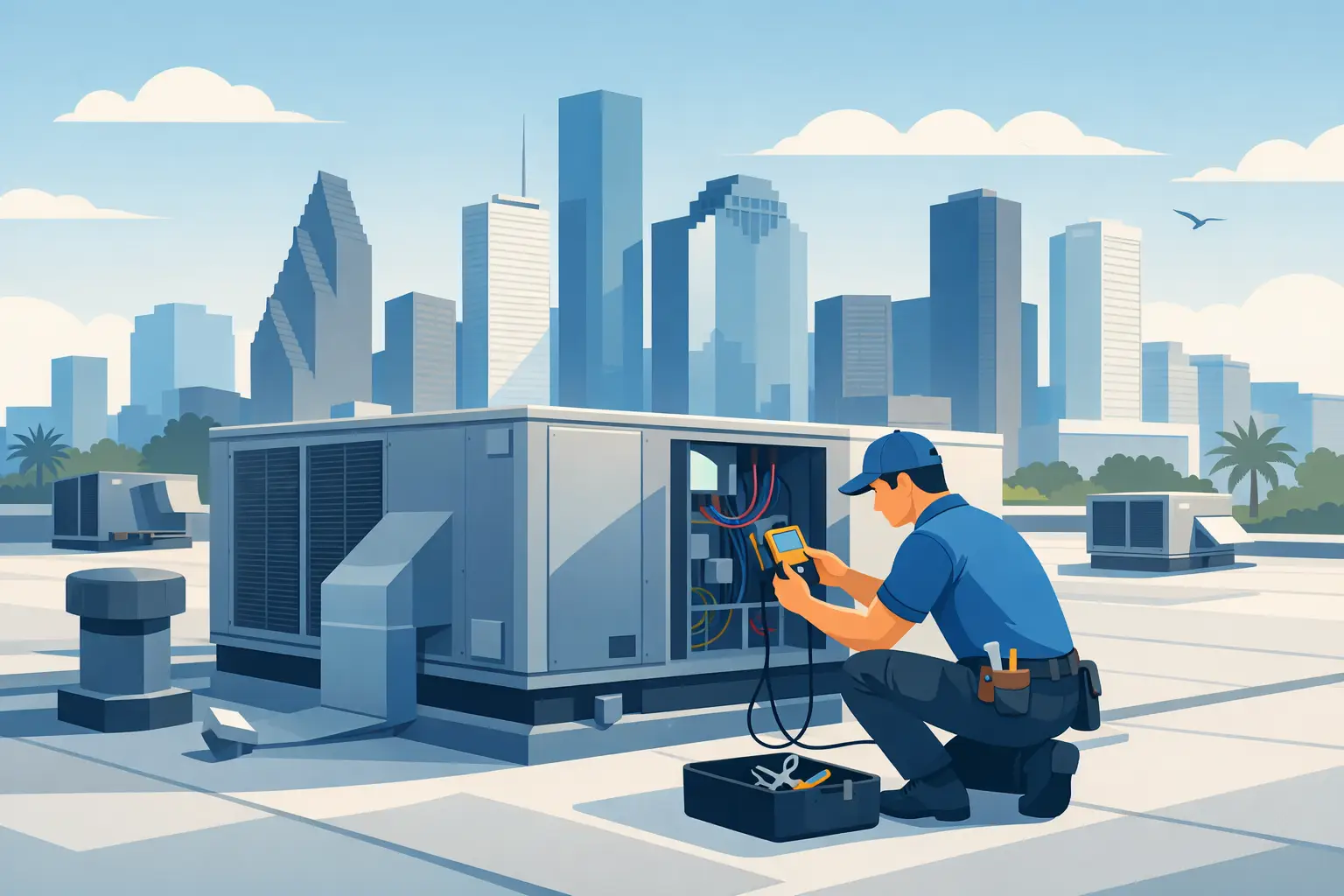
If you have changed batteries, checked settings, confirmed power, and the system still is not behaving normally, it is time to bring in an HVAC technician. Thermostat wiring, compatibility, calibration, and system communication all need to be checked the right way. Guessing can lead to the wrong replacement or leave a larger issue unresolved.
This is especially true if your system is short cycling, not turning on at all, or running nonstop in high heat. Those are not symptoms to ignore in the Houston climate. Quick service can protect comfort and prevent extra strain on expensive equipment.
A technician can determine whether the thermostat can be repaired, needs to be replaced, or is simply exposing another HVAC issue. If replacement makes sense, they can also help you decide whether a standard programmable model or smart thermostat is the better fit for your home or business. Elisee HVAC and Home Services Houston often sees situations where a simple thermostat issue is mistaken for major equipment failure, and a proper diagnosis saves time, money, and unnecessary stress.
How to prevent thermostat problems
The best way to avoid thermostat failure is to treat it as part of your full HVAC system, not a standalone gadget. Regular maintenance helps identify wiring problems, calibration issues, and performance drift before they affect comfort. Keeping the device clean and making sure it is not exposed to direct heat or drafts also helps.
If your thermostat is older and your system has become less consistent over time, replacement may be worth considering even before it fails completely. The trade-off is simple. Replacing a worn thermostat costs money upfront, but waiting can lead to poor comfort, wasted energy, and avoidable system wear.
A thermostat should make your home or building feel predictable. If it no longer does that, trust what you are seeing. Small control issues have a way of turning into bigger comfort problems when the weather is least forgiving.