
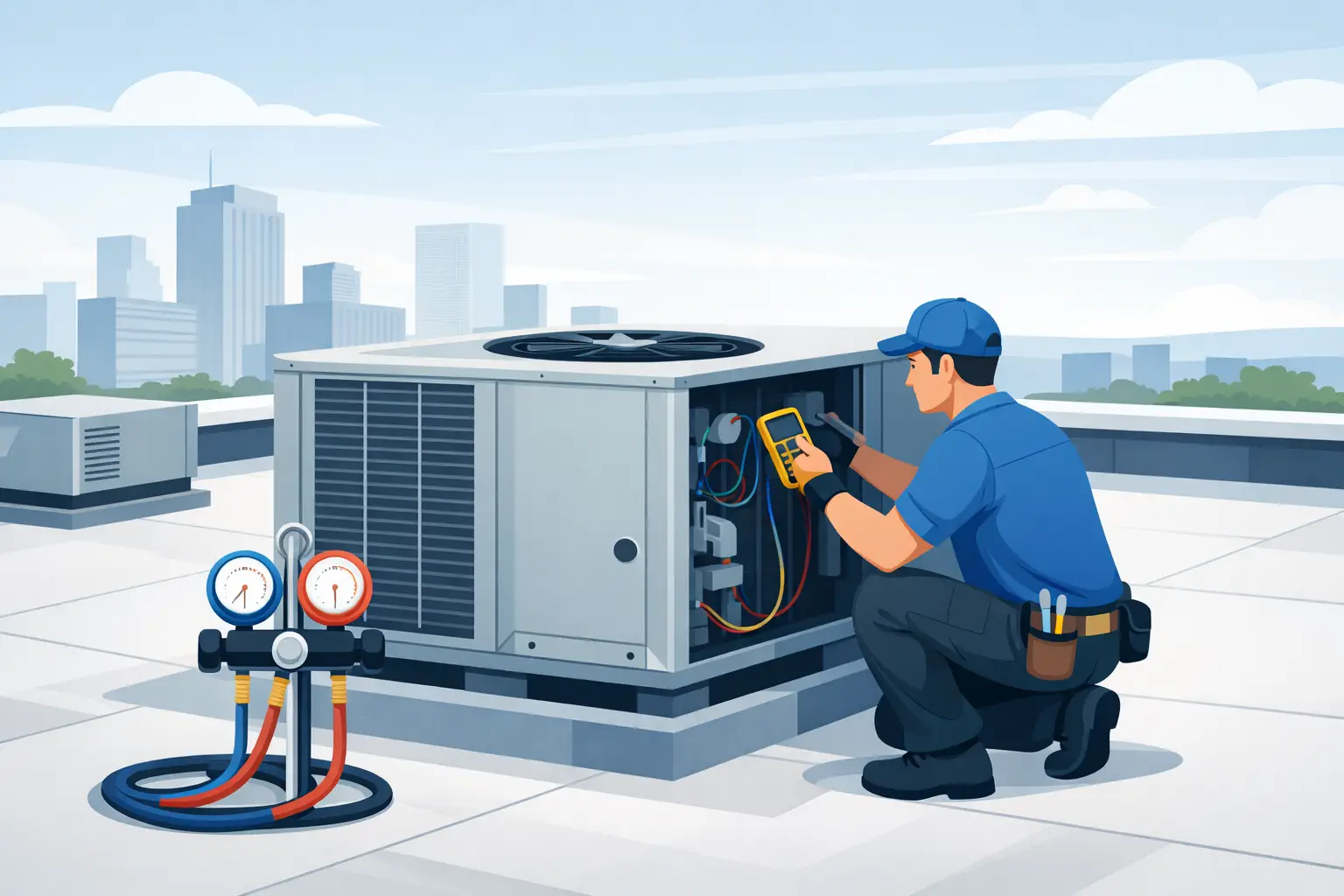
If your rooftop unit quits on a July afternoon in Houston, the problem rarely started that day. In most cases, it built up over weeks or months through dirty coils, clogged drains, loose electrical parts, or airflow problems that were easy to miss from the ground. That is why knowing how to maintain commercial rooftop unit equipment matters for any business that depends on steady cooling, controlled costs, and fewer emergency calls.
For small and mid-sized commercial properties, rooftop units do a lot of work with very little attention. They sit in brutal heat, handle long run times, and often serve offices, retail spaces, churches, warehouses, and mixed-use buildings where comfort complaints turn into business problems fast. Good maintenance is not about checking a box. It is about protecting uptime.
Why rooftop unit maintenance matters more in Houston
Houston weather is hard on commercial HVAC. Long cooling seasons, high humidity, heavy rain, and airborne debris all put pressure on rooftop equipment. Even a well-installed unit can lose efficiency faster than many owners expect if filters are not changed on time or condensate drainage is not kept clear.
The cost of neglect usually shows up in three places. First, utility bills climb because the system has to work harder to move air and reject heat. Second, comfort drops off, often unevenly, with hot spots, weak airflow, or humidity issues inside the building. Third, the chance of a no-cool breakdown goes up at the exact time your unit is under the most strain.
For property managers and business owners, the trade-off is simple. Planned maintenance costs less than lost operating time, urgent repairs, or premature replacement.
How to maintain commercial rooftop unit performance year-round
A commercial rooftop unit should be maintained on a schedule, not only when something seems off. In most Houston applications, that means at least twice a year, with added attention before peak cooling season. Some properties with heavy occupancy, dusty environments, or long operating hours may need more frequent service.
The basic goal is to keep airflow, refrigeration, drainage, and electrical components in proper working order. Those are the systems that most directly affect efficiency and reliability.
Start with air filters and airflow
If there is one maintenance item that gets overlooked the most, it is filter condition. Dirty filters reduce airflow, strain the blower, and can throw off system performance across the board. In some cases, restricted airflow can contribute to coil freezing, poor dehumidification, and unnecessary wear on compressors and motors.
Filter replacement frequency depends on the building. A quiet office may have a different schedule than a restaurant, retail store, or light industrial space. The right approach is to inspect filters regularly and replace them based on actual loading, not guesswork. Waiting until occupants complain is too late.
Airflow also depends on clean supply and return paths, properly operating blower assemblies, and dampers that open and close as intended. A unit can be running constantly and still underperform if the air side is neglected.
Keep condenser and evaporator coils clean
Coils are where efficiency is won or lost. The evaporator coil absorbs heat from indoor air, and the condenser coil rejects that heat outside. When either one is dirty, heat transfer suffers. The system runs longer, energy use rises, and component stress increases.
On rooftop units, condenser coils are especially exposed to dirt, cottonwood, grease, and general outdoor buildup. In a city like Houston, where cooling demand is high for much of the year, that buildup matters quickly. Cleaning coils is not just cosmetic maintenance. It directly affects operating pressures, system capacity, and equipment life.
That said, coil cleaning needs to be done correctly. Aggressive washing or the wrong cleaner can damage fins or create more problems than it solves. This is one reason routine professional service is worth scheduling instead of relying on occasional visual checks alone.
Inspect belts, motors, and moving parts
Not every rooftop unit has the same blower configuration, but for units with belts and pulleys, wear is expected over time. Belts can loosen, crack, or slip, which reduces airflow and places extra strain on motors. Bearings and moving assemblies can also wear down gradually, often before there is a complete failure.
During maintenance, these parts should be inspected for alignment, tension, wear, and unusual vibration. Odd noise from a rooftop unit is never something to ignore. What sounds minor at first can become a failed motor or damaged blower wheel if left alone.
Check drains and manage moisture
In Houston, moisture control is not optional. A rooftop unit pulls significant humidity from the air, and that water has to drain properly. If the condensate line or drain pan becomes clogged, water can back up, damage nearby components, or create indoor leaks.
Standing water is also a warning sign for biological growth and indoor air quality concerns. A maintenance visit should include clearing drain lines, inspecting pans, and confirming that the system is removing moisture as intended. This matters for comfort as much as cooling. A building that feels cold but clammy usually has an HVAC issue worth addressing.
Electrical checks are a big part of how to maintain commercial rooftop unit reliability
Many commercial HVAC failures begin with electrical wear. Contactors pit over time, capacitors weaken, terminals loosen, and wiring connections degrade under heat and vibration. These issues are easy to miss without opening the cabinet and testing components under real operating conditions.
A proper rooftop maintenance inspection should include checking voltage and amperage, tightening electrical connections where appropriate, inspecting contactors and relays, and testing capacitors and safety controls. The point is not to replace parts unnecessarily. It is to catch weakening components before they cause an after-hours shutdown.
For businesses that cannot afford downtime, this part of maintenance has real value. Electrical failures tend to happen under load, and in Houston that usually means the hottest day, the busiest hour, or both.
Refrigerant charge and controls should never be guesswork
Low refrigerant does not just mean less cooling. It can point to a leak, poor installation history, or a system that has been operating outside design conditions. Overcharged systems can also run poorly. Either way, refrigerant charge should be checked through proper testing, not assumptions.
Controls matter just as much. Thermostats, economizers, sensors, and staging controls all influence how a rooftop unit performs. If they are out of calibration or not functioning correctly, you may see short cycling, uneven cooling, or excess runtime even when the mechanical parts are still intact.
This is where experienced service helps. Two buildings with the same model unit can need different adjustments based on occupancy, duct layout, operating hours, and internal heat load.
What building owners can watch between service visits
You do not need to perform full HVAC maintenance yourself to catch early warning signs. A few routine observations can help you spot trouble before it becomes a disruption. If utility costs jump without a clear reason, if certain rooms stop cooling evenly, if the unit starts making new noises, or if water appears where it should not, those are all signals to schedule service.
It also helps to keep the roof area around the unit clear and accessible. Debris, blocked panels, and ignored curb conditions make inspections harder and can contribute to preventable problems.
Still, there is a limit to what should be handled in-house. Opening electrical compartments, testing refrigerant, and servicing internal components should be left to qualified technicians. Commercial rooftop equipment is too important, and too expensive, for trial-and-error maintenance.
Preventive maintenance works best with a service plan
For most businesses, the smartest approach is a scheduled maintenance program. That creates consistency, documents equipment condition, and reduces the odds that filter changes, coil cleaning, electrical checks, or seasonal inspections get delayed.
A service plan also makes budgeting easier. Instead of reacting to breakdowns one at a time, you get a more predictable path for repairs, performance adjustments, and long-term replacement planning. That is especially useful for multi-unit properties or businesses with limited tolerance for comfort complaints.
At Elisee HVAC and Home Services Houston, we see the same pattern again and again: the rooftop units that last longer and cause fewer disruptions are the ones that get regular attention before the heat puts them to the test.
If you are responsible for a commercial property, the best time to address rooftop maintenance is before your system starts asking for help. A reliable unit is rarely the result of luck. It is the result of staying ahead of wear, catching small issues early, and giving your equipment the support it needs to keep your business comfortable and running.