
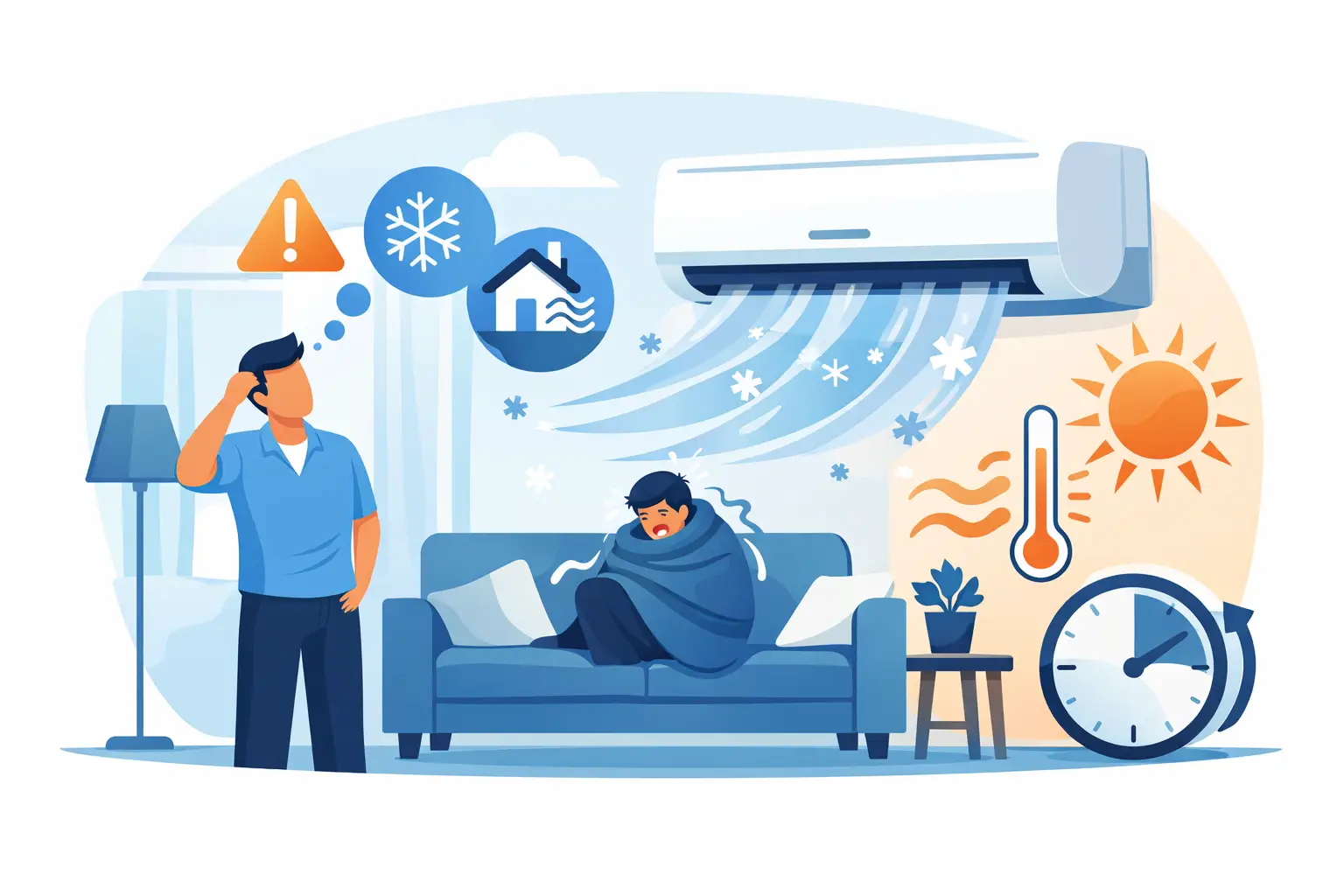
Your AC turns on, blasts cold air fast, and shuts off before the house ever feels truly comfortable. In Houston, that can be a warning sign. If you are wondering how to know AC oversized, the answer usually shows up in your humidity, your energy bills, and the way the system runs hour after hour.
An oversized air conditioner is not better just because it has more cooling power. Bigger is only better when the load actually calls for it. When an AC is too large for the home or commercial space it serves, it cools the air too quickly, then shuts down before it has done the full job of balancing temperature and moisture.
How to know AC oversized in real life
The most common sign is short cycling. That means the system starts, runs for a brief period, reaches the thermostat setting quickly, and shuts off. Then it starts again not long after. On paper, that may sound efficient. In practice, it creates uneven comfort and puts extra strain on components.
In the Houston area, the next clue is humidity. A properly sized system should remove heat and moisture steadily. An oversized system often drops the temperature fast but does not run long enough to pull enough moisture from the air. The result is a house that feels cool but still sticky. You lower the thermostat because you are uncomfortable, but the real issue is moisture, not just temperature.
You may also notice hot and cold spots from room to room. One area gets chilly quickly, while another never seems to settle. Some of that can point to duct problems or airflow issues, but oversizing can create the same pattern because the system is satisfying the thermostat before the whole property has had time to level out.
Higher utility bills are another tell. Many owners assume a larger unit should cool faster and save money. The opposite can happen. Starting an AC takes a surge of energy. When the unit turns on and off repeatedly, those frequent starts can increase energy use instead of reducing it.
Why an oversized AC feels worse, not better
Air conditioning is not only about lowering the number on the thermostat. It is also about run time, airflow, and dehumidification. That matters in Southeast Texas more than in many other parts of the country.
A system that runs in longer, steadier cycles has time to move air across the evaporator coil and remove moisture. A system that is too large often reaches the target temperature before that moisture removal process has done enough work. So the thermostat says one thing, but your body says another.
This is why some homes with oversized systems feel clammy in summer, especially in the morning or evening when outdoor temperatures shift but indoor humidity still lingers. Business owners can notice it too. Customers and staff may describe the space as cold near the vents but muggy overall.
There is also a wear-and-tear issue. Short cycling can be hard on compressors, capacitors, contactors, and blower-related components. Over time, the system may need repairs sooner than a properly sized unit that runs more consistently.
Common signs your AC may be too big
If you are trying to confirm how to know AC oversized, look at patterns rather than a single symptom. One issue alone does not prove the unit is oversized, because thermostat placement, duct leakage, insulation, and maintenance can all affect comfort.
Still, the combination matters. Your AC may be oversized if it cools very quickly but leaves the space humid, turns on and off often, struggles to maintain even comfort, and creates energy bills that seem high for the amount of use. You might also hear the system kick on with noticeable frequency throughout the day instead of running in smoother cycles.
Another clue appears after a recent replacement. If comfort got worse after installing a new unit, sizing is worth reviewing. This happens when equipment is selected based on the old unit’s tonnage instead of the building’s actual cooling load. If the previous system was oversized, replacing it with the same size just repeats the problem.
What causes an AC to be oversized
Sometimes the issue starts with good intentions. An owner says they want extra cooling power for Houston heat. A contractor, installer, or seller responds by sizing up “just to be safe.” But HVAC sizing should not be based on guesswork or fear of hot weather. It should be based on load calculations.
Square footage alone is not enough. Window exposure, insulation levels, ceiling height, duct condition, occupancy, air leakage, and even shade can affect what size system is actually needed. Two homes with the same square footage can need very different equipment.
Renovations can also change the equation. If insulation has improved, windows have been upgraded, or duct sealing has reduced losses, an older larger system may now be oversized for the structure. The same can happen in commercial spaces where usage patterns or interior layout have changed.
Oversized AC or something else?
This is where experience matters. Short cycling does not automatically mean oversizing. A dirty filter, restricted airflow, low refrigerant, thermostat problems, frozen coils, or electrical issues can all produce similar behavior.
Humidity complaints can also come from duct leakage, poor attic insulation, unbalanced airflow, or ventilation problems. That is why diagnosing the issue should start with the full system, not just the condenser size printed on the nameplate.
A technician-led evaluation should look at equipment capacity, blower performance, thermostat operation, refrigerant condition, ductwork, and how the system performs under actual load. In many cases, the comfort issue is a combination problem. The unit may be slightly oversized, but the bigger comfort failure comes from leaking ducts or poor maintenance. In other cases, the sizing error is the main issue.
How professionals confirm an oversized AC
The most reliable method is a proper load calculation. That process looks at the home or building itself rather than relying on rules of thumb. It helps determine whether the installed tonnage matches the cooling demand.
A technician may also review cycle length, indoor humidity levels, temperature split, airflow, and static pressure. If the AC consistently satisfies the thermostat too quickly under normal summer conditions, that supports the oversized diagnosis. If the system is oversized and the duct system is also poorly matched, the comfort issues tend to be even more obvious.
For property owners, the key point is simple. Do not assume. Measure and verify.
What to do if your AC is oversized
The best fix depends on how far off the sizing is and what equipment is in place. If the unit is only modestly oversized, improving airflow setup, fan settings, duct sealing, insulation, or thermostat strategy may reduce the comfort issues. In some cases, adding humidity control can help, especially in homes where moisture is the main complaint.
If the oversizing is significant, replacement may be the most practical long-term solution. That is not what anyone wants to hear after paying for equipment, but a badly oversized system can cost more over time in repairs, discomfort, and wasted energy than a right-sized replacement would.
Variable-speed and multi-stage systems can soften some sizing problems because they do not run at full output all the time. Even so, they still need to be selected correctly. Better technology helps, but it does not cancel out poor sizing.
For homeowners and business owners around Houston, this is also where maintenance matters. Regular service can catch short cycling patterns, airflow restrictions, and humidity problems before they turn into compressor damage or repeat comfort complaints. A responsive local HVAC team can assess whether you are dealing with equipment sizing, system performance, or both. That is the kind of practical support companies like Elisee HVAC and Home Services Houston are built to provide.
When to call for an inspection
If your AC cools fast but never feels comfortable, if bills are rising without a clear reason, or if the system seems to start and stop all day, it is time to have it checked. The longer an oversized system short cycles, the more likely it is to wear down critical parts and leave you with an expensive breakdown during peak heat.
Comfort should feel steady, not erratic. Your AC should control humidity, not just temperature. And if something feels off, trust that instinct. A quick inspection now can prevent a lot of frustration when the next Houston heat wave settles in.