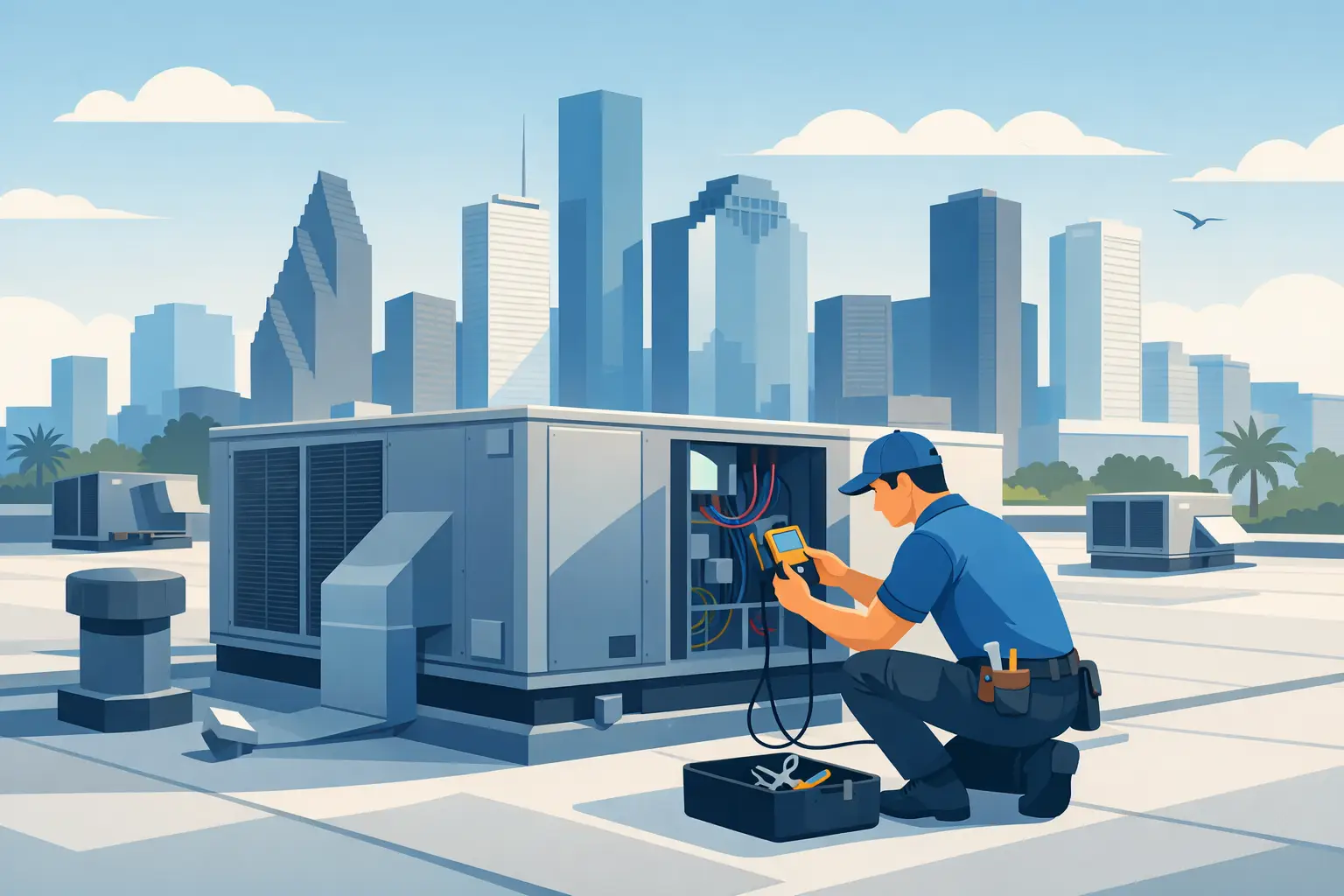
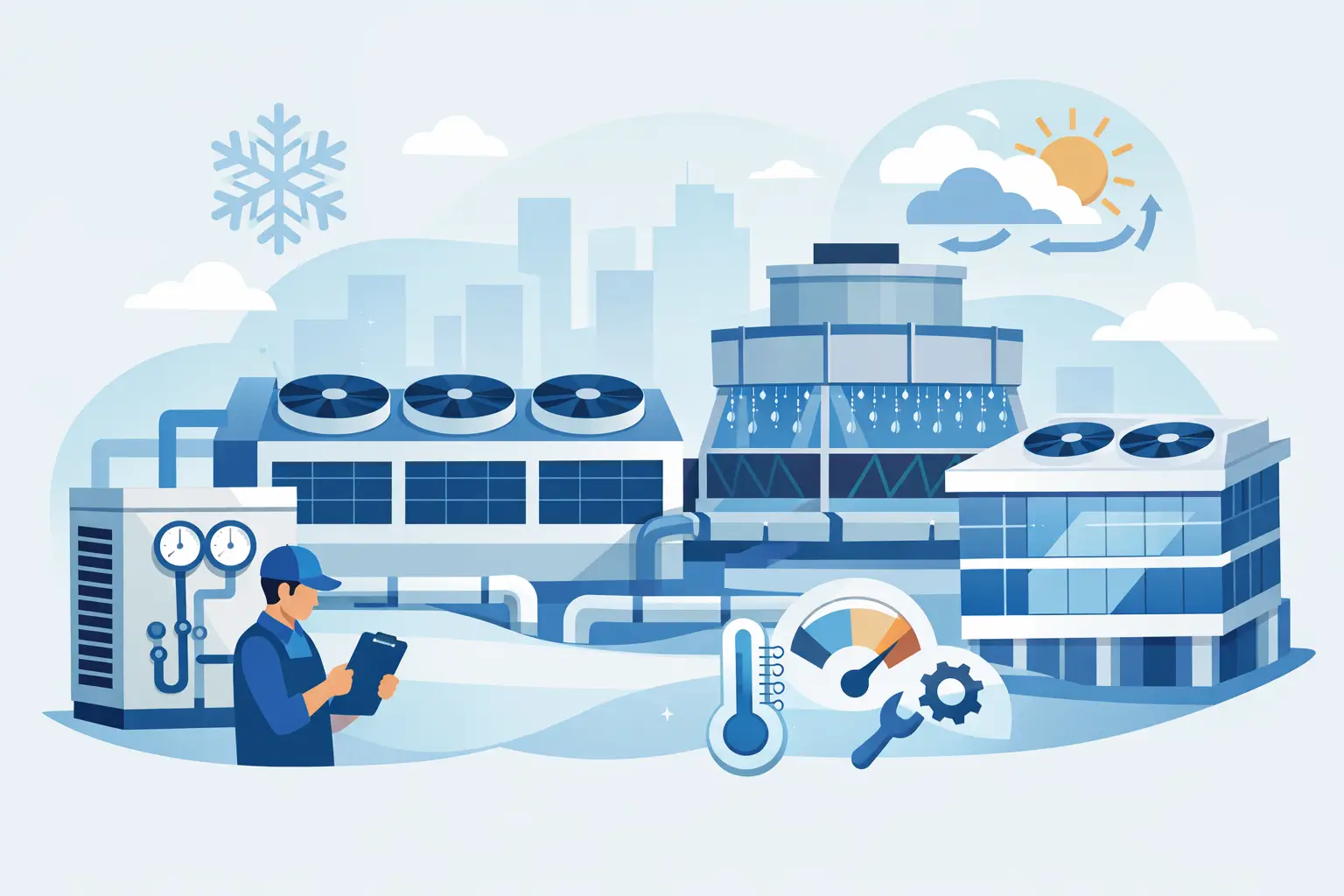
When a rooftop unit quits at 2 p.m. in a Houston summer, the problem is not just temperature. It is lost productivity, unhappy tenants, stressed equipment, and a business owner trying to decide whether this is a quick repair or the start of a bigger cycle of breakdowns. That is why a guide to commercial cooling reliability has to go beyond basic maintenance tips. Reliability is about keeping your building usable, your costs predictable, and your response time short when something goes wrong.
What commercial cooling reliability really means
For most small and mid-sized properties, cooling reliability is not about having the newest equipment on the market. It is about whether the system can hold temperature during peak demand, recover quickly after door traffic or occupancy swings, and run without constant emergency calls.
A reliable system does three things well. First, it delivers consistent comfort across the building. Second, it avoids preventable failures through regular inspection and correction. Third, when a problem does happen, it is easy to diagnose and repair because the equipment, controls, and ductwork have been kept in workable condition.
That distinction matters. A system can still be running and still be unreliable. If one zone is always hot, if utility bills keep rising, or if the unit trips out every few weeks, you are already paying the price of poor reliability.
Why Houston puts commercial cooling systems under pressure
Commercial HVAC in Houston deals with long cooling seasons, heavy humidity, and sustained high demand. Systems often run hard for months, not days. That kind of workload exposes weak points fast, especially in older equipment or buildings where maintenance has been deferred.
Humidity is a major factor. Cooling equipment is not just lowering temperature. It is also removing moisture from the air. When airflow is off, coils are dirty, drain lines are restricted, or the system is oversized or undersized, comfort drops even if the thermostat looks reasonable.
The local environment also adds wear. Dust, pollen, storm debris, and heat exposure all affect condenser performance and indoor air movement. For retail spaces, restaurants, offices, and mixed-use properties, occupancy patterns can shift throughout the day, which makes controls and zoning just as important as the mechanical equipment itself.
The biggest threats to cooling reliability
Most commercial cooling failures do not come out of nowhere. They usually build over time, then show up on the hottest day of the month.
Deferred maintenance is the most common issue. Dirty coils, worn belts, clogged drains, low refrigerant charge, failing capacitors, and neglected filters all reduce system capacity before they cause a full shutdown. The equipment works harder, runtime increases, and energy use climbs.
Poor airflow is another major threat. Closed dampers, duct leakage, dirty blowers, and blocked returns create hot spots and force the system to run longer than it should. In some buildings, comfort complaints get blamed on the unit when the real issue is distribution.
Controls problems are often overlooked. A faulty thermostat, bad sensor reading, or scheduling error can make a healthy system perform badly. If a building cools empty areas at full load or fails to ramp up before occupancy, the equipment ends up chasing demand instead of managing it.
Then there is equipment age. Older systems can still be dependable, but only up to a point. Once repairs become frequent and parts availability starts slowing response time, reliability becomes harder to maintain. At that stage, the question is no longer whether the unit can be repaired. It is whether repair is still the right decision.
A practical guide to commercial cooling reliability
The best approach is proactive, not reactive. If you are responsible for a building, a small portfolio, or a single business location, reliability improves when you treat cooling as an operating priority rather than an emergency expense.
Start with a real system assessment
Before you can improve reliability, you need a clear picture of current condition. That means more than checking whether the unit turns on. A proper assessment looks at capacity, airflow, refrigerant levels, electrical components, drainage, controls, duct condition, and general equipment wear.
This step is where hidden issues usually show up. A business owner may think the system is undersized, when the actual problem is a dirty evaporator coil and duct leakage. Another property may assume a repair will solve things, but inspection may reveal a unit near the end of service life with repeated component failure.
Put preventive maintenance on a schedule
Commercial systems need regular attention, especially before and during heavy cooling season. Preventive maintenance lowers the odds of sudden failure and gives technicians a chance to catch small problems before they become expensive ones.
A good maintenance visit typically includes cleaning coils, replacing filters, checking electrical connections, testing capacitors and contactors, inspecting belts and motors, clearing drain lines, verifying thermostat operation, and confirming refrigerant performance. For many Houston businesses, once-a-year service is not enough. It depends on run time, building use, and equipment condition.
Pay attention to warning signs early
Reliable cooling systems usually give notice before they fail. Rising electric bills, uneven temperatures, short cycling, excess humidity, weak airflow, unusual noises, and water around the unit all deserve attention.
Waiting can turn a manageable repair into a disruptive outage. For example, a clogged drain line may look minor, but if it leads to water damage or trips a safety switch during business hours, the downtime becomes much more costly than the service call.
Do not ignore ductwork and air balance
Cooling reliability is not just about the equipment itself. If conditioned air is leaking into unoccupied spaces or not reaching problem areas, the system will never perform the way it should.
Duct cleaning, duct sealing, and airflow correction can make a noticeable difference in comfort and efficiency. In some buildings, these improvements extend the useful life of the existing equipment because the system is no longer fighting preventable losses.
Know when repair stops being the smart option
There is no universal replacement age for commercial equipment. Some units last longer with solid maintenance, while others become unreliable sooner because of operating conditions. The better question is whether the system can still support your building without repeated disruption.
If you are facing frequent breakdowns, rising repair costs, uncomfortable zones, and poor efficiency, replacement may offer a better long-term result. That is especially true if the existing unit is mismatched to the space or if the controls and duct system need broader correction anyway.
How to build a more reliable service plan
A service plan should match the building, not just the equipment model. A small office with stable occupancy has different demands than a restaurant, retail space, or multi-tenant property. That is why reliability planning works best when it includes both routine maintenance and a clear path for urgent repairs.
For many local businesses, the most useful setup includes scheduled seasonal service, documented equipment history, and access to emergency response when a failure cannot wait. That combination keeps routine issues from being neglected and shortens the decision-making process when something serious happens.
Working with one provider across repair, maintenance, system upgrades, and replacement also helps. It reduces handoff problems and gives the technician a history of how the equipment has been performing over time. For Houston-area businesses that need fast restoration during extreme heat, that continuity matters. Elisee HVAC and Home Services Houston supports that kind of end-to-end approach, including emergency service when downtime becomes urgent.
Reliability and efficiency usually go together
Many owners think of reliability and energy efficiency as separate goals, but they overlap more than most people realize. A system with clean coils, proper airflow, sealed ducts, and accurate controls does not just run more efficiently. It also experiences less strain.
That said, efficiency upgrades should be chosen carefully. A new thermostat alone will not fix a weak blower motor. Higher-efficiency equipment can reduce operating costs, but only if it is sized and installed correctly. Reliability improves when upgrades solve the actual problem instead of adding complexity without addressing the basics.
What a good contractor should help you decide
You should not have to guess whether your building needs a repair, maintenance adjustment, or replacement plan. A dependable commercial HVAC partner should be able to explain what is happening, what can wait, and what needs immediate action.
That includes honest trade-offs. Sometimes the right answer is a targeted repair to get through the season. Sometimes it is smarter to replace aging equipment before the next peak demand period. A good recommendation is tied to uptime, operating cost, and building use - not just the quickest sale.
Commercial cooling reliability is never about one magic fix. It comes from consistent care, early intervention, and having a responsive team ready when the heat puts your system to the test. If your building has been sending warning signs, the best time to act is before the next outage decides for you.