
When a Houston AC system quits in August, nobody is thinking about abstract technology trends. They are thinking about getting cool again, keeping the house livable, protecting inventory, or making sure employees and customers do not walk into a hot building. That is exactly why the future of energy efficient cooling matters here - not as a buzzword, but as a practical shift toward systems that use less power, handle extreme heat better, and give property owners more control over comfort and cost.
In Houston, cooling is not a seasonal luxury. It is one of the biggest drivers of monthly utility bills and one of the most critical systems in any home or business. The next generation of cooling is being shaped by that reality. It is not just about replacing old equipment with newer equipment. It is about how systems are designed, how they respond to weather, how they manage airflow, and how they help prevent the kind of breakdowns that turn into expensive emergencies.
What the future of energy efficient cooling really looks like
A lot of people assume energy-efficient cooling means one thing: a higher SEER rating on a new air conditioner. That still matters, but it is only one part of the picture now. The future is moving toward complete system performance.
That includes variable-speed equipment that can run at lower levels for longer periods, smarter thermostats that adjust based on occupancy and demand, improved duct sealing, better insulation support, zoning, and controls that can identify performance issues before they become failures. In other words, efficient cooling is becoming more precise.
For Houston property owners, that precision matters because the local climate is not mild. Systems face long run times, high humidity, and heavy summer strain. Equipment that can adapt instead of cycling on and off at full blast often performs better in real conditions. It can reduce wear, improve indoor comfort, and help control humidity more effectively.
That said, newer technology is not automatically the right fit for every building. A small home with leaky ducts and weak attic insulation may not see the full benefit of premium equipment until those basics are addressed. Sometimes the biggest efficiency gain comes from correcting airflow problems, sealing ductwork, or replacing a badly oversized unit.
Smarter systems are changing cooling performance
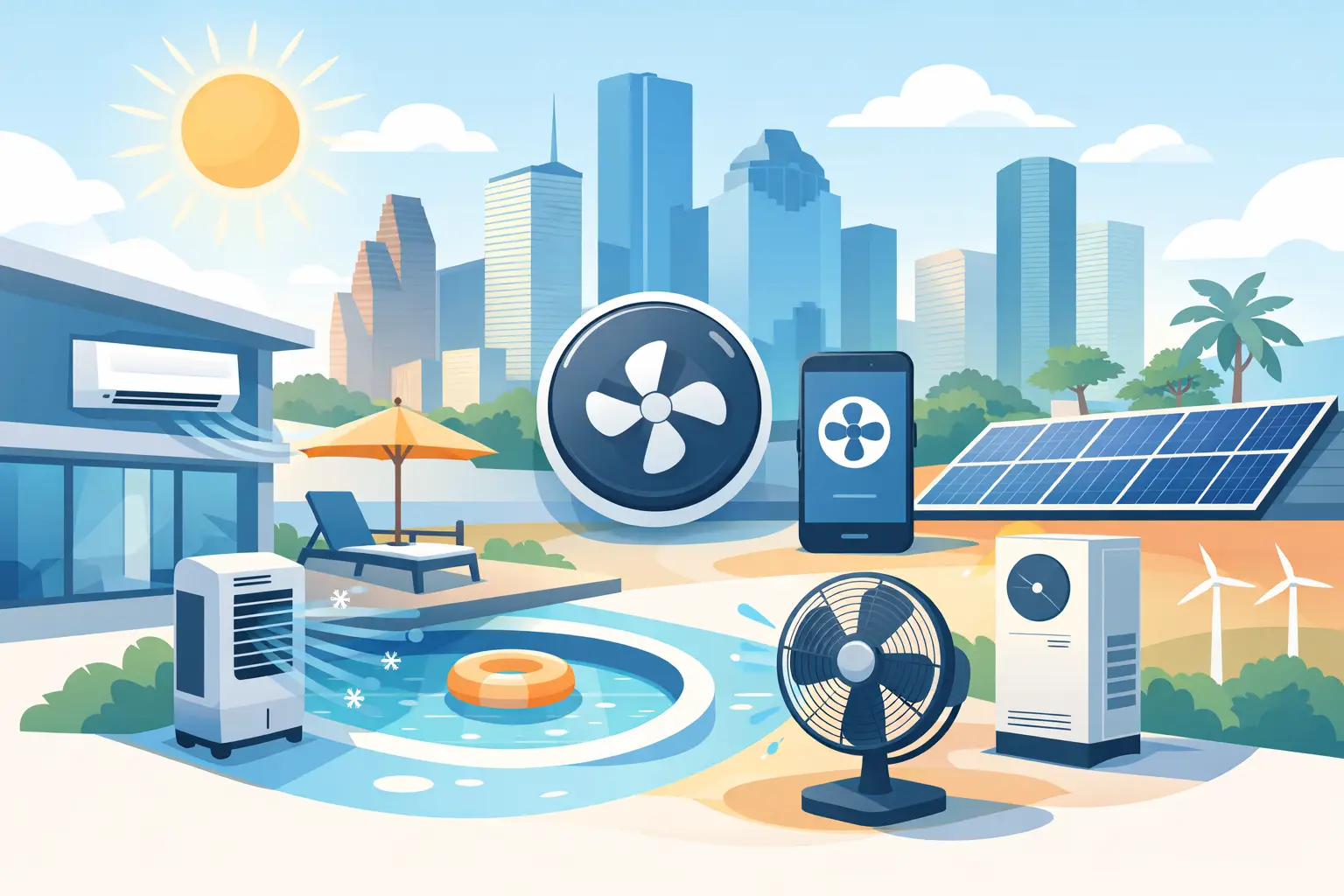
One of the clearest shifts in the future of energy efficient cooling is intelligence built into the system itself. Older systems mostly reacted in simple ways: thermostat calls for cooling, unit turns on, unit turns off. Newer systems can do much more.
Variable-speed compressors and blower motors can ramp up and down based on actual demand. That means they do not always need to operate at maximum output. In a climate like Houston, this is valuable because the goal is not just dropping the temperature fast. It is maintaining a stable indoor environment while removing moisture from the air.
That difference affects comfort in a real way. A home can technically hit the thermostat setting and still feel sticky or uneven from room to room. Better modulation helps avoid that. For businesses, it can also mean fewer temperature swings that affect staff, customers, or equipment.
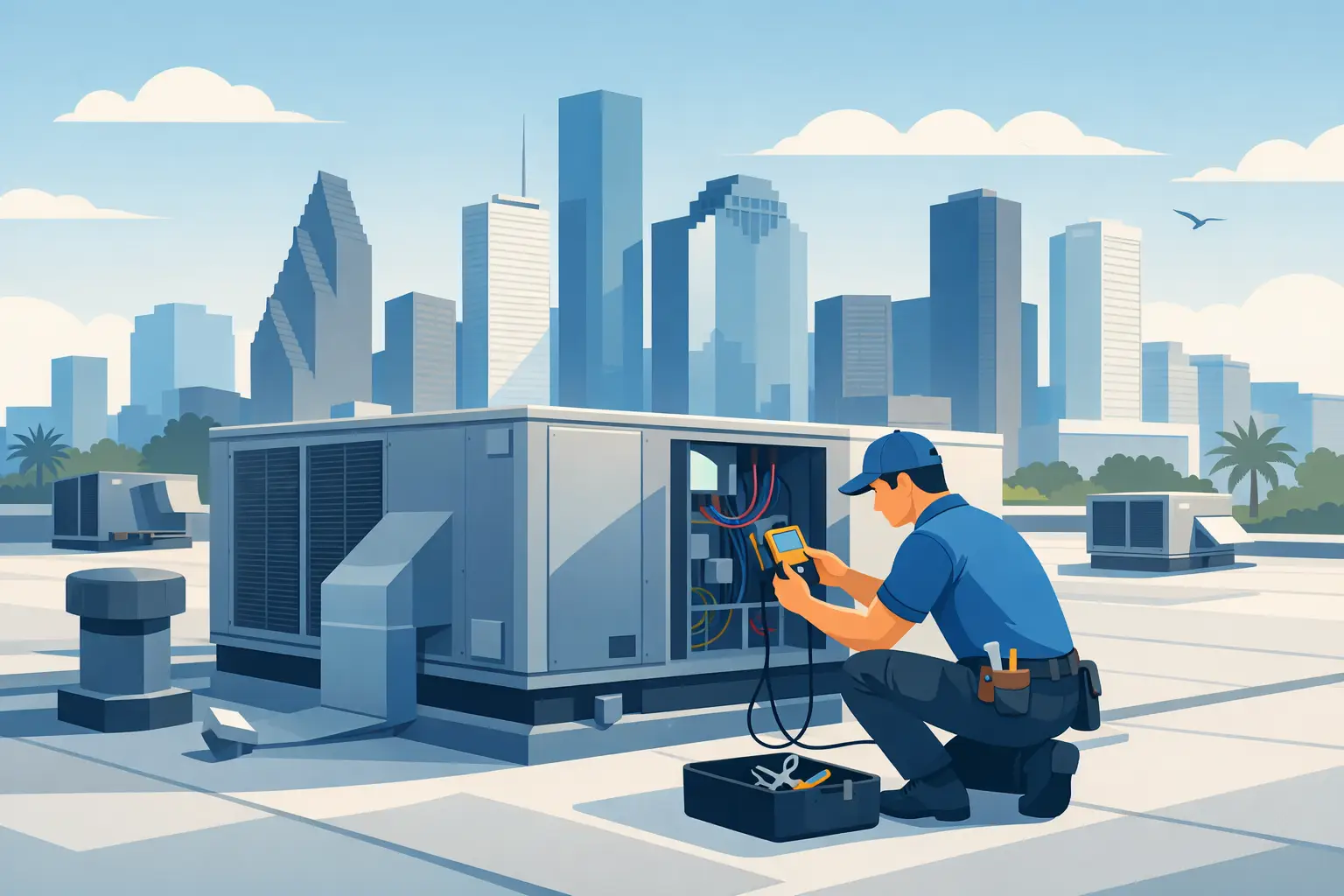
Smart diagnostics are another major step forward. Some modern systems can track pressure, airflow, temperature differentials, and operational faults with far more detail than older equipment. That does not eliminate the need for skilled service, but it helps identify issues earlier. A technician can often diagnose performance loss before it turns into a complete shutdown.
For owners focused on uptime, that matters as much as efficiency. A system that saves energy but fails often is not really delivering value.
Efficiency is no longer just about the equipment
The biggest misconception in HVAC upgrades is that the outdoor unit does all the work. In reality, cooling efficiency depends on the entire system. If airflow is restricted, ducts leak into the attic, or the thermostat is poorly placed, even good equipment can underperform.
That is why future-ready cooling starts with a broader view. Load calculations matter. Duct condition matters. Return air design matters. Maintenance history matters. The most efficient air conditioner in the world cannot fix a house or building that moves air poorly.
In Houston, humidity makes this even more important. When a system is oversized, it may cool the space too quickly without running long enough to remove enough moisture. The result is a cooler temperature on paper, but less comfort overall. On the other hand, an undersized system can run constantly and still struggle during peak heat.
This is where experienced guidance matters. Efficiency gains are often found in matching equipment properly, improving distribution, and making sure the system is set up for the building it serves. That is less flashy than talking about futuristic hardware, but it is often where the best long-term results come from.
Electrification and refrigerant changes are coming
Another part of the future of energy efficient cooling is being driven by regulation and product design. New refrigerant standards and shifts toward lower-impact systems are already influencing what equipment manufacturers produce and what contractors install.
For customers, this does not mean panic or a rush to replace every existing system. It does mean the replacement market will keep changing. As older refrigerants phase down and new systems become standard, repair costs, parts availability, and replacement planning may look different than they did a few years ago.
This is one reason proactive replacement conversations are becoming more practical. If a system is aging, inefficient, and needing frequent repairs, waiting for a total failure during peak summer can leave fewer options and more pressure. Planning ahead usually gives property owners more control over budget, equipment choice, and installation timing.
Electrification is part of the wider conversation too, especially in mixed heating and cooling systems. For Houston customers, the main issue is still cooling performance, but energy strategy is becoming more connected across the whole home or building. The details depend on utility rates, building use, and equipment condition, so there is no one-size-fits-all answer.
What Houston homeowners and businesses should pay attention to now
Most people do not need to chase every new HVAC feature. What they do need is a clear idea of what will actually improve comfort, reduce operating costs, and lower the risk of downtime.
If your current system is running but struggling, start with performance basics. Have the equipment inspected, airflow checked, and ductwork evaluated. A maintenance visit can reveal whether the problem is wear and tear, poor system balance, refrigerant issues, or a larger design problem.
If you are considering replacement, ask about more than equipment size and price. Ask how humidity control will be handled. Ask whether the duct system supports the new unit. Ask what efficiency gains are realistic for your building, not just what is printed on a brochure.
For commercial properties and small businesses, reliability should stay front and center. Lower power use is valuable, but so is minimizing interruptions. A more efficient system that also improves diagnostics, staging, and control can help prevent lost business hours and emergency repair situations.
For homeowners, comfort often comes down to consistency. That may mean zoning in a larger house, upgrading to a variable-speed system, or correcting duct leakage that has gone unnoticed for years. The best path depends on the age of the home, insulation levels, occupancy patterns, and how the current system performs during real Houston heat.
The local service side of future-ready cooling
New cooling technology still depends on old-fashioned execution. Installation quality, maintenance discipline, and fast repair support will keep making the difference between a system that performs well and one that never lives up to expectations.
That is especially true in a market like Houston, where AC demand spikes hard and breakdowns cannot wait. Even the most advanced system needs routine service, clean coils, accurate refrigerant charging, proper airflow, and prompt attention when something changes.
This is where working with a local HVAC team matters. A contractor who understands Houston conditions can recommend improvements that fit the climate instead of just selling features. For customers who want a practical path forward, Elisee HVAC and Home Services Houston can help evaluate whether maintenance, repair, duct improvements, or full replacement makes the most sense based on the actual condition of the system.
The future of cooling is not about chasing technology for its own sake. It is about building systems that stay dependable under pressure, control costs without sacrificing comfort, and recover faster when problems happen. For Houston homes and businesses, that future is already taking shape - and the smartest move is to prepare for it before the next heat wave forces the decision.