
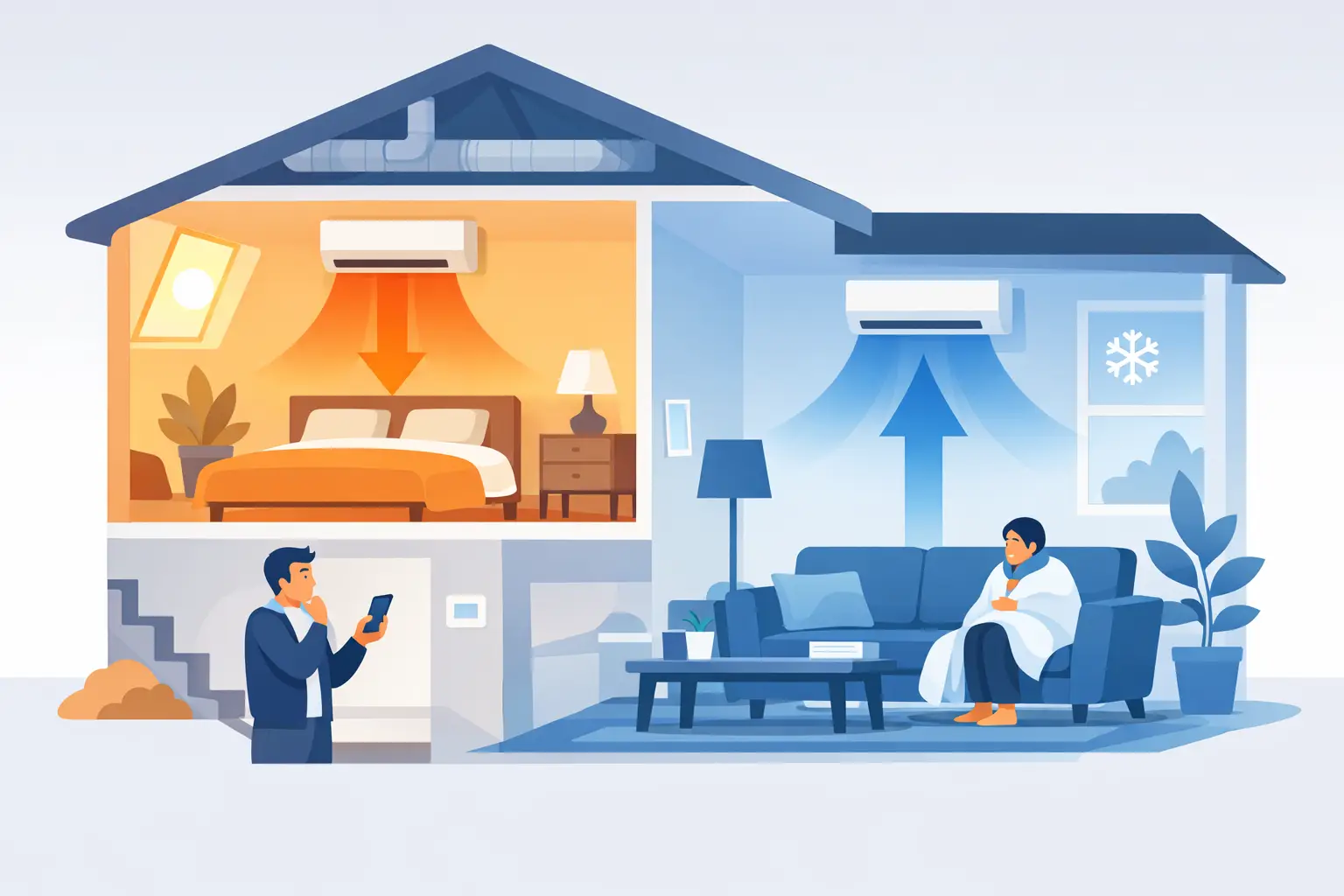
If your bedroom feels like a walk-in freezer while the upstairs hallway stays warm and sticky, you are not imagining it. Uneven cooling is one of the most common comfort complaints in Houston homes, especially during long stretches of high heat and humidity. It usually means your AC is running, but your house is not distributing cool air the way it should.
The good news is that this problem is often fixable. The better news is that fixing it early can improve comfort, lower strain on your system, and help you avoid bigger repair costs later. If you are trying to fix uneven cooling in house conditions, the key is finding out whether the issue is airflow, insulation, ductwork, system sizing, or something more technical inside the equipment itself.
Why uneven cooling happens in the first place
Most homes do not cool evenly by accident. Air conditioning systems depend on balance. The equipment has to produce enough cooling, the duct system has to deliver it properly, and the home itself has to hold onto that cooled air.
When one part of that chain breaks down, some rooms get too much airflow and others get too little. In Houston-area homes, the problem is often worse in upstairs rooms, bonus rooms over garages, sun-facing spaces, and areas farthest from the indoor unit.
Sometimes the cause is simple, like a clogged filter or a closed vent. Other times, it is a combination of issues, such as leaky ducts, poor attic insulation, and an aging AC that can no longer keep up with peak demand.
How to fix uneven cooling in house rooms
Start with the easiest things to check before assuming you need major repairs. A few small issues can create a big temperature difference from room to room.
Check your air filter first
A dirty air filter restricts airflow across the whole system. That can leave distant rooms undercooled and make the unit run longer than it should. If the filter looks dusty or clogged, replace it with the correct size and type recommended for your system.
Higher-efficiency filters can improve indoor air quality, but some create more airflow resistance than older systems can handle. If uneven cooling got worse after switching filters, that is worth mentioning during service.
Make sure vents and returns are open and clear
Supply vents push cooled air into rooms. Return vents pull air back to the system. Both matter.
Walk through the house and check for closed registers, blocked vents, furniture pushed over returns, or rugs covering airflow paths. Even one closed or obstructed vent can throw off pressure and circulation in nearby rooms. Opening every vent all the way is not always the permanent answer, but it is a smart first step while troubleshooting.
Look at the thermostat location
If your thermostat sits near a sunny window, a kitchen, or a particularly cool hallway, it may get a false reading of the house temperature. That can cause the system to shut off before warmer rooms are comfortable.
This is especially common in two-story homes where the thermostat is downstairs but the hottest rooms are upstairs. In those cases, zoning, thermostat relocation, or a smart thermostat with remote sensors may help.
Common hidden causes behind hot and cold spots
If the basics look fine and the problem continues, the cause is often deeper in the system.
Leaky or poorly designed ductwork
Duct leaks are a major reason homeowners struggle to fix uneven cooling in house layouts with multiple levels or additions. Conditioned air may be escaping into the attic instead of reaching the room it is meant to cool. In other homes, ducts may be too long, undersized, kinked, or poorly balanced.
This is not just a comfort issue. Lost air means wasted energy and higher utility bills. Duct sealing or redesign can make a noticeable difference, especially in older homes and remodeled spaces.
Inadequate insulation or attic heat gain
Your AC is only part of the equation. If attic heat is pouring into the home through weak insulation or air leaks, some rooms will warm up faster than others no matter how long the system runs.
Rooms directly under the roof often show this first. If they are always hotter in the afternoon, the issue may be less about the AC unit and more about the building envelope. Adding insulation and sealing air leaks can reduce that load.
An oversized or undersized AC system
Bigger is not always better in air conditioning. An oversized system may cool the thermostat area too quickly and shut off before air circulates evenly through the house. An undersized system may run constantly and still fail to cool far rooms during Houston heat.
This is where professional load calculations matter. If the system was installed without proper sizing, no amount of vent adjusting will fully solve the issue.
A failing blower, coil, or low refrigerant
Mechanical problems can also create uneven cooling. A weak blower motor reduces airflow. A dirty evaporator coil limits heat transfer. Low refrigerant can reduce cooling performance across the system.
These issues usually come with other warning signs such as longer run times, rising electric bills, weak airflow, ice on the indoor unit, or the house never quite reaching the set temperature.
When vent adjustments help and when they do not
Many homeowners try to balance temperatures by closing vents in cooler rooms. That can help a little in some systems, but it is not a cure-all.
Closing too many vents can increase static pressure in the duct system and strain the blower. In some cases, it can make cooling performance worse or contribute to duct leakage. A better approach is to have airflow measured and balanced professionally if room temperatures stay uneven.
Manual dampers inside the ductwork can sometimes be adjusted to improve distribution. That is more precise than shutting room registers, but it should be done carefully. Too much adjustment in one area can create a new problem somewhere else.
Solutions that make sense for Houston homes
Not every home needs the same fix. The right solution depends on the cause, the age of the system, and how the home is built.
For some households, routine maintenance and duct sealing are enough to restore balanced comfort. For others, the better answer may be zoning, added return air, insulation upgrades, or a replacement system designed for the home’s actual cooling load.
In homes with persistent upstairs heat, zoning can be especially effective. It allows different areas of the house to cool according to their own needs instead of relying on one thermostat to control everything. The trade-off is cost. Zoning is more involved than a standard service visit, but it can deliver much better control in larger or multi-level homes.
If your current unit is near the end of its service life, investing in duct repairs or balancing alone may not solve the full problem. A replacement may be more cost-effective if the equipment is already struggling, inefficient, or improperly sized.
Signs it is time to call a professional
Some uneven cooling issues are easy to spot. Others need testing to confirm what is really happening. If one or more rooms stay warm no matter what you try, or if airflow feels noticeably weak, it is time for a closer look.
Professional diagnostics can identify static pressure problems, duct leakage, refrigerant issues, thermostat errors, and equipment performance concerns that are not obvious from a basic walkthrough. That matters because guessing can get expensive. Replacing parts or adjusting vents without testing often treats the symptom instead of the cause.
For Houston homeowners, speed matters too. An airflow issue in spring can turn into a system breakdown in peak summer if the equipment is forced to run harder every day. Reliable service is not just about comfort. It protects uptime when temperatures are least forgiving.
If you need help getting consistent cooling back, Elisee HVAC and Home Services Houston can inspect the full system, from equipment to ductwork, and recommend the most practical path forward based on how your home actually performs.
Preventing the problem from coming back
Once the cooling is balanced again, regular maintenance helps keep it that way. Filters need to be changed on schedule. Coils and blowers need to stay clean. Refrigerant levels, electrical components, and airflow should be checked before the hottest part of the season.
It also helps to pay attention to small changes. If one room starts drifting warmer than the rest, or your AC suddenly runs longer in the evening, those can be early signs that the system is falling out of balance again.
Comfort should not depend on which room you are standing in. If your home has hot spots, cold spots, or airflow that never feels right, the fix is usually there to be found - and the sooner you address it, the easier it is to get every room back to where it should be.