
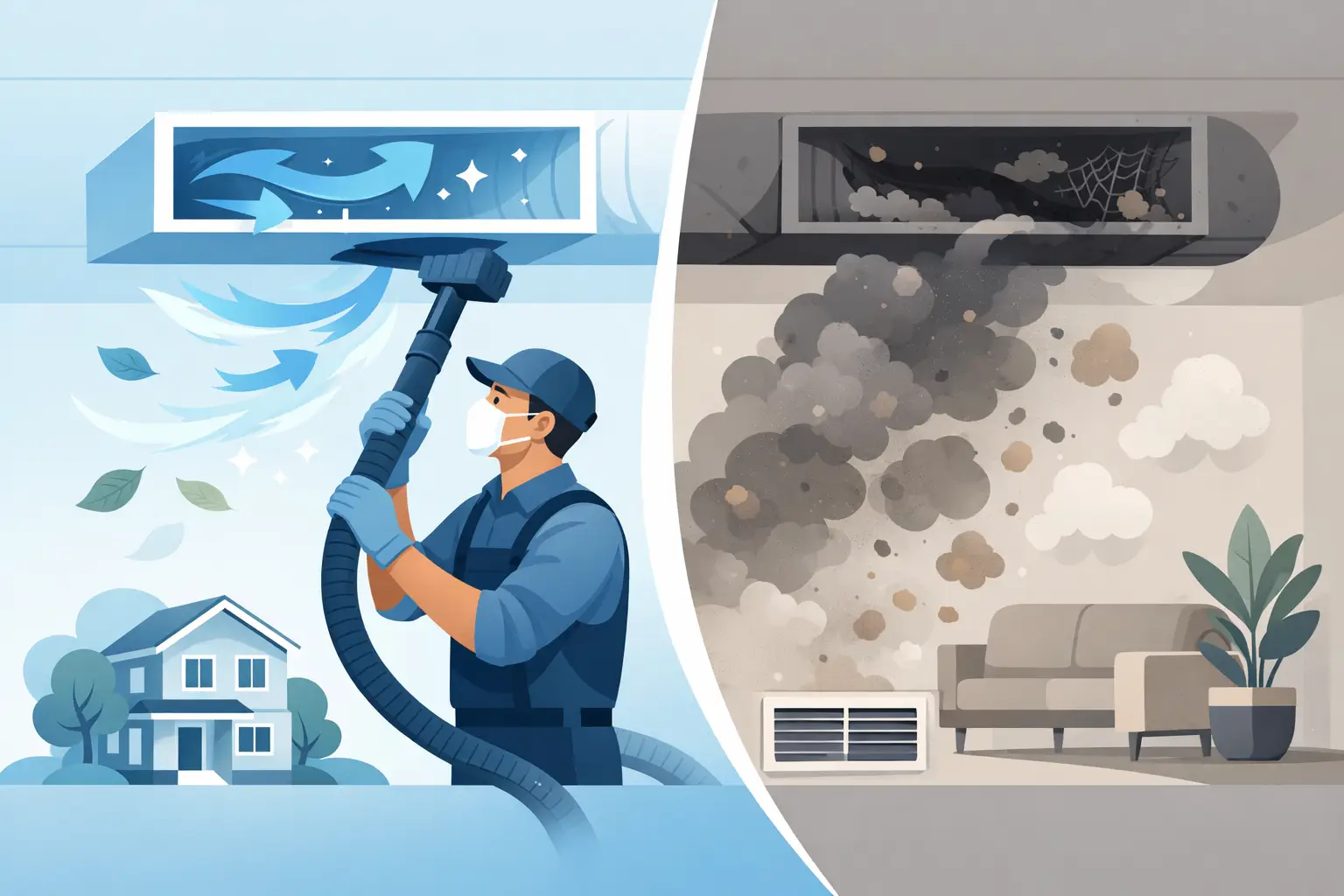
If your home gets dusty again a day after cleaning, some rooms never seem to cool properly, or the AC smells stale when it kicks on, duct cleaning is probably on your radar. In Houston, where HVAC systems run hard for long stretches of the year, your ductwork does more than move air - it affects comfort, airflow, system strain, and how clean your indoor air feels day to day.
That said, duct cleaning is not a cure-all. Some properties benefit from it right away. Others are better served by duct sealing, filter upgrades, coil cleaning, or a full system inspection. The key is knowing what problem you are actually trying to solve.
What duct cleaning actually does
Duct cleaning removes built-up dust, debris, and contaminants from the ductwork that supplies and returns air through your HVAC system. A proper service may also address registers, grilles, and accessible components connected to airflow.
The goal is straightforward: reduce unwanted buildup inside the air distribution system and restore cleaner, more consistent airflow where contamination or debris is present. In a home or business with years of accumulated dust, renovation debris, pest activity, or visible buildup around vents, this can make a meaningful difference.
But clean ducts do not automatically fix every comfort complaint. If a room stays hot because of leaking duct joints in the attic, cleaning alone will not solve that. If humidity is high because the system is oversized or the drain line is restricted, the issue is elsewhere. Good HVAC service starts with diagnosis, not guesswork.
When duct cleaning makes sense
Some situations clearly justify duct cleaning. After remodeling or construction, ductwork can collect drywall dust, insulation particles, and other fine debris that keeps circulating long after the project ends. If you have recently moved into an older property and the maintenance history is unclear, cleaning can help reset the system.
It also makes sense when there is visible dust and debris coming from vents, signs of pest contamination, or musty odors that appear when the system runs. For businesses, duct cleaning may be worth considering when indoor air complaints increase, especially in spaces with high foot traffic, long operating hours, or neglected maintenance.
In Houston, another common factor is long cooling seasons. Systems run often, which means they pull and move a lot of air over time. If filters have not been changed consistently, buildup inside the duct system can become part of a larger airflow problem.
When duct cleaning may not be the main fix
This is where experience matters. Many comfort issues get blamed on dirty ducts when the real problem is mechanical or structural.
If your utility bills are climbing, the cause might be leaking ducts, low refrigerant, dirty evaporator coils, poor insulation, or an aging system losing efficiency. If airflow is weak, the issue could be a failing blower motor, crushed flex duct, blocked return, or undersized duct design. If the house feels dusty, gaps around return ducts can pull attic dust into the system even after a cleaning.
That is why the best approach is to look at the whole HVAC picture. Duct cleaning can be valuable, but it works best when it is matched to the right problem and combined with other corrective work if needed.
Signs your ductwork needs attention
Homeowners and property managers usually notice the symptoms before they know the cause. Dust collecting quickly on furniture, uneven temperatures, stale smells when the air starts, or vent covers with visible buildup are all worth checking.
You may also notice allergy irritation indoors, reduced airflow in one part of the building, or a system that seems to run longer than it used to. None of these signs guarantees that duct cleaning is the answer, but they do suggest your air distribution system deserves a closer look.
For commercial spaces, employee complaints, comfort inconsistencies between zones, and recurring dust around registers can point to the same need. In small offices, retail spaces, and rental properties, small airflow issues often get ignored until they affect tenant satisfaction or operating costs.
Duct cleaning and indoor air quality
Indoor air quality matters, especially when buildings stay closed up for much of the year. Clean ductwork can support a healthier indoor environment when contamination is present, but it is only one part of the equation.
Filters, humidity control, coil condition, ventilation, and duct leakage all play a role. In Houston, humidity is a major factor. Moisture issues can make indoor air feel heavy and contribute to odors or microbial growth around HVAC components. If that is happening, cleaning the ducts without addressing the moisture source will only provide partial results.
A good contractor will be honest about that. Sometimes the right recommendation is duct cleaning. Sometimes it is sealing leaks, correcting drainage, improving filtration, or scheduling full HVAC maintenance first.
What to expect from professional duct cleaning
A professional service should start with an inspection and a clear explanation of what is being found. You should know whether the concern is dust buildup, construction debris, restricted airflow, contamination, or a larger HVAC issue tied to the duct system.
The cleaning itself should be methodical, not rushed. Registers, returns, and accessible duct runs should be addressed with equipment designed for HVAC systems, not a basic shop vacuum and a sales pitch. Care matters, especially in occupied homes and businesses where protecting furnishings, maintaining cleanliness, and avoiding damage are part of the job.
You should also expect practical guidance afterward. If the ductwork is dirty because filters were undersized or rarely changed, that should be discussed. If leaks are pulling in attic air, that should be part of the plan. The best service call leaves you with answers, not just a receipt.
Why duct sealing is often part of the conversation
Duct cleaning and duct sealing are different services, but they frequently go hand in hand. Cleaning removes debris already inside the system. Sealing helps prevent unconditioned air, dust, and insulation particles from entering through leaks and gaps.
This matters a lot in attics, crawl spaces, and older properties. A duct system with leaks can waste conditioned air, reduce room-to-room balance, and make the HVAC unit work harder than necessary. Even after a good cleaning, those issues can continue if the ductwork is not sealed properly.
For many Houston-area properties, the most cost-effective improvement is not just cleaning the ducts. It is combining cleaning with targeted sealing and routine maintenance so airflow stays cleaner and more efficient over time.
Duct cleaning for homes vs. small businesses
The basic goal is the same, but the priorities can differ. In homes, people usually call about dust, allergies, odors, or inconsistent cooling. In small businesses, the concern is often uptime, comfort complaints, and keeping the space presentable for staff and customers.
A retail store with dusty vents or uneven cooling has an operational problem, not just a comfort issue. A rental property with neglected ductwork can affect tenant retention and maintenance costs. In both cases, duct cleaning should support broader HVAC reliability, not operate as a standalone fix without context.
That is why many property owners prefer working with one local team that can inspect the full system, handle urgent repairs if needed, and recommend the next step without sending them to multiple vendors. For Houston-area customers who need that kind of continuity, Elisee HVAC and Home Services Houston provides duct cleaning as part of a broader HVAC service approach.
How often should ducts be cleaned?
There is no universal schedule that fits every property. A newer home with good filtration and regular maintenance may go years without needing duct cleaning. A property with pets, recent renovations, inconsistent filter changes, or visible dust issues may need it sooner.
The better question is not whether it has been three years or five. It is whether there are signs of buildup, contamination, or airflow issues that justify service now. Condition matters more than the calendar.
Choosing the right next step
If you suspect your ductwork is affecting comfort or air quality, start with an inspection, not an assumption. The right contractor should be able to tell you whether duct cleaning is warranted, whether your duct system is leaking, or whether the problem points back to the equipment itself.
That kind of clarity saves time and money. It also helps you avoid treating symptoms while the real issue keeps stressing your HVAC system in the background.
When your cooling system works hard for most of the year, small duct problems rarely stay small for long. Taking care of them early can mean cleaner airflow, steadier comfort, and one less thing to worry about when Houston heat puts your system to the test.