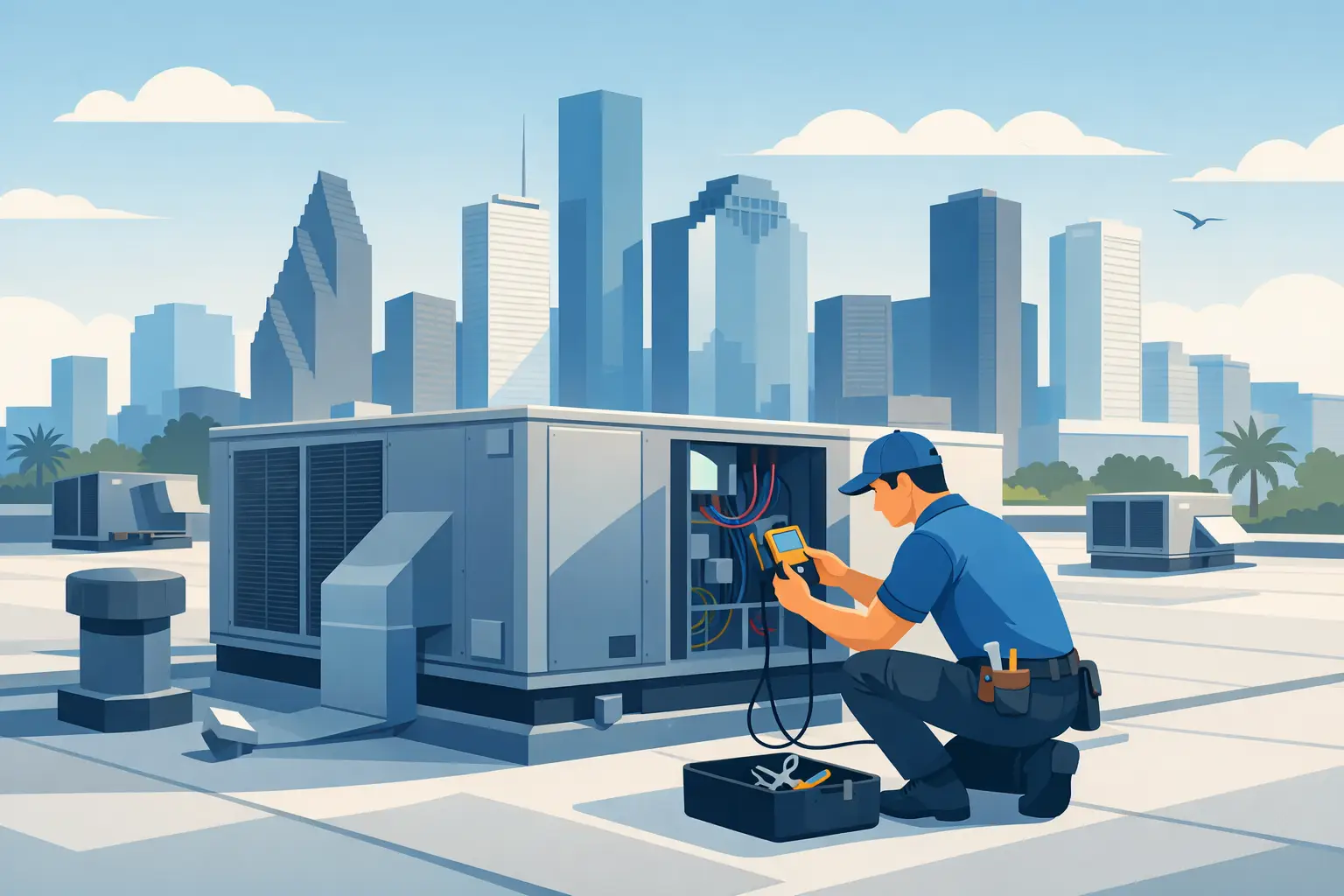
A failing rooftop unit rarely gives you the courtesy of a convenient breakdown. It usually shows up as rising indoor temperatures at 2 p.m., uneven airflow across tenant spaces, or a utility bill that suddenly looks out of line with your normal usage. For Houston businesses, that kind of problem is more than uncomfortable. It can interrupt operations, affect employees and customers, and put added strain on equipment already working hard in the heat.
If you are trying to decide whether your system needs a quick fix, a major repair, or a full replacement, the right move starts with a clear diagnosis. Commercial rooftop unit repair is not just about getting cooling back on. It is about protecting uptime, controlling costs, and making sure the system can keep up with your building's real demand.
What a rooftop unit actually handles
A commercial rooftop unit, often called an RTU, is the packaged system responsible for heating, cooling, and moving air through many small and mid-sized commercial buildings. Retail spaces, offices, restaurants, warehouses, churches, and light industrial properties often rely on one or more RTUs to serve different zones.
Because these systems sit outside on the roof, they are exposed to sun, rain, debris, and long operating hours. In Houston, high heat and humidity add another layer of stress. That means even well-built units can develop problems with compressors, condenser coils, fan motors, belts, contactors, drain lines, economizers, thermostatic controls, and electrical components.
The challenge is that one symptom can point to several possible causes. Weak airflow might be a blower issue, a dirty filter, a failing motor, or duct leakage. Short cycling might come from control problems, low refrigerant, or an oversized unit. That is why accurate troubleshooting matters before any repair decision is made.
Signs you may need commercial rooftop unit repair
Most RTUs do not fail all at once. They lose performance first. If your building takes longer to cool, some rooms stay warm, or the unit runs constantly without reaching setpoint, those are early signals that service is overdue.
Strange noises also deserve attention. Grinding, rattling, buzzing, and belt squeal usually mean moving parts are wearing down or something inside the cabinet has come loose. Ignoring those sounds can turn a smaller repair into compressor damage, fan failure, or a full shutdown.
Water around interior vents or signs of moisture near the unit can point to a clogged condensate drain, poor drainage, or icing at the coil. In a humid climate, drainage problems can quickly create indoor air quality concerns in addition to cooling loss.
Then there is the cost signal. If your energy bill climbs while comfort drops, the unit is likely losing efficiency. Dirty coils, refrigerant issues, failing capacitors, and airflow restrictions all force the system to work harder than it should.
Common commercial rooftop unit repair issues in Houston
Houston weather creates a predictable pattern of rooftop unit problems. During heavy cooling season, capacitors and contactors often wear out faster because the system cycles under high demand. Condenser coils collect dirt and grime, which traps heat and reduces performance. Evaporator coils can freeze when airflow drops or refrigerant charge is off.
Electrical problems are also common. Loose connections, damaged wires, and failing relays can cause intermittent shutdowns that are frustrating because they do not always happen while someone is onsite to inspect them. A unit may run fine in the morning, trip out in peak heat, then restart later, making the issue look random when it is not.
For some buildings, the problem is not the main unit alone. Duct leakage, thermostat communication issues, or neglected filters can make a healthy RTU look like it is failing. That is another reason a full system check is worth more than a quick guess.
Repair now or replace later? It depends on the unit
Not every repair means the unit is near the end. If the problem is isolated and the cabinet, compressor, and heat exchanger are still in good shape, repair is often the practical move. Replacing a motor, capacitor, contactor, sensor, or belt is very different from replacing a compressor on an aging system with a history of recurring issues.
Age matters, but condition matters more. A 7-year-old unit with poor maintenance can be a bigger risk than a 12-year-old unit that has been serviced consistently. Repair usually makes sense when the fix restores dependable operation without setting you up for another costly breakdown in a few months.
Replacement becomes easier to justify when repair costs are stacking up, parts are becoming harder to source, efficiency has fallen off, or business interruption from downtime is becoming too expensive. For many property owners, the real question is not whether a repair is possible. It is whether the repair is still a smart investment.
Why fast diagnosis matters in a business setting
In a home, one hot room is inconvenient. In a business, it can affect customers, employees, inventory, equipment, or lease obligations. Restaurants need stable kitchen and dining conditions. Offices need comfort for productivity. Retail spaces cannot afford a stuffy sales floor during high-traffic hours.
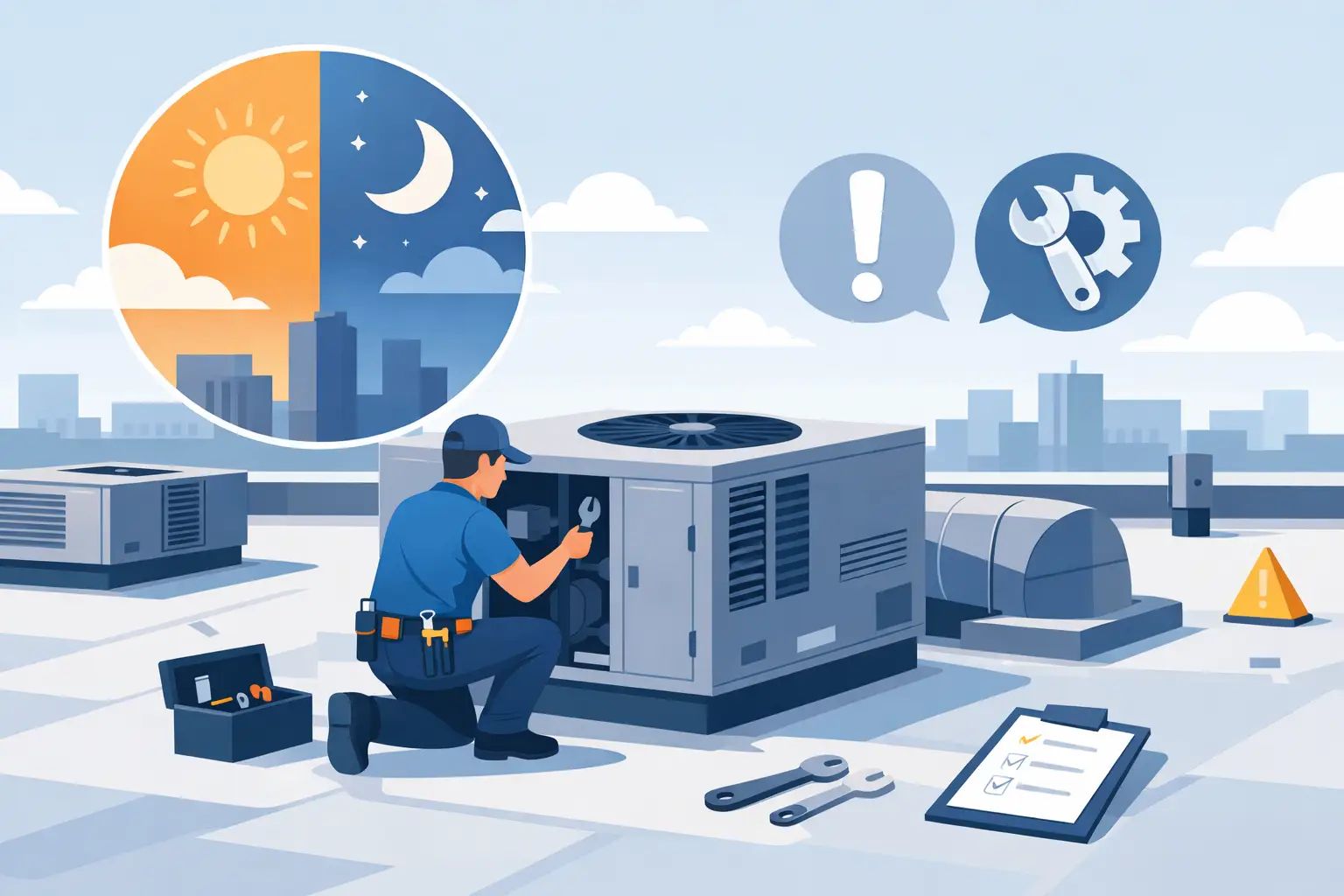
That is why response time matters as much as technical skill. A delayed service call can turn a repairable issue into a larger failure because the unit keeps running under stress. The longer a struggling motor, compressor, or fan assembly is left alone, the more likely it is to cause damage elsewhere.
For facilities with multiple rooftop units, a technician should also look at load distribution and whether one failing unit is forcing the others to compensate. That kind of imbalance increases wear across the entire system, not just the one with the obvious symptom.
What to expect during a commercial rooftop unit repair visit
A proper service call starts with more than a thermostat check. The technician should inspect operating pressures, electrical components, amperage draw, temperature split, airflow, drainage, and control response. On commercial equipment, it is also important to confirm whether the issue is isolated to the unit or tied to ductwork, zoning, or building controls.
Once the cause is identified, you should get clear guidance on the repair itself, the condition of surrounding components, and whether the unit has any signs of broader wear. Good service is not just fixing the immediate issue. It is helping you understand whether this was a one-time failure or part of a pattern.
For Houston-area businesses that need a responsive local team, Elisee HVAC and Home Services Houston can help evaluate rooftop unit issues, restore cooling quickly, and recommend the next step based on the unit's condition rather than a one-size-fits-all answer.
Preventing repeat rooftop unit problems
Most emergency calls start as maintenance issues that were easy to miss. Filters get skipped. Coils stay dirty. Belts loosen gradually. Drain lines build up over time. By the time the unit stops cooling, the warning signs have already been there.
Routine service lowers the odds of mid-season breakdowns and gives you a better chance of repairing smaller issues before they affect business operations. It also helps with planning. If a technician sees a worn motor or declining compressor performance early, you can budget for repair or replacement instead of making a rushed decision during an outage.
Preventive maintenance is especially valuable for small and mid-sized businesses that do not have an in-house facilities team. A scheduled service relationship keeps equipment performance on the radar without forcing you to manage every detail yourself.
Choosing the right repair partner
Commercial HVAC service should be straightforward. You need a contractor who shows up quickly, communicates clearly, and understands how downtime affects your business. That includes being honest about when a repair is enough and when a replacement conversation is justified.
The best repair partner is not the one who automatically recommends the biggest job. It is the one who can diagnose accurately, explain options in plain terms, and support the full HVAC lifecycle, from urgent repair to maintenance to system replacement if the time comes.
When your rooftop unit starts showing signs of trouble, waiting usually costs more than acting. A fast repair can protect comfort today, but the bigger value is keeping your building dependable when your tenants, staff, or customers need it most.