
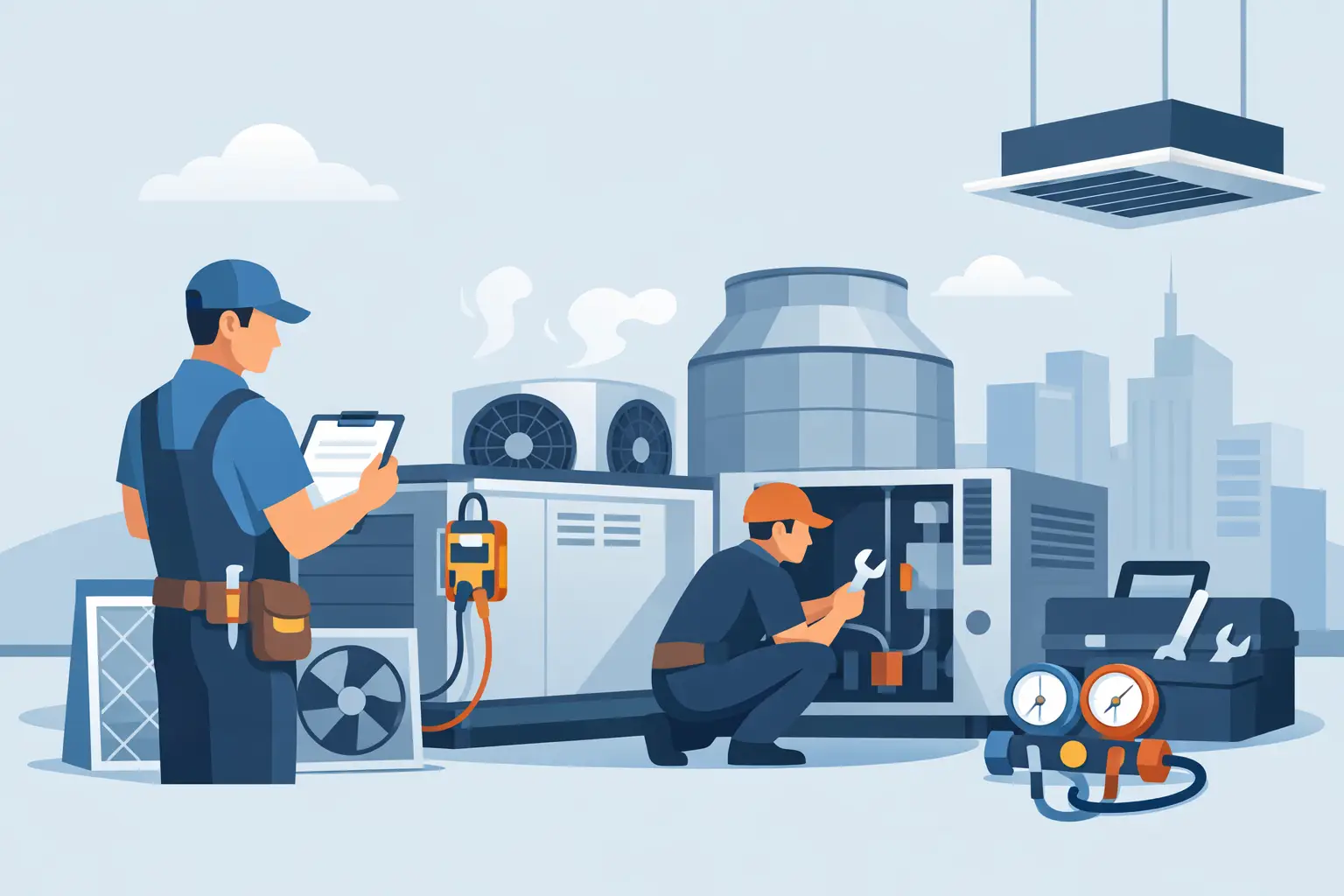
A rooftop unit rarely picks a convenient time to fail. In Houston, it usually happens during a heat wave, when tenants are calling, employees are uncomfortable, and customers are already noticing. That is why preventive maintenance is not just a line item for commercial buildings. It is part of keeping the doors open, protecting equipment life, and avoiding repair calls that cost more because they happen at the worst possible moment.
This commercial HVAC preventive maintenance guide is built for business owners, property managers, and facility teams who need practical control over comfort, costs, and uptime. If you run a retail space, office, restaurant, church, warehouse, or multi-tenant property, the goal is the same: catch small issues early, keep airflow and cooling stable, and reduce the odds of a mid-season breakdown.
Why preventive maintenance matters in commercial buildings
Commercial HVAC systems work harder than most people realize. They run for longer hours, support larger spaces, and often deal with uneven occupancy, frequent door openings, kitchen heat, server loads, or hot attics and roof exposure. In Houston, long cooling seasons put even more strain on compressors, coils, motors, and controls.
When maintenance gets skipped, the system usually keeps running for a while. That is part of the problem. It gives the impression that everything is fine while efficiency slips, parts wear down faster, and comfort complaints start showing up one room at a time. A dirty condenser coil, a weak capacitor, a clogged drain line, or a loose electrical connection may not shut the system down today, but each one pushes it closer to failure.
Preventive maintenance helps in three ways. First, it lowers the chance of emergency breakdowns. Second, it improves efficiency, which matters when utility costs are high. Third, it helps you plan repairs and replacements instead of getting forced into them during peak demand.
What a commercial HVAC preventive maintenance guide should cover
A useful maintenance plan is not just "change the filters and take a look." Commercial equipment needs a structured inspection schedule tied to usage, building type, and system age. A newer office building with standard hours will not need the same attention as a restaurant, medical office, or older retail center.
At a minimum, a commercial HVAC preventive maintenance guide should include airside components, refrigeration performance, electrical safety, drainage, controls, and system cleanliness. It should also account for seasonality. In Houston, cooling preparation matters early and often, while heating checks still matter before colder weather arrives.
The strongest plans also include documentation. If no one is tracking pressures, amperage, temperature split, filter condition, recurring alarms, and part replacements, small patterns get missed. Good records help identify whether a unit is stable, declining, or becoming too expensive to keep repairing.
The core maintenance tasks that protect performance
Filter changes are the most visible maintenance item, but they are only one part of the picture. Filters that are overdue restrict airflow, raise energy use, and can lead to coil issues or comfort imbalances. In dusty environments or high-traffic commercial spaces, filter intervals may need to be much shorter than the standard schedule.
Coil cleaning is another major priority. Evaporator and condenser coils collect dirt over time, and even a moderate buildup can reduce heat transfer enough to strain the system. That often shows up as longer run times, higher utility bills, or poor cooling on the hottest part of the day.
Drain line and condensate checks matter more than many facility teams expect. In Houston’s humidity, clogged drains can create water damage, indoor air quality concerns, or float switch shutoffs that stop cooling entirely. A simple cleaning and inspection can prevent a much larger headache.
Electrical components also deserve close attention. Contractors should inspect contactors, capacitors, relays, wiring, and disconnects for wear, overheating, or loose connections. Many no-cool calls begin with electrical issues that gave warning signs during earlier service visits.
Belts, bearings, blower assemblies, motors, and pulleys should be checked for wear and alignment where applicable. Refrigerant charge should be verified based on system design and operating conditions, not guessed at. Thermostats and controls should be tested to confirm the system is cycling correctly and responding to occupancy needs.
How often commercial HVAC maintenance should happen
For many small-to-mid-sized commercial properties, twice-yearly service is the baseline - once before cooling season and once before heating season. That works well for lighter-duty spaces with relatively stable occupancy and clean operating conditions.
But not every building fits that model. Restaurants, medical facilities, salons, gyms, and other high-demand environments often benefit from quarterly service. Buildings with older equipment may also need more frequent visits because wear-related issues can develop faster between inspections.
If your building has had repeated drain backups, airflow complaints, electrical failures, or refrigerant-related repairs, that is usually a sign the maintenance schedule needs to tighten up. The right frequency depends on run time, building use, and the cost of downtime. For some businesses, a preventive visit costs far less than even one hour of comfort disruption.
Warning signs between scheduled visits
Even with a maintenance program in place, building staff should know what to watch for. Rooms that suddenly feel warmer than the rest of the building often point to airflow or zoning problems. New noises from rooftop units or air handlers may indicate motor, belt, or bearing wear. Unusual cycling, rising energy bills, weak airflow, thermostat complaints, or musty smells should all trigger a closer look.
Water around indoor equipment should never be ignored. Neither should short cycling or breakers that trip more than once. These are the kinds of problems that start small and turn expensive if they are left alone through a Houston summer.
The cost question: maintenance vs. repair
Some owners hesitate to invest in recurring service because they want to avoid unnecessary expense. That is understandable. But the comparison should not be maintenance versus zero cost. It is maintenance versus emergency repair, lost productivity, tenant dissatisfaction, and premature replacement.
That said, there is a real trade-off. Preventive maintenance does not eliminate every repair. Older systems can still fail, especially if they are already near the end of their service life. What maintenance does is improve your odds, reduce avoidable wear, and give you better visibility into what is coming next.
For budget planning, that visibility matters. It is easier to approve a fan motor replacement during scheduled service than to deal with a full outage on a Friday afternoon in August. It is also easier to plan for replacement when service records show a unit is steadily losing efficiency and reliability.
Choosing the right service partner
Commercial maintenance works best when the technician is not just checking boxes. They should understand how your building operates, which areas are most sensitive to temperature swings, and which equipment is becoming a risk. The best service relationship is ongoing, not transactional.
Look for clear reporting, realistic recommendations, and responsiveness when conditions change. If a contractor identifies a weak component, you should know whether it needs immediate action, near-term budgeting, or simple monitoring. That kind of guidance helps owners and managers make informed decisions instead of reacting under pressure.
For Houston-area properties, it also helps to work with a team that understands how local heat, humidity, and long cooling seasons affect equipment. Elisee HVAC and Home Services Houston supports businesses that need dependable maintenance along with fast repair response when a unit does go down.
Building a maintenance plan that fits your property
A good plan starts with an equipment inventory. Know what units you have, their age, service history, filter sizes, locations, and known trouble spots. From there, set service intervals based on operating demand, not guesswork. A small office with newer split systems should not be treated the same as a retail site with aging rooftop equipment.
It also helps to decide who handles what internally. Your staff may be able to monitor thermostat settings, replace some filters, and report visible issues. Licensed HVAC technicians should handle electrical testing, refrigerant evaluation, deep cleaning, component diagnostics, and repair recommendations.
Most important, keep the plan active. Maintenance only works when it is scheduled, documented, and followed through. If you want fewer surprises, better comfort, and more control over operating costs, routine service is one of the most practical steps you can take.
When your HVAC system supports employees, tenants, inventory, or customer experience, waiting for a failure is rarely the cheaper option. A steady maintenance program gives your building a better chance to stay comfortable when Houston weather is doing its worst.