A restaurant dining room at 78 degrees in July is not a small problem. Neither is a retail store with weak airflow, an office with hot and cold spots, or a shop that has to close early because the system froze up. For small businesses in the Houston area, HVAC problems hit revenue fast. Customers leave, employees get distracted, and emergency repair costs pile up at the worst possible time.
That is why commercial HVAC maintenance for small business is less about checking a box and more about protecting day-to-day operations. When your cooling and heating system gets regular attention, you are not just trying to avoid breakdowns. You are trying to keep your business usable, comfortable, and predictable.
Why commercial HVAC maintenance for small business matters
Small businesses usually do not have the same margin for disruption that larger facilities do. A single rooftop unit failure can affect your whole space. If you run a salon, small clinic, café, office, daycare, or neighborhood retail location, indoor comfort is part of the customer experience whether you market it or not.
Routine maintenance gives you a better shot at avoiding peak-season failures, especially during Houston heat when systems are already under strain. It also helps catch the slower problems that often get ignored until they become expensive. Dirty coils, clogged drains, worn belts, low refrigerant, failing capacitors, and airflow restrictions rarely show up all at once. They build over time, and they usually show up when your system is working hardest.
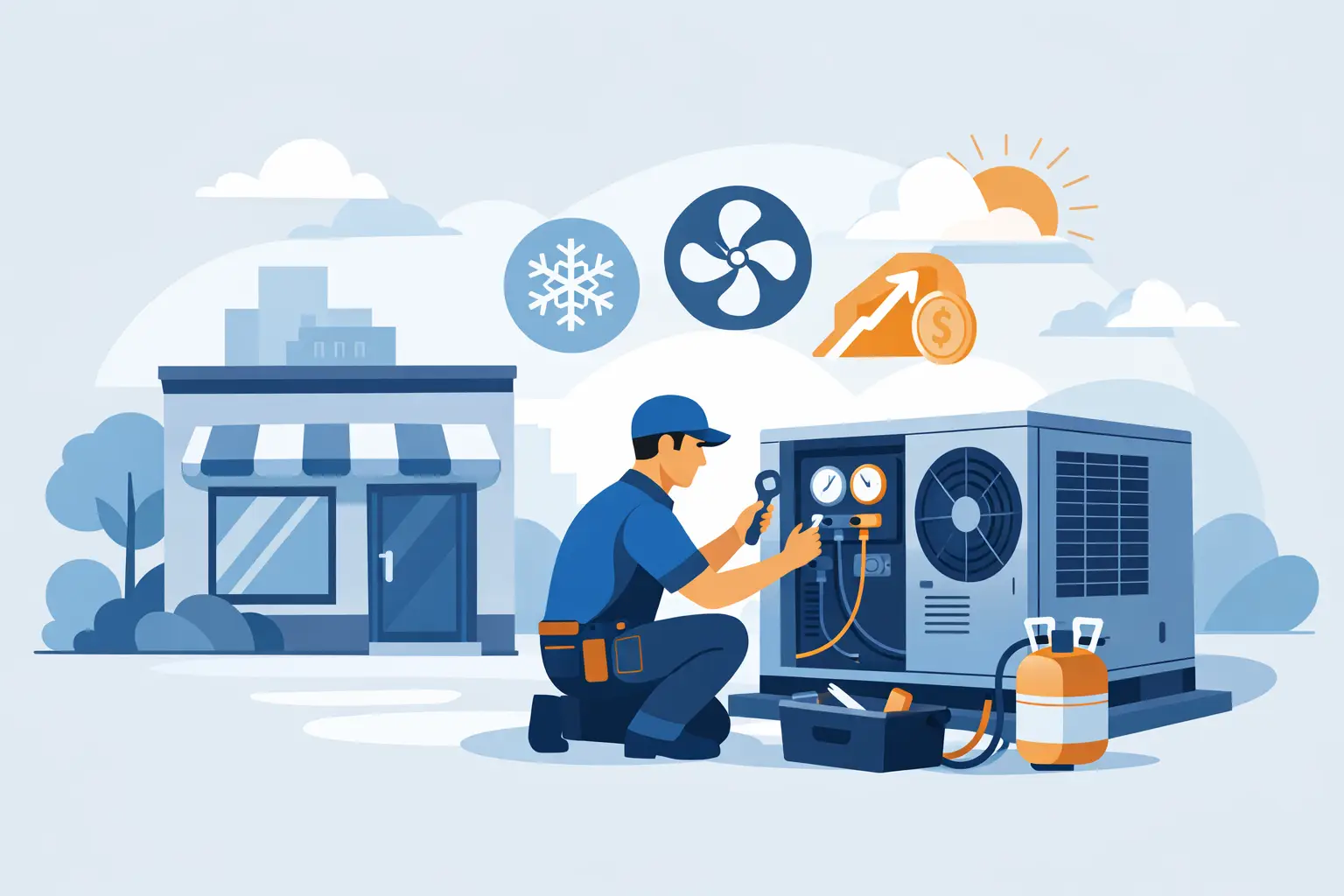
There is also the utility cost side. Many business owners first notice HVAC trouble through higher monthly bills, not a total shutdown. When equipment is dirty, out of calibration, or struggling to move air, it uses more energy to do less work. Maintenance can improve efficiency, but the exact savings depend on the age of the system, building layout, insulation, hours of operation, and how overdue service has become.
What a maintenance visit should actually include
Good maintenance is more than changing a filter and leaving a sticker behind. A proper commercial service visit should look at how the system is performing, not just whether it turns on.
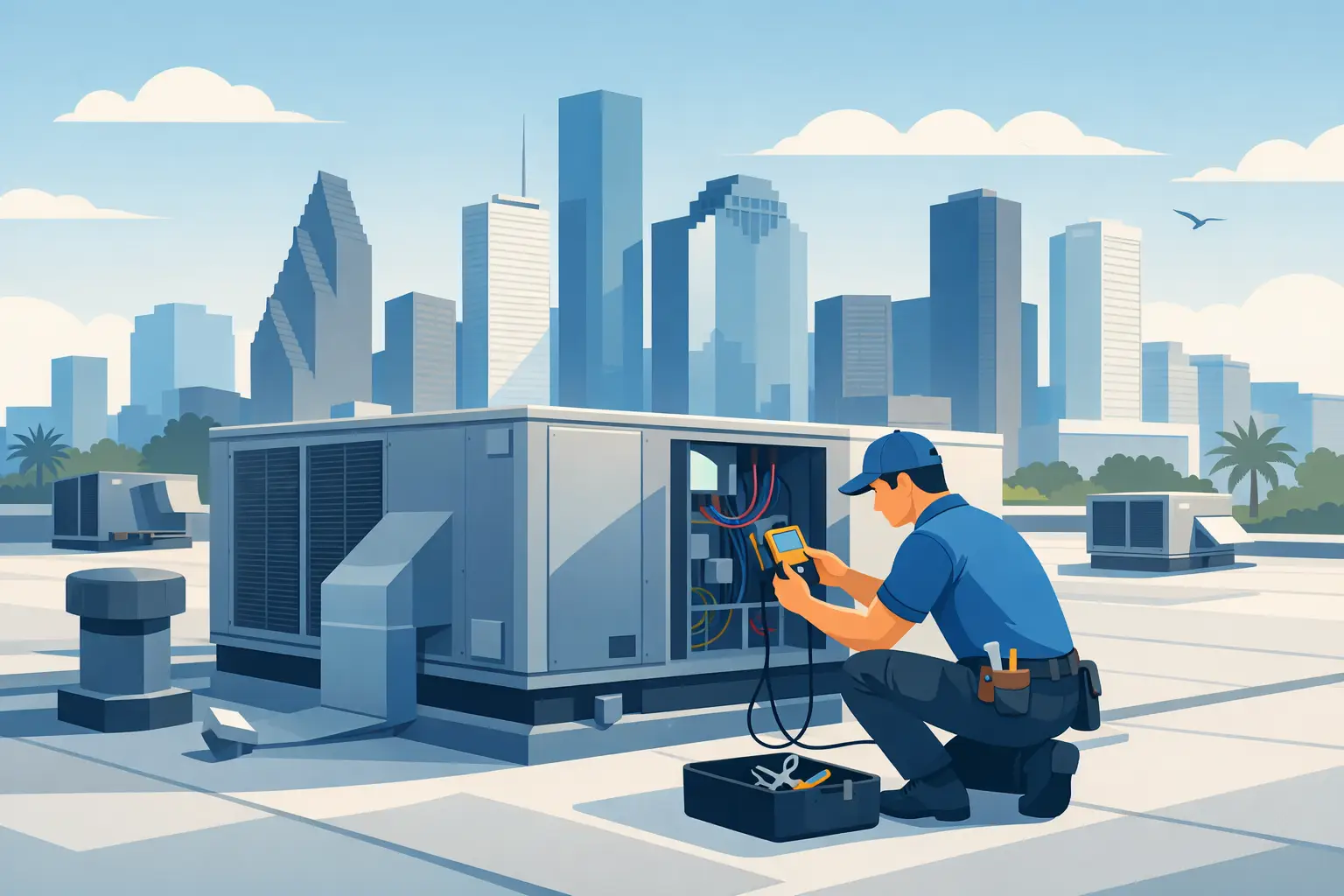
For most small business systems, that means checking filters, blower components, coils, drain lines, electrical connections, contactors, capacitors, thermostat operation, refrigerant levels when needed, and overall airflow. On heating equipment, it should also include inspection of burners, heat exchangers, safety controls, and ignition components. If your business uses rooftop units, access panels, weather wear, and curb condition may also matter.
The goal is twofold. First, identify anything likely to fail soon. Second, correct the smaller issues that make the system work harder than it should. Sometimes the fix is simple, like replacing a clogged filter or clearing a drain line. Other times, maintenance reveals a part that is still running but clearly nearing the end of its life.
That is where experience matters. A technician-led maintenance approach should not leave you guessing whether a recommendation is urgent, optional, or worth planning for later.
The biggest mistakes small business owners make
The most common mistake is waiting for a breakdown. That sounds obvious, but it happens for practical reasons. Many owners are juggling payroll, staffing, inventory, and customer service, so HVAC slips down the list until comfort complaints get loud enough to force action.
Another mistake is treating every business the same. A small office with stable weekday hours has different HVAC needs than a bakery, gym, medical suite, or storefront with doors opening all day. Equipment runtime, indoor humidity, ventilation demand, and occupancy swings all affect how often service should happen.
The third mistake is focusing only on repair price instead of downtime cost. A cheaper emergency fix is not always the better financial decision if it leaves you vulnerable to another shutdown next month. For many small businesses, the real cost is lost productivity, interrupted service, and unhappy customers.
How often should maintenance happen?
For most small commercial properties, twice-a-year service is a smart baseline - once before cooling season and once before heating season. In Houston, the cooling side deserves special attention because the system works so hard for so much of the year.
That said, frequency depends on the building and business type. If your system runs long hours, deals with high dust levels, serves rooms with people coming and going all day, or supports temperature-sensitive operations, you may need more frequent inspections and filter changes. Businesses with older equipment often benefit from closer monitoring too.
If you are unsure what schedule makes sense, start with an honest assessment of your current system, runtime, and complaint history. A maintenance plan should fit your operation, not a generic calendar.
Signs your system needs attention before the next scheduled visit
Not every issue can wait for seasonal maintenance. If you notice weak airflow, uneven temperatures, short cycling, unusual sounds, musty odors, water around the unit, or a sudden increase in energy use, it is worth getting the system checked sooner.
Commercial systems rarely fail without giving some warning first. The trouble is that the warning signs are easy to dismiss when the unit is still technically running. A struggling system can keep operating while quietly damaging parts, wasting energy, and making indoor comfort harder to maintain.
This is especially true during extreme heat. In Houston, once your system begins slipping in midsummer, there may not be much room left before it stops keeping up altogether.
Repair, maintain, or replace? It depends
One of the hardest decisions for small business owners is knowing when maintenance is enough and when replacement should be on the table. There is no one-size-fits-all answer.
If the system is relatively young, repairable, and your comfort issues trace back to deferred upkeep or a specific component, maintenance plus targeted repairs often makes sense. If the unit is older, breaking down repeatedly, driving up utility bills, and struggling to hold temperature even after service, replacement may be the more stable long-term choice.
Budget matters, but so does reliability. Some owners keep an aging system alive because the upfront replacement cost feels steep. That can be reasonable in the short term. But if repairs are frequent and the business cannot afford a surprise shutdown, planned replacement may actually reduce risk. Financing options can also change that decision for some businesses by making a larger project easier to approve.
What to expect from a good service partner
Small business owners usually do not want a long technical lecture. They want clear answers, honest timing, and a system that works when customers and employees walk through the door.
A dependable HVAC partner should explain what was found, what needs immediate action, what can wait, and what steps could improve performance or efficiency over time. They should also understand that response time matters. If your cooling fails during operating hours, you need help fast, not a vague callback window.
That local responsiveness is a major part of the value. In a market like Houston, where heat can push commercial systems hard for months, 24/7 emergency support is not just a nice extra. For many businesses, it is the difference between a temporary disruption and a full operational problem.
For business owners who want one team to handle seasonal upkeep, repairs, system upgrades, and emergency calls, working with a provider like Elisee HVAC and Home Services Houston can simplify decision-making and reduce the stress of finding help when the pressure is already on.
Commercial HVAC maintenance for small business is really about continuity
The best maintenance plans do not feel dramatic. There is no crisis, no panicked phone call, and no scrambling to explain to staff or customers why the building is uncomfortable. That is the point.
When HVAC maintenance is handled consistently, your system has a better chance of lasting longer, operating more efficiently, and staying dependable during the months when you need it most. It will not prevent every problem, and no honest contractor should promise that. But it can reduce surprises, improve planning, and give your business a steadier footing.
If your HVAC only gets attention after something breaks, that is usually a sign the system is already costing you more than it should. A little proactive service now can save you from a much harder decision on a very hot afternoon.