
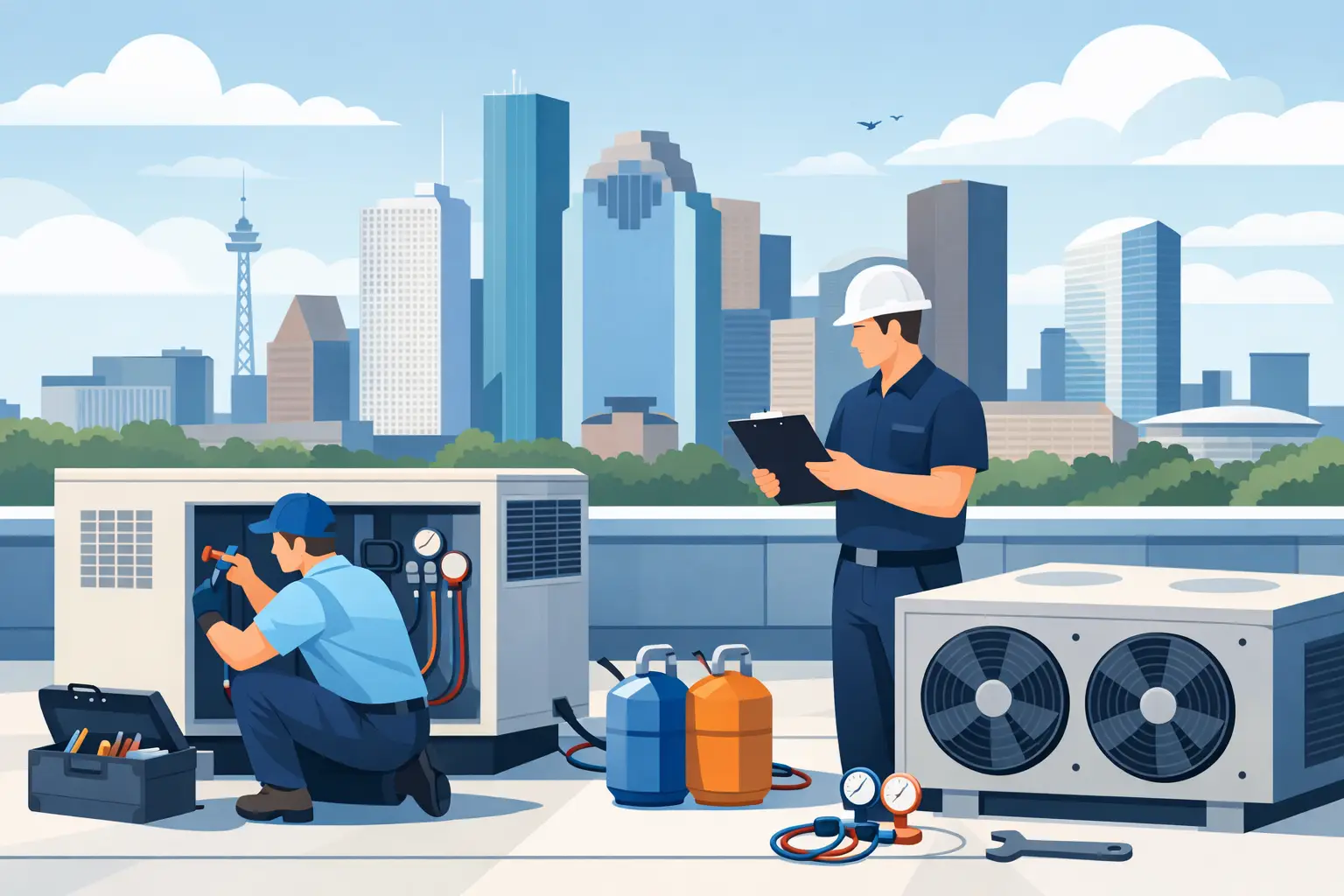
A failing rooftop unit at 2 p.m. in August is not a minor inconvenience in Houston. It can shut down a dining room, overheat a server closet, frustrate staff, and push customers straight back out the door. For many businesses, air conditioning is not just about comfort. It protects revenue, equipment, employee productivity, and day-to-day operations.
That is why commercial AC repair in Houston has to be fast, accurate, and built around uptime. Business owners and property managers do not need guesswork. They need a technician who can diagnose the problem, explain the fix clearly, and get the system back online with as little disruption as possible.
Why commercial AC repair Houston calls for a faster response
Houston puts commercial HVAC systems under constant pressure. Long cooling seasons, high humidity, heavy run times, and sudden spikes in demand all wear equipment down faster than many owners expect. A system may seem fine one week and start short cycling, leaking, or blowing warm air the next.
Commercial systems also tend to be more complex than residential units. You may be dealing with multiple zones, rooftop equipment, larger air handlers, thermostatic controls, ventilation requirements, or older ductwork that has been patched over time. The repair itself may be straightforward, but getting to the real source of the problem takes experience.
That matters because the wrong diagnosis costs more than the repair. It can mean repeat service calls, wasted parts, uneven cooling, and downtime that stretches far beyond the original issue. A good commercial repair visit should solve the actual problem, not just the most obvious symptom.
What a reliable commercial repair visit should look like
When you call for commercial AC repair Houston service, the process should feel organized from the start. Response time matters, but so does what happens after the technician arrives.
A proper visit begins with a full system evaluation. That usually includes checking airflow, thermostat communication, electrical components, refrigerant levels, coils, drains, capacitors, contactors, blower assemblies, and compressor performance. In commercial properties, it may also include reviewing how different spaces are cooling and whether one issue is affecting the rest of the building.
From there, the technician should explain what failed, what caused it, and whether there are any related concerns that could create another breakdown soon. Some repairs are simple and isolated. Others reveal a larger wear pattern. If a motor has failed because of strain caused by dirty coils or restricted airflow, fixing only the motor may not be enough.
Clear communication matters here. Business owners should know whether the repair is expected to restore normal operation fully, whether the system is nearing replacement age, and whether a temporary fix makes sense or simply delays a bigger problem.
Common commercial AC problems in Houston properties
No two buildings are identical, but some repair calls show up again and again across offices, retail spaces, restaurants, clinics, churches, and multi-tenant properties.
Electrical failures are common during peak summer demand. Capacitors, relays, contactors, and wiring connections take a beating when systems run hard for long periods. Refrigerant leaks are another frequent issue, especially in older equipment. A leak is not just a matter of adding refrigerant. The source has to be found and repaired, or the system will keep losing cooling capacity.
Drain line blockages also cause trouble in Houston's humidity. When condensate cannot drain properly, water can back up, trigger float switches, or create ceiling and wall damage. Dirty coils and airflow restrictions are equally common. These may not cause a dramatic breakdown right away, but they reduce cooling performance, increase utility bills, and put extra stress on major components.
Then there are the complaints that seem small at first - one hot room, weak airflow in the back office, inconsistent temperatures between suites. These often point to larger balancing, duct, zoning, or control issues. They are easy to ignore until customers or staff start noticing every day.
Repair or replace? It depends on the system and the stakes
This is one of the biggest questions in commercial HVAC, and there is no one-size-fits-all answer. A repair can be the smart move if the unit is relatively young, the issue is isolated, and the rest of the system is still operating efficiently. In that case, fast repair helps you avoid unnecessary capital expense.
But if a system is older, breaking down often, or driving up energy costs month after month, replacement may be the better business decision. The cheapest invoice today is not always the lowest operating cost over the next three years. That is especially true when frequent breakdowns affect tenants, customers, or critical operations.
The right contractor should be honest about that trade-off. If a repair is worthwhile, they should say so. If the equipment is becoming unreliable, they should explain why and what your options look like. For many small and mid-sized businesses, planning an upgrade before a total failure is easier than dealing with an emergency replacement in extreme heat.
Why preventive maintenance changes the math
A lot of emergency service calls begin with problems that were building quietly for months. Filters loaded up. Coils got dirty. Electrical parts weakened. Drains started slowing down. Airflow dropped enough to strain the system, but not enough to trigger immediate concern.
That is why maintenance matters so much for commercial properties in Houston. It reduces the odds of sudden failure during the hottest part of the year and gives owners a clearer view of system condition before a crisis hits. Maintenance also helps catch efficiency losses early, which can make a noticeable difference in monthly operating costs.
For commercial clients, maintenance is less about checking a box and more about protecting continuity. If your business depends on customer traffic, tenant satisfaction, temperature-sensitive inventory, or employee productivity, scheduled service is part of risk management.
The value of 24/7 emergency support
Commercial HVAC problems do not wait for convenient hours. A unit can fail before opening, after closing, on a weekend, or during a stretch of extreme heat when every hour matters. In those moments, responsiveness is not a bonus feature. It is the service.
That is where a local company with 24/7 emergency availability can make a real difference. Faster response helps limit downtime, reduce discomfort, and keep a manageable repair from turning into a larger operational issue. For some businesses, especially restaurants, medical offices, childcare facilities, and retail environments, waiting until the next business day is simply not practical.
Local knowledge matters too. A Houston-area technician understands what these systems go through here - not just heat, but humidity, storm-related power issues, and long cooling seasons that compress equipment life. That context helps with both diagnosis and recommendations.
Choosing a commercial HVAC partner, not just a repair call
If you manage a property or run a business, the goal is not only to fix the immediate issue. It is to have one dependable team you can call for repairs, maintenance, system upgrades, ductwork concerns, and long-term efficiency improvements.
That continuity helps because the contractor gets to know your building, your equipment history, and the pressure points that affect your operation. It also saves time when something goes wrong. Instead of starting from scratch with a new vendor each time, you are working with a company that already understands your setup.
Elisee HVAC and Home Services Houston approaches commercial service with that broader view. The repair matters, but so does the bigger picture - reducing repeat issues, improving performance, and helping businesses stay ahead of avoidable failures. When needed, support can extend beyond repair into maintenance planning, system replacement, and efficiency improvements that help control operating costs.
What to do when your system starts showing warning signs
Do not wait for a full shutdown if your building is already telling you something is off. Warm air, rising humidity, short cycling, unusual noises, weak airflow, uneven temperatures, and unexplained energy spikes are all reasons to call sooner rather than later. Early service often means a simpler repair, lower cost, and less disruption.
It also gives you more options. When a system is still partially operating, technicians can often diagnose conditions more clearly and help you plan next steps without the pressure of a complete outage. That is better for your staff, your customers, and your schedule.
If your business needs commercial AC repair Houston property owners can rely on, look for a team that responds quickly, communicates clearly, and treats uptime like the priority it is. In this climate, dependable cooling is part of keeping your business open, productive, and ready for the next day.