
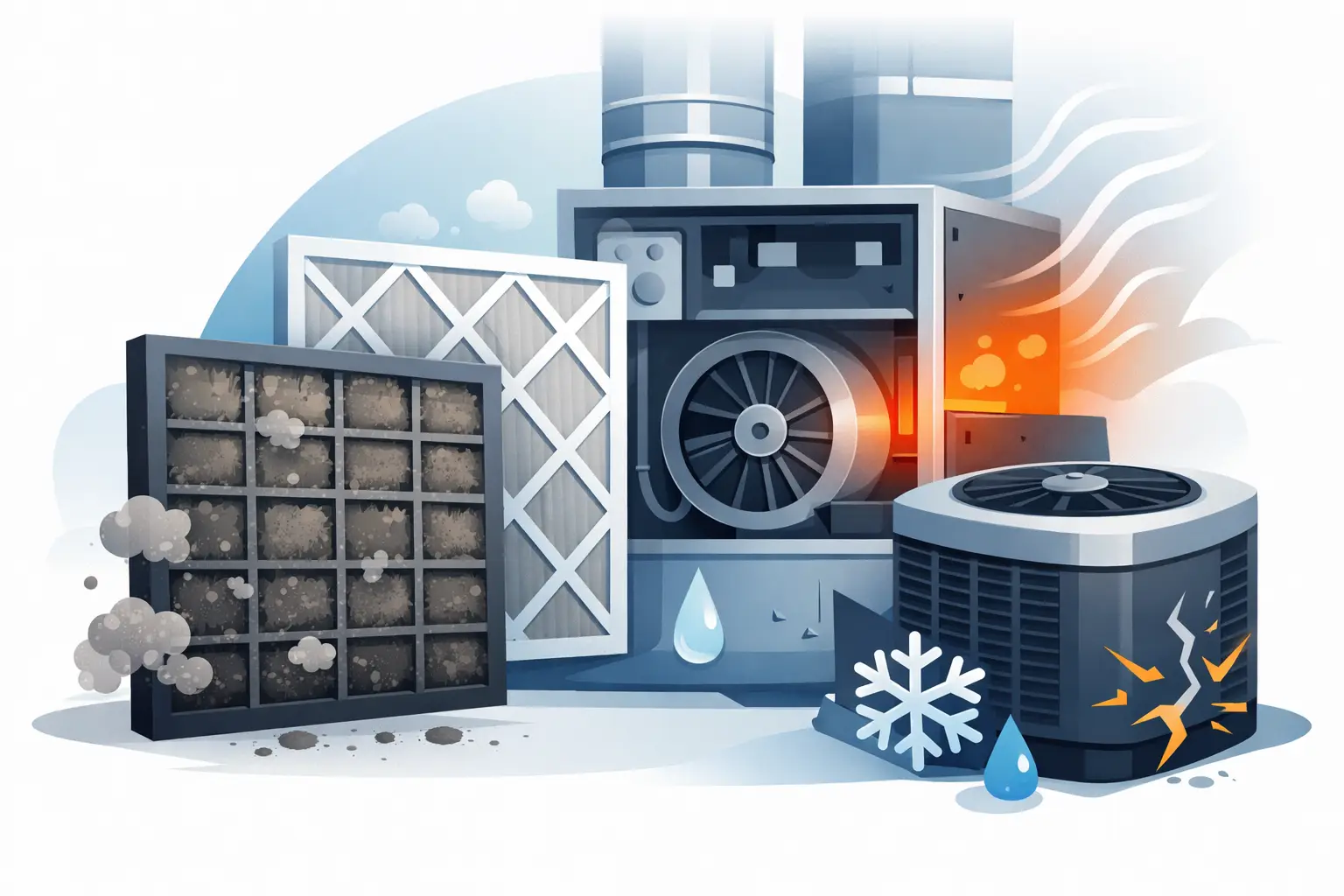
When your AC keeps running but the house still feels sticky, the filter is one of the first places to look. Homeowners often ask, can clogged filters damage HVAC systems, or do they just make them less efficient? In real-world Houston conditions, a dirty filter can do both - and the longer it stays that way, the more strain it puts on the equipment you rely on every day.
A clogged filter starts as a small maintenance issue. It can turn into poor airflow, uneven temperatures, higher electric bills, frozen coils, overheating components, and avoidable repair calls. For homes and small businesses across the Houston area, that matters because HVAC systems rarely get a break for long stretches of the year.
Can clogged filters damage HVAC equipment?
Yes, they can. The filter’s job is simple: catch dust, debris, and airborne particles before they move deeper into the system. But when that filter gets packed with buildup, airflow drops. Your HVAC system still tries to hit the temperature on the thermostat, so it works longer and harder to compensate.
That extra strain affects more than comfort. Restricted airflow can push the blower motor harder than it should run, reduce cooling capacity, and throw off the balance of the entire system. On the air conditioning side, low airflow across the evaporator coil can cause the coil to get too cold and freeze. On the heating side, airflow problems can contribute to overheating inside the furnace. Either situation can shorten equipment life and increase the odds of a breakdown.
The damage is not always immediate. That is what makes clogged filters easy to ignore. Many systems will keep operating for a while, but they do it inefficiently and under stress. By the time the system stops cooling or heating properly, the filter problem may already have led to a larger repair.
Why a dirty filter causes bigger HVAC problems
HVAC systems are designed to move a specific amount of air. When the filter is blocked, the system cannot breathe the way it should. Think of it less like a minor inconvenience and more like forcing mechanical equipment to operate with a built-in restriction every time it turns on.
In cooling mode, one of the most common results is a frozen evaporator coil. Warm air from the home is supposed to pass over the coil, helping the refrigerant absorb heat. If not enough air passes through, the coil temperature can drop too low, and ice forms. Once that happens, airflow gets even worse. You may notice weak air from the vents, longer run times, and rooms that never quite cool down.
In heating mode, especially with a furnace, restricted airflow can cause the heat exchanger area to run hotter than intended. Modern systems have safety controls that may shut the unit down to prevent more serious damage, but repeated overheating is still hard on components. Limit switches, blower parts, and other internal pieces can wear out faster.
There is also the issue of static pressure. When airflow is restricted, the system operates under conditions it was not designed for. That can expose weaknesses in older systems, ductwork, or motors that were already under strain.
The warning signs are usually easy to spot
A clogged filter often gives you clues before major damage sets in. The trouble is that many property owners chalk those signs up to normal summer demand or an aging system.
If some rooms feel warmer than others, your airflow may be dropping. If the AC runs for long cycles without bringing the temperature down, a blocked filter may be part of the problem. If you notice more dust around the home, higher utility bills, ice on the indoor unit, or weak air coming from vents, it is worth checking the filter right away.
For small businesses, the signs can show up as comfort complaints from staff or customers, especially in spaces farther from the unit. A system with poor airflow may still be on, but it will not deliver the steady performance commercial spaces need.
A quick filter check is one of the simplest ways to rule out a preventable issue before scheduling a larger repair.
How fast can a clogged filter become a problem?
That depends on the filter type, the system, and the building itself. In some homes, a filter can load up faster than expected because of pets, renovation dust, high occupancy, or indoor air quality issues. In Houston, long cooling seasons also mean filters often work harder for more months out of the year.
A one-inch filter in a busy household may need attention much sooner than the owner expects. Thicker media filters can last longer, but they are not set-and-forget items. Even a higher-quality filter can become restrictive if it stays in too long.
There is also a trade-off with filtration ratings. A filter that captures smaller particles can help indoor air quality, but if the system is not designed for that level of resistance, airflow can suffer. That is why the best filter is not always the densest one on the shelf. The right choice depends on your equipment and how your home or building is used.
What clogged filters can cost you
The first cost is usually energy. When airflow drops, run time goes up. Your system has to work longer to deliver less comfort, and utility bills often reflect that quickly.
The second cost is wear and tear. Blower motors, capacitors, limit controls, and other components can fail earlier when the system is constantly struggling against restricted airflow. In some cases, frozen coils can lead to service interruptions that leave you without cooling when you need it most.
The third cost is lifespan. HVAC equipment is a major investment. Anything that forces it to operate under stress on a regular basis can reduce how long it lasts. That does not mean one late filter change will destroy a system, but repeated neglect absolutely adds up.
For landlords and business owners, the cost includes downtime. Comfort problems affect tenants, employees, customers, and day-to-day operations. A clogged filter is small compared to a compressor issue or emergency replacement, but it can help create the conditions for bigger problems if nobody catches it.
How often should you change the filter?
There is no single answer that fits every property. A common starting point is every 30 to 90 days, but real conditions matter more than the packaging.
If you have pets, allergy concerns, ongoing construction, or an HVAC system that runs heavily for much of the year, checking monthly is a safer habit. If you manage a small commercial space, regular inspections are just as important because occupant load and business activity can affect filter life.
The best approach is simple: inspect the filter on a schedule instead of guessing. If it looks loaded with dust and debris, replace it. If the filter still has useful life, note the condition and check again soon. Over time, you will get a more accurate sense of the right interval for your property.
When a filter change is not enough
Sometimes replacing the filter solves the issue quickly. Other times, the clogged filter was only the first symptom. If the system still has weak airflow, keeps freezing up, cycles oddly, or cannot maintain temperature after a fresh filter is installed, there may be a deeper problem.
Dirty coils, blower issues, duct leakage, thermostat problems, or low refrigerant can all affect performance. In those cases, a professional diagnosis saves time and prevents guesswork. That is especially true in Houston heat, where waiting too long can turn a manageable repair into a full outage.
A technician-led inspection can also confirm whether the filter you are using is appropriate for the system. Many people are trying to improve air quality, which makes sense, but the wrong filter setup can create airflow issues if the system is not matched to it.
A simple habit that protects comfort
Filter changes are not the most dramatic part of HVAC maintenance, but they are one of the most important. Clean filters support airflow, help your equipment run closer to design, and reduce the chances of avoidable strain during the hottest and coldest parts of the year.
For Houston-area homes and businesses, that kind of prevention matters. Reliable cooling and heating are not optional when occupancy, comfort, and daily operations depend on them. If you are unsure whether your system is already being affected by restricted airflow, having it checked before the next peak weather swing is a smart move.
At Elisee HVAC and Home Services Houston, we see this issue often: a small filter problem that quietly snowballs into poor performance or a no-cool call. Staying ahead of it is one of the simplest ways to protect your system, control energy costs, and keep your space comfortable when it matters most.