
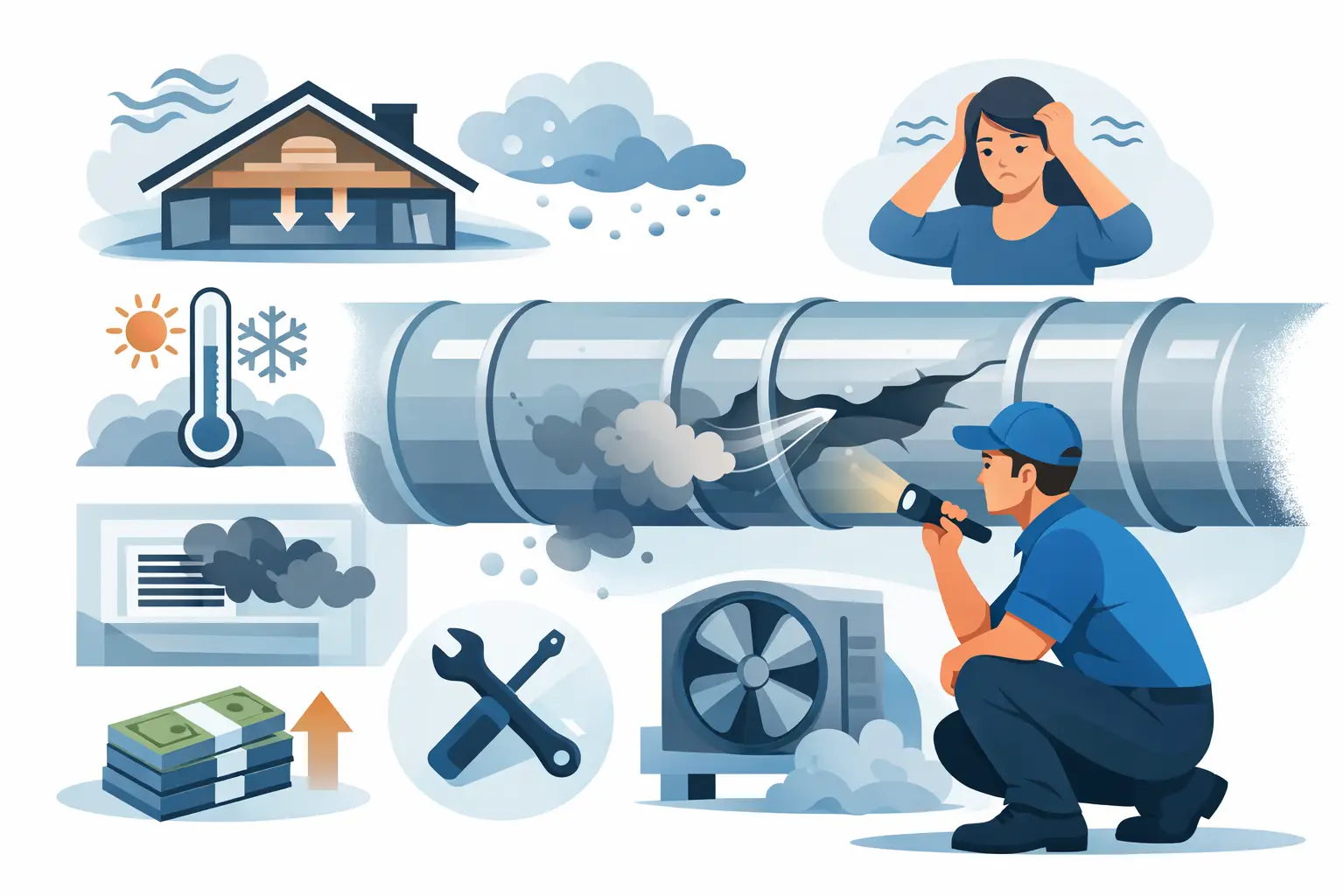
If one room in your home feels like Houston in August while the next feels almost comfortable, your AC may not be the only thing to blame. Some of the best signs you need duct replacement show up quietly at first - uneven temperatures, higher utility bills, extra dust, and airflow that never seems quite right no matter how often the system is serviced.
For homeowners and property managers, ductwork problems are easy to miss because most of the system is hidden behind walls, ceilings, or attic insulation. But when ducts are leaking, crushed, poorly designed, or simply worn out with age, your heating and cooling system has to work harder to deliver less comfort. That means more strain on equipment, less predictable indoor temperatures, and more money spent every month for results that still fall short.
Why ductwork matters more than most people think
Your duct system is the delivery path for conditioned air. Even a high-efficiency AC unit cannot perform the way it should if the air it produces is escaping into the attic, getting trapped by damaged sections, or failing to reach the rooms that need it most.
In the Houston area, that matters even more. Long cooling seasons, heavy humidity, and high system demand put pressure on every part of an HVAC system. When ducts are compromised, comfort issues tend to show up faster and energy waste becomes more expensive.
Best signs you need duct replacement in your home or building
Some duct issues can be repaired with sealing or section replacement. Others point to a larger system problem where full replacement makes more sense. The difference usually comes down to age, extent of damage, and whether the duct layout was ever right for the space in the first place.
1. Some rooms stay hot or stuffy no matter what
If your thermostat says one temperature but several rooms feel completely different, your ductwork may be failing to distribute air evenly. This can happen when ducts have leaks, disconnected joints, poor sizing, or long runs that reduce airflow before it reaches the far end of the house.
A single uncomfortable room does not always mean total duct replacement is needed. But if hot and cold spots have been a long-term issue across multiple areas, it usually points to a system-wide duct problem rather than a simple vent adjustment.
2. Airflow from vents feels weak
Weak airflow is one of the most common warning signs technicians see before recommending duct replacement. If air is barely coming out of the vents, especially in rooms farthest from the unit, damaged or collapsing ducts could be restricting the path.
It depends on the cause. A clogged filter, blower issue, or dirty evaporator coil can also reduce airflow. But when the equipment checks out and the problem remains, the duct system deserves a closer look.
3. Utility bills keep rising without a clear reason
When ducts leak conditioned air into attics, crawl spaces, or wall cavities, your system has to run longer to hit the thermostat setting. That wasted air shows up in your monthly energy bill.
If your usage habits have stayed about the same but your cooling costs keep climbing, replacement may be worth considering - especially if the ductwork is older or has already had multiple patch repairs. At some point, continuing to seal one problem after another stops being the cost-effective option.
4. You notice excessive dust around vents and surfaces
Leaky return ducts can pull dust, insulation particles, and attic debris into the system and circulate them through the property. If you are constantly dusting and the buildup returns quickly, damaged ducts may be part of the reason.
This is not always a duct replacement issue on its own. Sometimes cleaning and sealing will help. But if the duct material is deteriorating, joints are separating, or contamination has been ongoing for years, replacement often provides the cleaner long-term fix.
5. Ducts are old, sagging, torn, or crushed
Visible damage is one of the clearest signs. Flexible ducts in attics can sag over time, get kinked, tear at the connections, or collapse under storage items or service traffic. Metal ducts can rust, separate at seams, or lose insulation.
Once ducts are physically compromised in several places, replacement usually makes more sense than repeated spot repairs. New ductwork can restore proper airflow, improve insulation value, and correct layout issues that older systems often have.
6. You hear rattling, whistling, or popping from the vents
Unusual duct noise should not be ignored. Whistling can mean air is escaping through gaps or being forced through undersized runs. Rattling may point to loose connections. Popping can happen when poorly fitted metal ducts expand and contract under pressure.
A little noise is normal in some systems, but loud or worsening sounds usually mean the duct system is under stress. If the noise comes with comfort problems and high energy use, replacement may solve more than one issue at the same time.
7. Humidity problems never seem to improve
In Houston, humidity control is part of comfort. If your indoor air feels clammy even when the AC is running, leaking or poorly designed ducts may be allowing unconditioned air into the system or preventing proper airflow across the home.
That can leave rooms feeling sticky and make the cooling system run longer than it should. High humidity can also contribute to musty odors and create conditions where mold becomes a concern in or around duct materials.
8. Repairs keep piling up, but comfort does not improve
If you have already paid for duct sealing, vent adjustments, airflow diagnostics, or repeated repairs and the same complaints keep coming back, replacement may be the more practical next step. This is especially true in older homes or commercial spaces where the duct design no longer matches the current layout or equipment.
There is a point where continuing to patch an aging duct system costs more in service calls, wasted energy, and day-to-day frustration than installing new ductwork that is properly sized and balanced.
9. Your HVAC equipment was replaced, but the ductwork was not
A new air conditioner connected to old, undersized, or damaged ducts is a common source of disappointing performance. Homeowners sometimes expect a new system to solve airflow and comfort issues automatically, but the equipment can only do so much if the delivery system is still compromised.
If your AC or furnace was upgraded and your home still has uneven temperatures, weak airflow, or high bills, old ductwork may be the missing piece.
When repair is enough and when replacement is smarter
Not every duct problem calls for a full replacement. If the issue is limited to a few accessible leaks, one damaged section, or minor insulation problems, targeted repairs may restore performance at a lower upfront cost.
Replacement becomes the smarter option when the duct system has widespread wear, repeated leakage, poor sizing, bad routing, or contamination that keeps returning. In those cases, a piecemeal approach can leave you paying for temporary fixes while the larger problem continues.
A professional inspection should look at more than whether air is moving. It should evaluate duct condition, static pressure, insulation, layout, airflow balance, and how well the duct system matches the equipment it serves.
What Houston property owners should pay attention to
Heat is not the only challenge in this market. Attic ductwork in Houston homes takes a beating from prolonged high temperatures, and humidity can make small duct leaks much more noticeable in daily comfort. That is why issues like inconsistent cooling, moisture concerns, and energy waste often show up together.
For landlords and small business owners, the stakes can be even higher. Poor duct performance can lead to tenant complaints, uncomfortable workspaces, and HVAC systems that wear out faster because they are constantly compensating for air loss.
If those patterns sound familiar, it is worth having the full system checked instead of focusing only on the thermostat or outdoor unit. A trusted local team like Elisee HVAC and Home Services Houston can help determine whether sealing, repair, or full duct replacement is the right move based on the actual condition of the system.
Best signs you need duct replacement before peak season hits
The best time to address duct issues is before a summer breakdown forces the decision. If your home has long-running hot spots, weak airflow, dust issues, rising bills, or visible duct damage, waiting usually means more strain on the equipment and less comfort when you need cooling the most.
Good ductwork does not call attention to itself. The air reaches the rooms it should, temperatures stay consistent, and the system does not have to fight to keep up. If your home or building has stopped feeling that way, your ducts may be telling you it is time for a real fix instead of another temporary patch.