
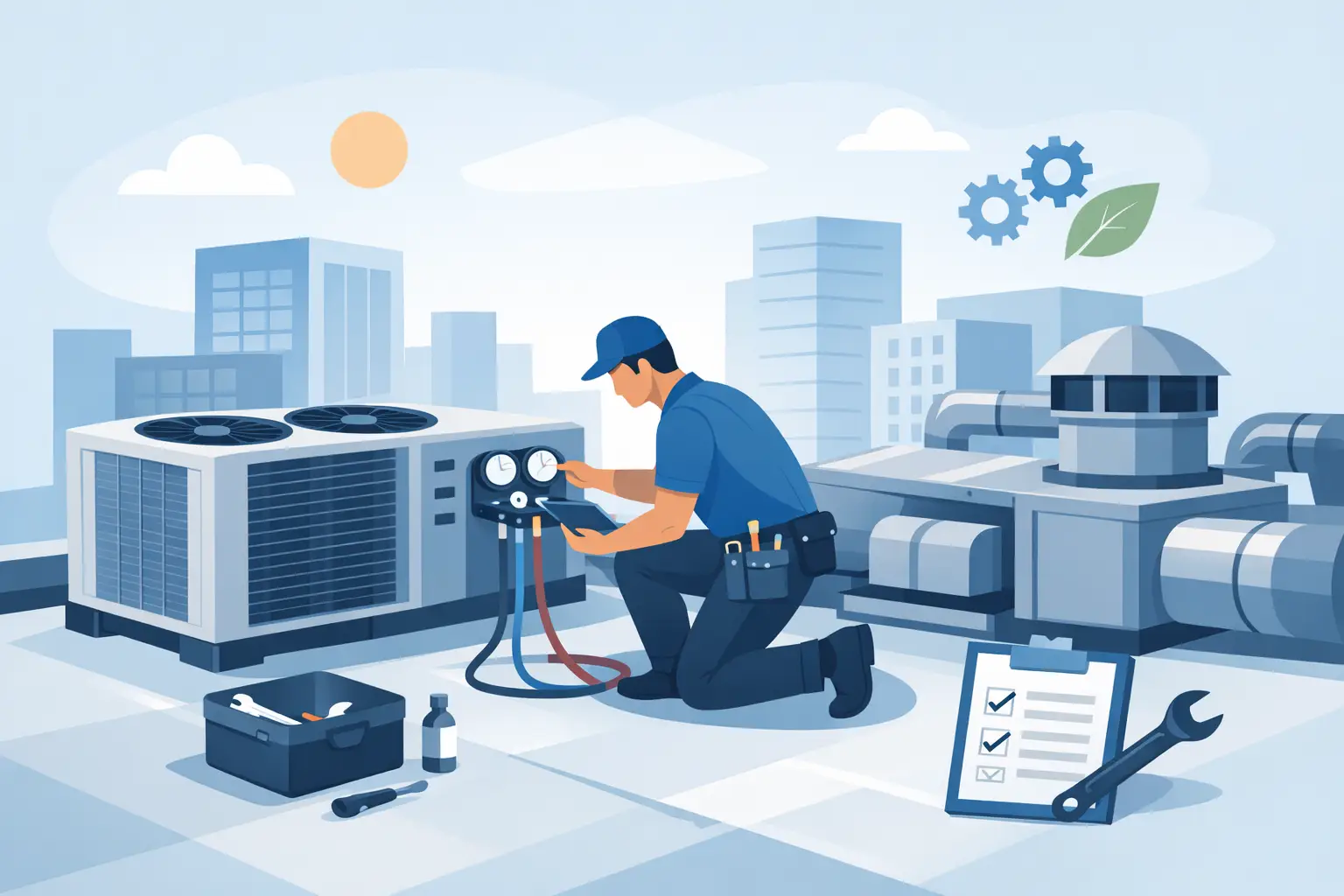
A rooftop unit failing at 2 p.m. in a Houston summer does more than make a building uncomfortable. It can shut down productivity, frustrate tenants, affect customers, and turn a manageable maintenance issue into an expensive emergency. That is why the best commercial HVAC maintenance practices are not just about keeping equipment clean. They are about protecting uptime, controlling operating costs, and making sure your building can handle the demands placed on it year-round.
For small and mid-sized businesses, maintenance has to be practical. It should prevent avoidable breakdowns, catch early warning signs, and support better performance without overcomplicating day-to-day operations. A good plan is not based on guesswork. It is based on how your system actually runs, how hard it works in Houston heat, and how much disruption your business can afford.
What the best commercial HVAC maintenance practices actually look like
The strongest maintenance programs are consistent, documented, and built around prevention. That sounds simple, but many commercial systems are still maintained reactively. Filters get changed only when there is a complaint. Coils get cleaned after efficiency drops. Refrigerant issues are addressed after cooling performance suffers. By then, energy waste and added wear have already taken hold.
The best commercial HVAC maintenance practices start with a scheduled service routine that matches the equipment type, building use, and seasonal demand. A small office with predictable occupancy will not need the same approach as a restaurant, retail space, or mixed-use property with varying load conditions. The goal is to service what matters before minor problems become business interruptions.
That usually means routine inspection of filters, belts, motors, coils, drain lines, thermostats, electrical connections, refrigerant levels, and safety controls. It also means checking how the full system operates under real conditions, not just whether it powers on. A system can still run while quietly wasting energy or approaching failure.
Start with the maintenance items that affect performance fastest
Airflow problems are among the most common causes of commercial HVAC trouble, and they often begin with neglected basics. Dirty filters restrict airflow, force equipment to work harder, and can reduce comfort across the building. In some settings, they may need monthly attention. In lighter-use spaces, the interval may be longer. What matters is actual condition, not a generic calendar reminder.
Evaporator and condenser coils also deserve regular attention. When coils collect dirt and debris, heat transfer suffers. That drives up run times and utility costs while increasing wear on compressors and fans. In Houston, where systems may run hard for long stretches, coil cleanliness has a direct effect on reliability.
Drain lines and condensate systems should never be treated as minor details. A clogged drain can lead to water damage, microbial growth, and emergency shutdowns. In commercial settings, that can affect tenant spaces, finished interiors, or sensitive equipment. Preventive flushing and inspection are far less disruptive than dealing with overflow after the fact.
Why seasonal inspections matter more in Houston
Not every market puts the same stress on cooling equipment. Houston does. Long cooling seasons, humidity, and heavy runtime create conditions where minor issues can escalate quickly. A unit that seems to be getting by in mild weather may fail under peak summer load.
That is why spring maintenance is especially important for commercial properties in this region. Before high demand hits, systems should be checked for refrigerant performance, amperage draw, thermostat calibration, coil condition, blower operation, and electrical integrity. Weak capacitors, loose connections, and failing contactors often show warning signs before full failure. Catching them early can mean the difference between a planned repair and an after-hours emergency call.
Fall maintenance also matters, even in a warm climate. Heating components, ignition systems, heat exchangers, and controls still need inspection to ensure safe and effective operation during cooler periods. Buildings that ignore heating maintenance can end up facing comfort complaints at the first cold snap, even if cooling performance has been the main focus all year.
Documentation is one of the most overlooked best commercial HVAC maintenance practices
Many businesses do some maintenance but still struggle with recurring issues because there is no clear service history. Without documentation, the same symptoms get treated over and over while the root cause stays unresolved. Maintenance records help identify patterns such as repeated low refrigerant readings, short cycling, recurring drain problems, or rising repair frequency on aging equipment.
Good records also support budgeting and replacement planning. If a rooftop unit has needed multiple major repairs over a short period, management can make a more informed decision about repair versus replacement. That matters for small businesses trying to avoid surprise capital expenses.
A documented maintenance plan should include service dates, findings, test results, recommended repairs, completed work, and notes on system condition. It does not need to be complicated. It just needs to be consistent enough to support smart decisions.
Pay attention to controls, not just equipment
Commercial comfort issues are not always caused by failing mechanical parts. Sometimes the problem is in the controls. Thermostats, sensors, scheduling settings, and zoning logic can all affect how the system performs and how much energy it uses.
If a building is being cooled aggressively after hours, if one area stays hot while another is overcooled, or if occupancy schedules have changed without HVAC settings being updated, the system may be working harder than necessary. Maintenance should include reviewing control settings and verifying that equipment operation matches the building’s actual needs.
This is especially important for businesses that have changed hours, expanded into additional suite space, added heat-producing equipment, or adjusted staffing patterns. HVAC settings that made sense two years ago may now be costing you money every month.
Treat small repairs as part of maintenance, not separate from it
One costly mistake in commercial HVAC management is separating maintenance from minor repairs too aggressively. If a technician finds a worn belt, weak capacitor, loose wire, or failing motor bearing during a maintenance visit, delaying the fix may erase much of the value of the service call.
That does not mean every recommendation should be approved automatically. It does mean minor corrective work should be evaluated in terms of downtime risk, not just immediate cost. In many cases, a smaller repair completed during routine service is the most cost-effective option because it prevents a larger interruption later.
This is where it helps to work with a provider that can support the full lifecycle of the system, from diagnostics and maintenance to repairs and replacement planning. If you are in the Houston area, Elisee HVAC and Home Services Houston can help businesses build maintenance around reliability, not just checklists.
Indoor air quality should be part of commercial HVAC maintenance
For many commercial properties, comfort is only part of the equation. Air quality affects employees, customers, tenants, and overall building conditions. Maintenance should include more than just temperature control. It should also look at filtration, ventilation performance, and cleanliness within the air distribution system.
The right filter strategy depends on the system and the use of the building. Higher-efficiency filtration can improve indoor air quality, but it has to be matched to equipment capabilities. A filter upgrade that overly restricts airflow can create new problems. This is one of those areas where the right answer depends on the building, not just the product label.
Duct condition matters as well. Leaks, contamination, or buildup can reduce efficiency and affect delivered air quality. In some facilities, duct cleaning or sealing may be an important part of long-term maintenance, especially when comfort complaints persist despite otherwise functional equipment.
Know when maintenance is no longer enough
Preventive service extends equipment life, but it does not make aging systems new again. There comes a point when maintenance starts to reveal a different message: the unit is becoming too expensive to keep alive. Frequent repairs, inconsistent comfort, rising energy bills, and difficulty finding parts are all signs that replacement should at least be discussed.
This is not always an immediate yes-or-no decision. Sometimes a business can make it through one more season with targeted repairs. Sometimes replacing one failing component buys useful time. In other cases, continuing to patch an aging system creates more disruption than planning a controlled upgrade.
A reliable HVAC partner should be honest about that trade-off. The goal is not to push replacement too early. It is to help owners and managers avoid being forced into rushed decisions during the hottest week of the year.
Build a maintenance plan around business continuity
The best maintenance plan is one that fits your operating reality. If your business cannot tolerate daytime interruptions, schedule service around off-hours access. If you manage multiple tenant spaces, make communication part of the process. If you operate equipment with heavy cooling loads, tighten inspection frequency before summer arrives.
The best commercial HVAC maintenance practices are ultimately about continuity. They protect comfort, reduce surprise costs, and give your building a better chance of staying online when the weather is least forgiving. A well-maintained system does not just run better. It gives owners, managers, and tenants one less thing to worry about when conditions are already demanding.
If your building has been getting by on reactive service, now is a good time to change that. A consistent maintenance plan will not eliminate every repair, but it will put you in a much better position when the next heat wave hits.