
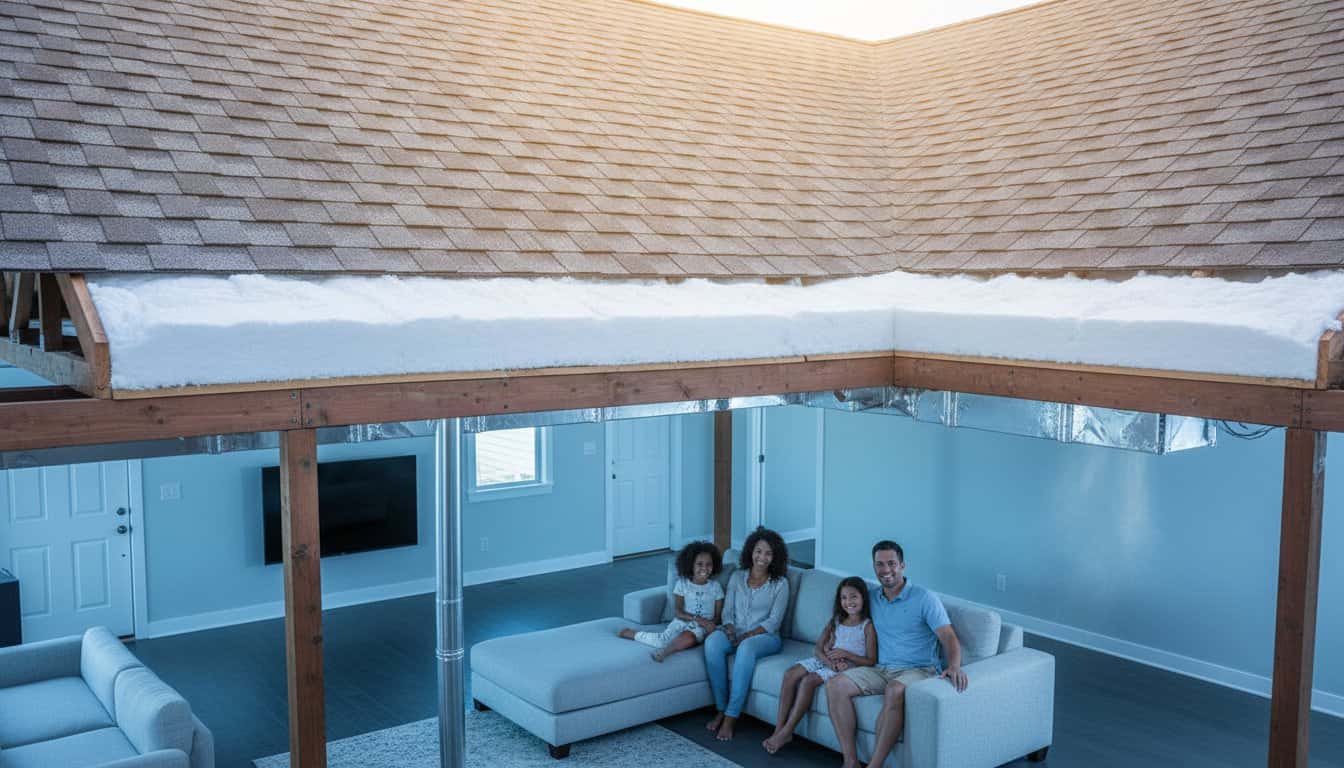
What if your attic is secretly acting as a massive heat battery, stealing comfort from your family every single afternoon? You've likely noticed those frustrating hot spots in the guest room or watched your AC unit cycle every 12 minutes just to maintain a livable temperature. It's exhausting to feel like you're fighting a losing battle against the Texas sun. We understand that your home should be a sanctuary, not a source of stress. Finding the right attic insulation advice hvac efficiency houston residents can trust is the first step toward reclaiming your peace of mind and protecting your expensive equipment.
You probably believe that your current setup is "good enough" because your home was built within the last 10 years. We're here to help you see past the confusion. By upgrading to meticulous, properly installed materials, you can slash your heating and cooling costs by an average of 15% according to data from the EPA. This guide debunks five common myths that are currently costing you money and putting unnecessary strain on your HVAC system. Let's look at how a tailored approach to your attic can create the pristine, comfortable environment your family deserves.
Key Takeaways
- Stop the "oven effect" by learning how attic insulation acts as a summer shield, keeping scorching heat out of your living sanctuary.
- Gain expert attic insulation advice hvac efficiency houston to eliminate long recovery cycles and significantly lower your monthly energy expenses.
- Uncover the truth about common materials like fiberglass batts and find the most effective thermal barrier for your home's unique structure.
- Master a simple 5-step safety audit to identify performance killers in your attic before they lead to costly HVAC strain.
- Protect your peace of mind by understanding the risks of DIY attic work and how a tailored, professional approach ensures a meticulous result.
The "Winter Blanket" Myth: Why Houston Attic Insulation is Actually a Summer Shield
Many homeowners view insulation as a thick wool sweater kept in the closet until a rare Texas freeze. This "winter blanket" mentality is a significant mistake in our local climate. In reality, high-quality attic insulation acts more like a high-performance ice chest. It keeps the cool, conditioned air inside your living space while blocking the relentless solar energy beating down on your roof. This is the foundation of the best attic insulation advice hvac efficiency houston homeowners can follow to maintain a sanctuary of comfort.
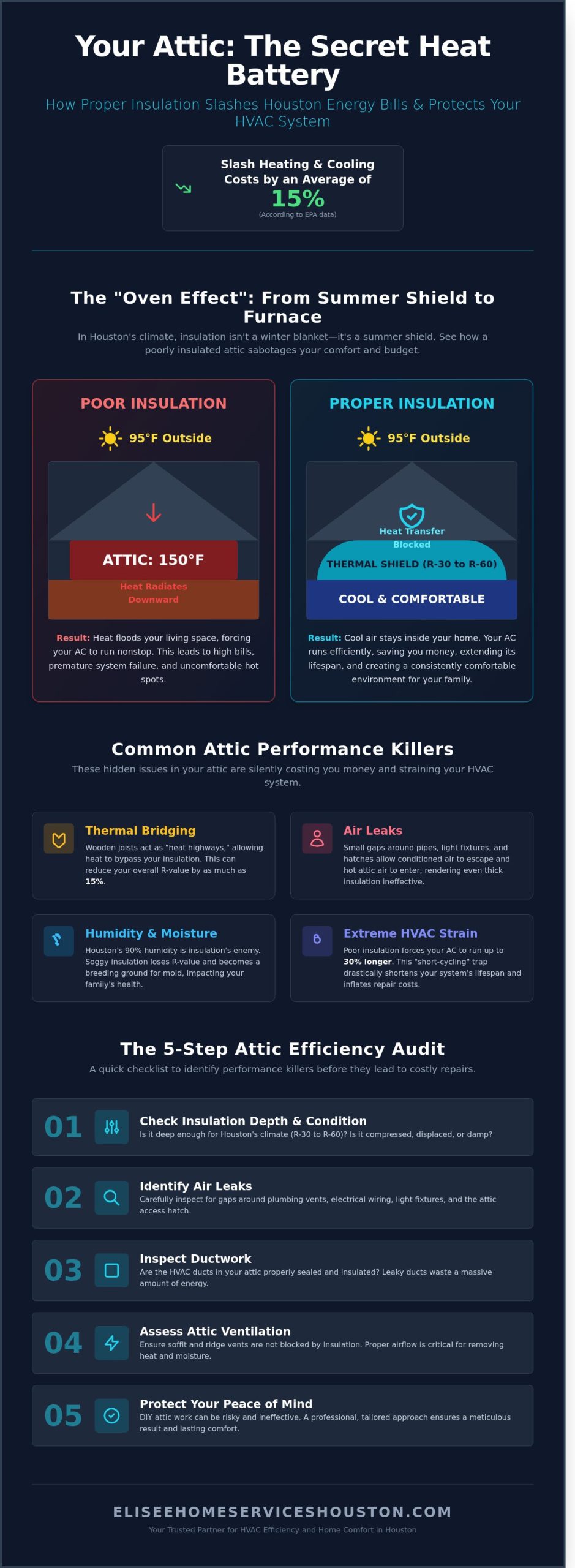
On a typical 95°F July day in Harris County, your attic doesn't just stay warm; it becomes a thermal reservoir. Temperatures in these confined spaces often climb between 140°F and 150°F. Without a proper barrier, this stagnant heat radiates downward through your ceiling joists and into your bedrooms. This process, known as heat gain, is the primary reason your air conditioner struggles to keep up during the afternoon. By applying Building insulation principles, we create a shield that slows this heat transfer, protecting your home's comfort and your monthly budget.
Understanding R-Value in the Gulf Coast Climate
R-value measures how well a material resists heat flow. The Department of Energy classifies Houston in Climate Zone 2, recommending an insulation level between R-30 and R-60 for uninsulated attics. While higher numbers offer more resistance, simply piling on more material isn't a cure-all. If your home lacks proper air sealing, heat will bypass the insulation through small gaps around pipes and light fixtures. We take a meticulous approach, ensuring your attic insulation advice hvac efficiency houston strategy includes sealing these leaks to maximize your R-value performance.
The Role of Humidity in Attic Performance
Houston's average morning humidity levels frequently hit 90%, and this moisture directly impacts how your home breathes. When humid air enters an attic and hits a surface cooled by your AC, it reaches the dew point and turns into liquid water. Soggy insulation loses its ability to trap air, which destroys its efficiency and can lead to mold growth. We prioritize keeping your insulation dry and pristine. A dry attic is a healthy attic, providing the peace of mind that your family is breathing clean air while enjoying a perfectly cooled home.
Performance Killers: How Poor Insulation Sabotages Your HVAC Efficiency
Houston summers turn your attic into a literal furnace. When temperatures soar past 90 degrees outside, an unshielded attic often reaches a staggering 140 degrees. This intense heat doesn't stay confined to the rafters; it migrates downward into your living space. This heat transfer forces your air conditioner to work through grueling recovery cycles just to maintain a basic level of comfort. Providing the right attic insulation advice hvac efficiency houston homeowners need involves looking at the whole system, as poor barriers cause your AC to run 30% longer than necessary.
One hidden culprit that many people overlook is the thermal bridge effect. While your insulation might look thick, the wooden joists holding up your ceiling act as heat conductors. Wood is a poor insulator compared to modern materials, and these joists allow heat to bypass your protection entirely. This can reduce your overall R-value by as much as 15 percent. To understand the full scope of protection your property needs, consult the U.S. Department of Energy guide on Where to Insulate in a Home. Without a meticulous barrier, your HVAC system becomes a victim of its own environment.
The long-term cost of an overworked AC is more than just a high electric bill. Components like the compressor and fan motor are rated for a specific number of operational hours. When your system runs 18 hours a day instead of 12, you are effectively cutting the lifespan of your unit by several years. We believe your home should be a sanctuary, and a well-protected attic is the first step toward that peace of mind.
The "Short-Cycling" Trap
Short-cycling occurs when your AC turns on and off too frequently, which is the most expensive way to operate your cooling system. Poor insulation causes rapid temperature swings that confuse your thermostat. Cold air escapes quickly, and heat rushes back in, triggering the system to restart before it has finished a proper dehumidification cycle. This constant starting and stopping places immense mechanical stress on your equipment. If you notice your system clicking on every ten minutes, scheduling expert AC maintenance near me ensures your equipment stays healthy while you address your insulation levels.
Ductwork in the Hot Zone
Most Houston homes house their ductwork in the attic. Imagine running ice-cold air through thin metal tubes sitting in a 140-degree room. Without a dedicated layer of protection, that air warms up significantly before it ever reaches your vents. This creates "duct sweat," a form of condensation that occurs when hot attic air meets the cold surface of the duct. This moisture often leads to unsightly ceiling stains and elevated indoor humidity levels. High-quality insulation protects the "coolth" inside your ducts, ensuring your family stays comfortable and your home stays dry. Pairing proper insulation with professional air duct cleaning houston homeowners rely on removes the allergens and debris that force your HVAC system to work even harder. If you want to reclaim your comfort, our dedicated team is ready to help you tailor a solution for your specific attic layout.
Blown-In vs. Batts vs. Spray Foam: Debunking the "Best" Material for Houston
Many homeowners believe fiberglass batts represent the gold standard for attic floors. This myth persists because batts are familiar and visible in most big-box stores. However, Houston rooflines often feature complex angles, internal bracing, and structural supports that create a difficult puzzle for rectangular batts. When a batt doesn't fit perfectly, it leaves a gap. Research from the Department of Energy shows that even a 1% gap in insulation coverage can result in a 25% loss in thermal efficiency. These small voids allow air to bypass the barrier, forcing your AC to work harder during a 100-degree July afternoon. Seeking expert attic insulation advice hvac efficiency houston homeowners trust involves understanding how these materials perform in our unique local climate.
Comparing the cost-to-performance ratio is essential for a smart investment. Blown-in cellulose typically offers an R-value of approximately 3.5 per inch, while blown fiberglass sits closer to 2.5 per inch. While cellulose might require a slightly different initial investment, its higher density provides a more robust defense against the relentless Texas heat. We focus on creating a pristine, continuous layer that keeps your home cool and your energy bills predictable.
The Blown-In Advantage for Older Houston Homes
Blown-in material offers a superior solution for the irregular spaces found in older homes across the Heights or River Oaks. Our meticulous teams use specialized equipment to distribute loose-fill material that flows around joists, electrical boxes, and wiring. This creates a seamless thermal blanket that fills every nook and cranny that precut batts simply cannot reach. While blown-in cellulose can settle by 20% over the first two years, we account for this by over-installing to ensure you maintain your target R-value for decades. This approach also provides a quiet sanctuary for your family. Dense-pack insulation can reduce outside noise by up to 10 decibels, effectively muffling the roar of Houston traffic or heavy thunderstorms.
The Spray Foam Debate: Conditioned vs. Unconditioned
Spray foam offers a high-performance alternative by insulating the roof rafters rather than the attic floor. This choice transforms your attic into a "conditioned" space, often keeping it within 5 to 10 degrees of your living area temperature. In Harris County, where humidity levels frequently exceed 80%, a sealed attic prevents heavy, moist air from infiltrating your home's structure. However, a sealed system requires a dedicated ventilation strategy to be successful. Without proper air exchange, moisture can become trapped against the roof deck. We ensure your home breathes correctly while maintaining peak attic insulation advice hvac efficiency houston standards to protect your investment and your family's comfort.
The 5-Step Attic Efficiency Audit: What Houston Homeowners Should Look For
Protect your peace of mind by checking your attic before the midday sun hits. Temperatures in a Houston attic often climb to 150 degrees by noon during the peak of July. Schedule your DIY audit for 7:00 AM to avoid the risk of heat exhaustion. Bring a bright flashlight, a sturdy ruler, and a protective mask. Safety is the first priority for every neighbor we serve, and a morning inspection keeps you out of the dangerous afternoon heat.
Start with a simple visual sweep. We use a reliable "Rule of Thumb" during our professional evaluations. If you can see the tops of your wooden floor joists, you don't have enough material. Effective insulation should look like a deep, consistent blanket that completely buries the structural beams. This visual check provides the most immediate attic insulation advice hvac efficiency houston homeowners can use to judge their home's performance.
Look for "dirty" insulation during your walk-through. These dark, localized stains usually appear near light fixtures or wall headers. They indicate that your insulation is acting as a filter for air escaping from your living spaces. When you see these spots, it's a clear sign that cooled air is bypassing your ceiling and heading straight out of the house. These leaks force your HVAC system to cycle more frequently, which shortens the lifespan of your equipment.
Measuring the "Pink Snow"
Grab your ruler and dip it into the insulation in three different spots to get an average depth. The Department of Energy recommends a level between R-38 and R-60 for the Houston climate. For standard blown-in fiberglass, this means you need at least 15 inches of depth to stay truly efficient. If your ruler shows only 6 or 8 inches, your HVAC system might be working 25 percent harder than necessary to maintain a comfortable temperature. If the wooden floor joists are visible anywhere in your attic, you definitely need more insulation to protect your family's comfort.
Spotting the Invisible Thieves: Air Leaks and Bypasses
Adding more material won't solve every problem. You must identify the "top plate" leaks where wires and plumbing stacks enter the attic from the walls below. These small gaps collectively act like a giant hole in your ceiling. Pay close attention to the attic hatch or pull-down stairs. Without a proper weatherstrip seal or an insulated cover, this area becomes a highway for heat. Sealing these bypasses is just as vital as adding material because it stops the physical movement of air, ensuring your home remains a pristine sanctuary.
Reclaiming Your Comfort: Professional Solutions from Elisee Home Services
Stepping into a Houston attic during July is more than just uncomfortable; it's a legitimate health risk. Temperatures regularly exceed 150 degrees, creating a hazardous environment for any DIY enthusiast. Beyond the stifling heat, structural risks like tripping over joists or accidentally disturbing aging electrical wiring make professional intervention essential. At Elisee Home Services, we act as your meticulous partner. We treat your home like the sanctuary it is, ensuring every upgrade is handled with precision and care.
Our expert attic insulation advice hvac efficiency houston focuses on the entire ecosystem of your home. We don't just look at the floor of your attic. We understand that insulation is the silent partner of your mechanical systems. Poor insulation forces your furnace to work double time during our rare but biting cold snaps. If your unit is struggling, our team integrates heating system repair into our assessment to ensure your comfort is restored from every angle. Reclaiming your peace of mind starts with a professional assessment that identifies every hidden energy leak.
The Elisee Meticulous Installation Process
We know that blowing in insulation can be a messy job. That's why we protect your living space with drop cloths and specialized equipment to keep your home pristine. Our commitment to transparent pricing and local Houston expertise means you'll never see hidden fees. While we're up there, we conduct a comprehensive check. We look for water heater repair needs and inspect your ductwork simultaneously. A leaking duct can negate the benefits of even the best insulation, so we ensure your entire system is sealed and dedicated to your comfort. We also recommend pairing your insulation upgrade with air duct cleaning houston specialists trust to remove pounds of allergens and debris that reduce indoor air quality and strain your newly optimized system. As part of our whole-home safety review, we also check that your laundry exhaust is clear, since a clogged line is a hidden fire hazard — the same reason we recommend scheduling professional dryer vent cleaning in Houston alongside your attic work to protect your family from one of the most overlooked household fire risks. For homeowners considering a full system upgrade, pairing your attic improvements with professional water heater installation in Houston can further reduce your monthly energy bills and protect your home's plumbing from the damaging effects of hard water.
Beyond Insulation: Radiant Barriers and Ventilation
Insulation stops heat transfer, but radiant barriers take it a step further. These specialized foils reflect 97% of radiant heat before it ever enters your insulation layer. To keep the air moving, we optimize Soffit-to-Ridge airflow. This natural ventilation prevents moisture buildup and keeps your roof deck cool during the peak of August. This holistic approach ensures your attic insulation advice hvac efficiency houston translates into real, measurable savings on your utility bills. Every Houston home has unique needs that deserve a customized approach.
Don't let an inefficient attic drain your bank account and your comfort. Our team is ready to provide the dedicated care your family deserves. Schedule your efficiency audit today and take the first step toward a cooler, more peaceful home.
Transform Your Attic Into a Summer Shield
Your attic shouldn't be a source of stress during a grueling Houston heatwave. We've debunked the myths that keep energy bills high and force your HVAC system to work overtime. The Department of Energy recommends R-38 to R-60 insulation levels for our specific climate zone to effectively block radiant heat. By upgrading your materials and sealing hidden air leaks, you can reduce your heating and cooling costs by an average of 15 percent based on Energy Star reports. This process isn't just about utility savings; it's about creating a pristine sanctuary where your family feels truly at ease.
As locally owned Houston experts, Elisee Home Services brings meticulous attention to detail to every project. We provide the professional attic insulation advice hvac efficiency houston homeowners trust to maintain a comfortable living space. Our team stands by transparent, flat-rate diagnostic fees to ensure you receive honest guidance without surprises. We're dedicated to tailored solutions that respect the unique needs of your home. Reclaim your home's comfort and lower your bills—schedule an attic audit with Elisee Home Services today!
You deserve a home that feels as good as it looks.
Frequently Asked Questions
Is attic insulation actually worth it for Houston summers?
Yes, proper insulation is essential for Houston summers because it reduces cooling costs by an average of 15% according to Energy Star data. This protective barrier prevents 100-degree attic heat from radiating into your living spaces. You'll notice your AC cycles less frequently, which extends the lifespan of your expensive equipment. We focus on creating a meticulous environment where your family can relax without worrying about the intense outdoor temperature.
How much insulation do I need in my Houston attic according to the DOE?
The Department of Energy recommends an R-value between R-38 and R-60 for Houston attics located in Climate Zone 2. This usually translates to a thickness of 13 to 14 inches of blown-in cellulose or fiberglass. Following this attic insulation advice hvac efficiency houston homeowners need ensures your home meets modern energy standards. Our team meticulously measures your current levels to determine exactly how much material we need to add for peak performance.
Can I just put new insulation on top of the old stuff?
You can add new insulation over existing material as long as the original layers are dry and free of mold or pests. We call this "topping off," and it's a dedicated method to reach R-49 standards without a full removal. However, if your current material is compressed to less than 3 inches, or if it has been damp, we recommend a fresh start. This ensures a pristine foundation for your home's thermal envelope.
What is the best type of insulation for high-humidity areas like Houston?
Blown-in fiberglass and closed-cell spray foam are the top choices for Houston's 90% humidity levels because they don't absorb moisture. Fiberglass is inorganic, so it doesn't provide a food source for mold or mildew. We tailor our approach to your home's specific structure, ensuring the material remains effective even during the heaviest Gulf Coast rainstorms. This precision helps maintain a healthy, breathable atmosphere for your loved ones.
How long does it take to see a return on investment for attic insulation?
Most homeowners see a full return on their insulation investment within 3 to 5 years through lower monthly utility bills. According to the 2023 "Cost vs. Value" report from Remodeling Magazine, attic insulation projects often recoup over 100% of their cost at the time of home resale. It's one of the few home improvements that pays for itself while immediately increasing your daily comfort. We take pride in delivering results you can see on your next statement.
Will adding insulation stop my AC from running all the time?
Adding insulation reduces AC runtime by approximately 25% by trapping cool air inside and blocking heat transfer from the attic. When your attic reaches 150 degrees, your AC must work 20% harder to maintain a 72-degree indoor temperature. Proper insulation stabilizes these temperatures, allowing your system to rest more often. This reliable attic insulation advice hvac efficiency houston residents trust helps prevent premature mechanical failure during the peak of July.
Does attic insulation help with noise reduction in busy Houston neighborhoods?
High-density insulation acts as a dedicated sound barrier that reduces exterior noise by up to 40%. This is particularly helpful for homes near I-45 or under flight paths from Bush Intercontinental Airport. Materials like cellulose are excellent at dampening vibrations and muffled sounds from traffic or neighbors. We help transform your house into a quiet sanctuary where you can escape the hustle of the city and enjoy true peace.
What are the signs that my current insulation has failed or settled too much?
You should check your attic if your energy bills have increased by 20% over the last year without a change in usage. If you can see the wooden floor joists in your attic, your insulation has likely settled below the 10-inch mark required for basic efficiency. Other signs include rooms that feel 5 degrees warmer than the rest of the house. Our meticulous inspections identify these gaps to restore your comfort and peace of mind.