
If your home still feels dusty two days after cleaning, or your building has that stale, closed-up smell even when the AC is running, the problem may not be your thermostat. It may be your air quality. This air purifier for HVAC review is built for Houston-area property owners who want cleaner air without buying the wrong add-on for their system.
A lot of whole-home air cleaning products sound impressive on the box. In practice, some help with particles, some help with odors, some do very little, and a few can create new problems if they are installed without considering the HVAC system they are tied into. That matters in Houston, where long cooling seasons, high humidity, and heavy HVAC use put extra pressure on both equipment and indoor air.
Air purifier for HVAC review: what you are really buying
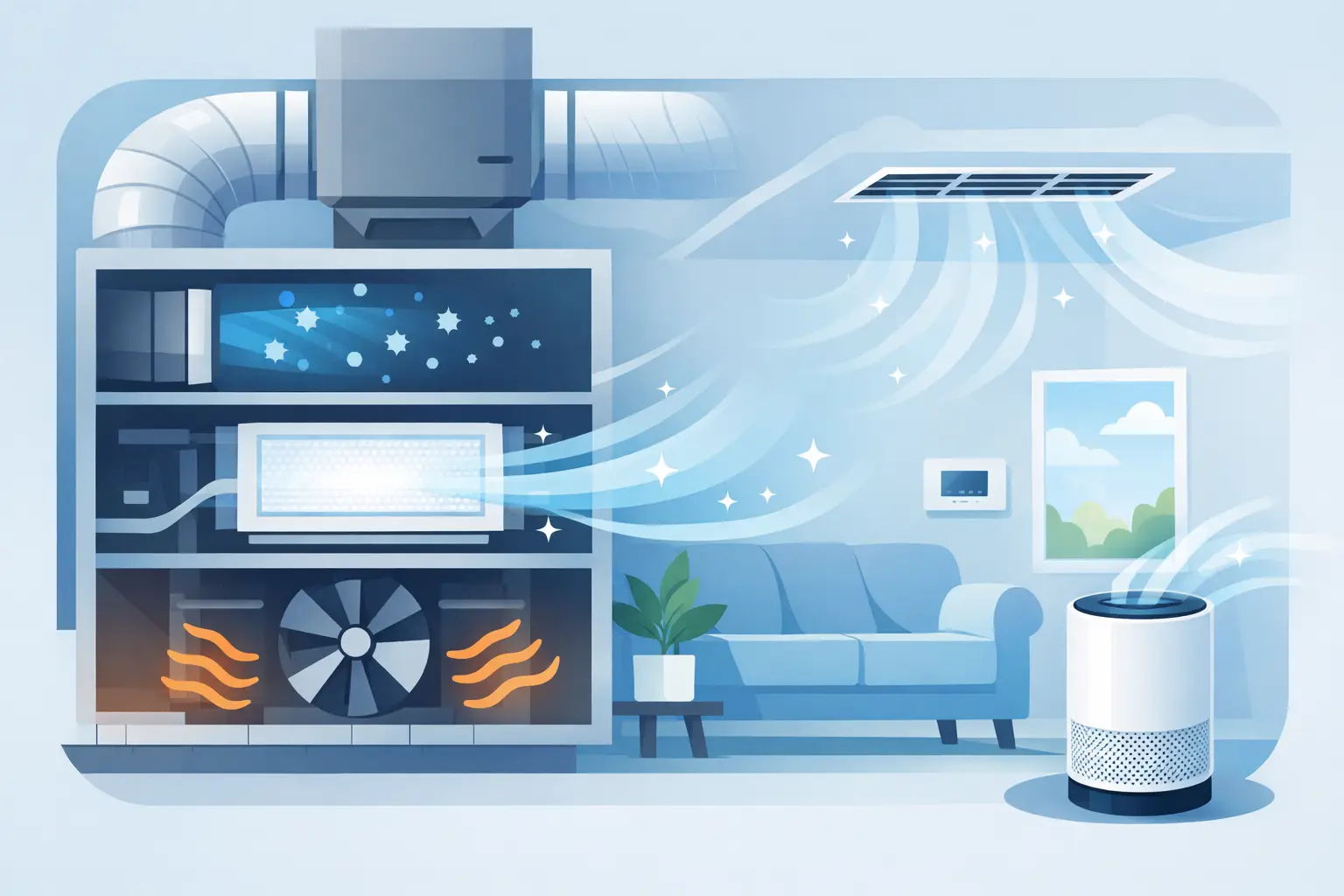
When people say they want an air purifier for their HVAC system, they are usually talking about one of three things. The first is upgraded filtration, such as a higher-efficiency media filter cabinet. The second is an in-duct electronic or UV-based air treatment device. The third is a combination approach that targets both airborne particles and biological growth near the coil.
These are not interchangeable. A filter is mainly there to capture particles moving through the system. A UV light is generally used to reduce microbial growth on damp HVAC components, especially around the evaporator coil. Electronic air cleaners vary widely. Some are effective, some need frequent maintenance, and some products marketed as purifiers rely on ionization methods that should be evaluated carefully before installation.
For most homes and small commercial spaces, the best results come from matching the product to the actual problem. Dust and allergens call for filtration. Musty odors and moisture-related growth near the equipment may benefit from UV treatment. If you are trying to solve every indoor air issue with one device, expectations can get out of line quickly.
What tends to work best in real HVAC systems
The most dependable upgrade for many properties is still a properly sized media filter cabinet with a high-quality pleated filter. That answer is less flashy than many purifier ads, but it is often the most practical. Good media filtration can capture a significant amount of dust, pollen, pet dander, and other airborne particles without the maintenance headaches some electronic systems bring.
The catch is static pressure. A filter that is too restrictive can make your blower work harder and reduce airflow. In Houston, where AC systems already run hard for much of the year, poor airflow can lead to comfort issues, higher utility bills, and extra wear on equipment. That is why filter performance cannot be judged by rating alone. The HVAC system has to be able to handle it.
UV lights also have a place, especially in humid climates. Inside an air handler, moisture around the coil can contribute to microbial buildup. A UV device aimed at those surfaces may help keep that area cleaner. It is not a substitute for filtration, and it is not a magic fix for every air quality complaint, but in the right application it can support cleaner operation.
Electronic air cleaners sit in the middle. Some do a solid job capturing fine particles, but they often require more regular cleaning and upkeep than homeowners expect. If maintenance gets skipped, performance drops. For busy households and property managers, that matters just as much as the original product specs.
The trade-offs most reviews miss
An honest air purifier for HVAC review should talk about trade-offs, because there is no perfect choice for every building.
Higher-efficiency filtration can improve indoor air, but only if the ductwork, return design, and blower setup support it. If they do not, the system can struggle. UV lights can help with coil-area hygiene, but bulbs need replacement and installation location matters. Electronic products may promise a lot, yet they are only as good as their maintenance schedule.
There is also the issue of air leakage. If a home has leaky return ducts in an attic or crawlspace, your system may be pulling in unwanted dust and contaminants before the air ever reaches the purifier. In that case, a better air cleaner helps, but duct sealing may produce a more noticeable improvement. The same goes for excess indoor humidity. If relative humidity stays too high, air quality complaints often continue no matter which purifier is installed.
That is why a product-only review falls short. Indoor air quality is connected to filtration, humidity control, duct condition, system runtime, and maintenance habits. Ignore the rest, and even a good product may underperform.
Best fit by problem, not by marketing
If allergies, dust buildup, and pet hair are the main complaints, start with filtration. A media filter upgrade is often the strongest first move, especially when paired with regular maintenance and clean ductwork where needed.
If the issue is a persistent musty smell near vents or concern about growth around the coil, UV treatment may be worth considering. This is particularly relevant in Gulf Coast conditions, where moisture is a year-round factor.
If you run a small office, retail space, or rental property and want a cleaner indoor environment with manageable upkeep, simplicity usually wins. A solution that works with your existing maintenance routine is better than an advanced system no one services properly.
For families with asthma or heightened sensitivity, it is smart to think beyond a device. Air sealing, humidity control, filter upgrades, and proper system sizing all affect results. The purifier may be part of the answer, but rarely the whole answer.
What Houston property owners should watch closely
Houston HVAC systems face a combination of high runtime, humidity, and heavy seasonal demand. That changes how air quality products should be evaluated.
First, be careful with anything that could restrict airflow too much. Cooling performance is non-negotiable during the summer, and indoor comfort can drop fast if a system starts struggling. Second, do not overlook moisture control. Humidity problems can make indoor air feel sticky, stale, and uncomfortable even when the temperature looks fine on the thermostat. Third, make sure any purifier recommendation fits the age and condition of the equipment. Installing an add-on onto a poorly maintained or oversized system is not the same as improving the whole indoor environment.
A local HVAC contractor should be able to explain how the purifier affects airflow, maintenance, energy use, and expected results in a Houston climate. If the pitch sounds like a one-size-fits-all cure, ask more questions.
How to choose without overspending
Start with your symptoms. Dust, odors, allergy flare-ups, visible buildup around vents, or concerns about indoor freshness all point in slightly different directions. Then look at the HVAC system itself. Is the filter setup basic and undersized? Are there duct leakage issues? Is humidity under control? Has the system been maintained consistently?
Once those basics are clear, the right product category becomes easier to identify. In many cases, the best value is not the most expensive purifier. It is the option that works with the system you have and solves the problem you actually notice day to day.
This is also where professional installation matters. Even a solid product can disappoint if it is installed in the wrong spot, paired with the wrong filter strategy, or added to a system that already has airflow problems. A technician-led evaluation is usually worth more than an online star rating.
Our take on the air purifier for HVAC review question
If you want the short answer, here it is: for most homes and small businesses, upgraded media filtration delivers the most consistent value, UV treatment can be a useful add-on in humid conditions, and more complicated electronic options are worth considering only if you are prepared for the maintenance and the system is a good match.
That is not the most exciting answer, but it is the honest one. Cleaner air comes from good HVAC fundamentals first, then the right add-on. Products should support comfort and system performance, not compromise them.
For property owners who want a clearer recommendation, the safest path is to have the equipment, airflow, and indoor air concerns evaluated together. A contractor that handles repair, maintenance, ductwork, and system optimization can give you a more useful answer than a product brochure. If you are in the Houston area, Elisee HVAC and Home Services Houston can help you look at the whole system before you spend money on an upgrade that may or may not solve the issue.
The right air purifier should make your indoor space feel cleaner and easier to live or work in, not add guesswork to an HVAC system you already depend on every day.