
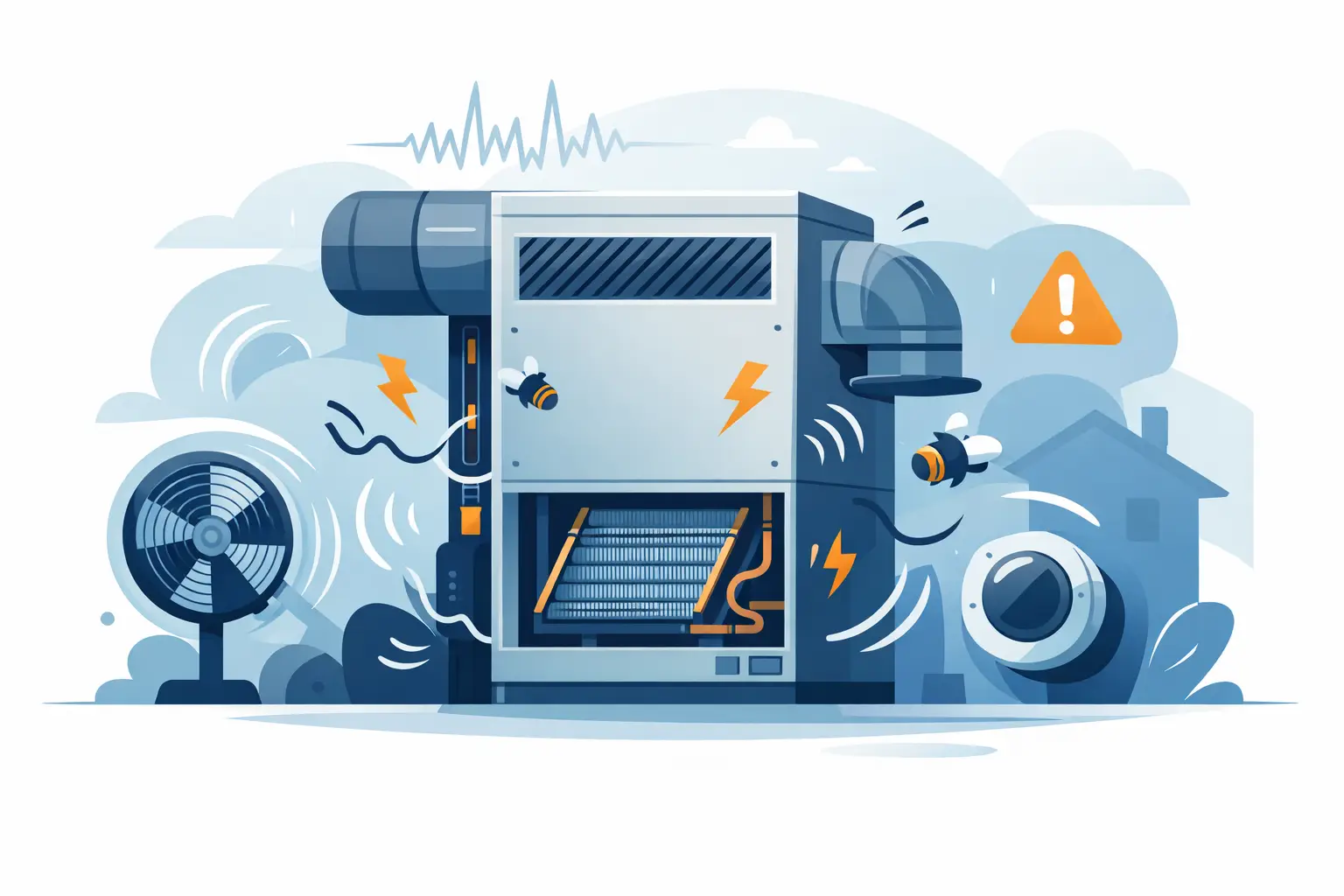
That buzzing sound usually starts small. Maybe you hear it in the hallway outside a closet unit, in the attic, or above a drop ceiling at your business. Then it gets harder to ignore. If your system is still cooling, it is tempting to put it off. In Houston heat, that can turn a minor repair into a full breakdown at the worst time.
An air handler making buzzing noise is not one problem with one fix. Buzzing can come from electrical components, loose parts, airflow restrictions, motor issues, or even vibration from the cabinet itself. The right response depends on where the sound is coming from, whether the system is still running normally, and whether the noise started suddenly or has been getting worse over time.
What an air handler actually does
Your air handler is the indoor part of the HVAC system that moves conditioned air through the ductwork. It typically houses the blower motor, fan assembly, evaporator coil, control board, and other electrical parts. When something inside that cabinet is loose, strained, dirty, or failing, buzzing is one of the first sounds many homeowners and property managers notice.
That matters because the air handler is central to airflow and comfort. Even if the outdoor unit is fine, a problem indoors can leave rooms hot, humidity high, and energy use climbing.
Common reasons an air handler making buzzing noise happens
One of the most common causes is a loose panel or mounting screw. When the blower starts, normal vibration can make a metal access panel buzz against the frame. This is usually one of the simpler fixes, but it still needs a proper look because that vibration can also point to a larger issue inside the cabinet.
Electrical problems are another major possibility. A failing contactor, relay, transformer, or control board can create a distinct buzzing or humming sound. This type of noise is more concerning because electrical components can overheat, short cycle, or stop working without much warning. If the sound seems tied to startup or shutdown, electrical diagnosis is often the next step.
A struggling blower motor can also buzz. Motors wear out over time, especially in systems that run hard through long Houston summers. Bearings can degrade, internal parts can loosen, and the motor may begin pulling harder than it should. Sometimes the unit still runs, but airflow drops off or the sound gets louder as the cycle continues.
A failing capacitor is another common culprit. Capacitors help motors start and run properly. When one weakens, the motor may hesitate, hum, or buzz before starting. In some cases, the blower may not start at all. That can quickly become an emergency if cooling stops during a hot afternoon.
Restricted airflow can create its own set of noises. A dirty filter, blocked return, matted evaporator coil, or duct issue can force the blower to work harder than normal. That stress may not always sound like a rattle or screech. Sometimes it presents as a steady buzz paired with weak airflow and longer run times.
What to check before calling for service
There are a few safe, simple things you can check without opening the system or handling electrical parts.
Start with the air filter. If it is heavily loaded with dust, replace it with the correct size and rating for your system. A clogged filter can strain the blower and change the sound of operation. If the noise improves after replacement, airflow restriction may have been part of the problem.
Next, listen carefully to where the buzzing is strongest. If it is clearly coming from the air handler cabinet, look for a loose door or panel that may not be seated properly. Sometimes after a filter change or prior service, a panel is not tightened all the way.
Then check your thermostat settings and system performance. Is the unit cooling normally? Is airflow weaker than usual? Does the buzzing happen only when the blower starts, or does it continue through the whole cycle? Those details help narrow down whether the issue is electrical, mechanical, or airflow-related.
If you manage a small commercial property, it also helps to note whether the sound is affecting one zone or the entire space. In a business setting, unusual noise paired with uneven cooling can point to a larger air distribution or equipment problem that should be addressed quickly.
When buzzing means you should shut the system off
Not every buzz requires an immediate shutdown, but some situations do.
If you smell something burning, see water leaking near electrical components, notice repeated tripped breakers, or hear loud buzzing followed by failure to start, turn the system off and call for service. The same applies if the cabinet feels unusually hot or the noise becomes sharp, aggressive, or much louder in a short period of time.
Electrical buzzing is not something to ignore. What starts as an intermittent issue can become a damaged motor, failed board, or complete loss of cooling.
Why DIY has limits here
With an air handler, the risk is not just getting the diagnosis wrong. It is also the combination of electricity, moving parts, and in some cases attic installation conditions that make do-it-yourself work unsafe.
Homeowners can usually handle filter replacement and basic visual checks. Beyond that, most buzzing issues require testing voltage, checking capacitor performance, measuring motor draw, inspecting blower balance, and confirming control operation. Those are technician tasks.
There is also a cost factor. Replacing the wrong part because the noise seemed obvious can waste time and money while the real issue keeps getting worse. A capacitor may be the problem, but it could also be the motor that damaged the capacitor in the first place. That is why a proper service call matters.
What a technician will usually inspect
When we diagnose an air handler buzzing noise, the goal is not just to stop the sound. It is to find out why the sound started and whether anything else in the system has been affected.
A technician will typically inspect the blower assembly, motor, capacitor, control components, wiring connections, access panels, and evaporator section. Airflow and static pressure may also need to be checked if filter restriction, dirty coils, or duct issues are suspected.
In some cases, the fix is straightforward, such as securing a loose panel, replacing a weak capacitor, or correcting a wiring issue. In others, the sound is a warning that the blower motor is nearing failure or that deferred maintenance has created strain across the system. The trade-off is simple: a smaller repair today is usually easier to manage than an emergency replacement later.
Why buzzing often shows up during peak cooling season
In the Houston area, HVAC systems run long hours under heavy demand. That constant operation exposes weak components quickly. Capacitors fail faster in heat. Motors run hotter. Dust buildup becomes more noticeable as airflow demand rises. Small vibrations turn into obvious noise when equipment cycles all day.
That is why a buzzing sound in spring or early summer is worth attention. Even if cooling has not stopped yet, the system may be telling you it is under stress.
Can maintenance prevent this?
It can prevent a lot of it, yes, though not every failure is avoidable.
Routine maintenance helps catch loose electrical connections, aging capacitors, dirty coils, blower wear, and airflow restrictions before they turn into service interruptions. It also gives you a better picture of whether an older system is still worth repairing or whether replacement is becoming the more predictable option.
For homeowners, that means fewer surprise outages and better control over repair costs. For landlords and business owners, it means less downtime, fewer tenant complaints, and a lower chance of urgent after-hours calls during extreme weather.
Repair or replace?
That depends on the age of the system, the failed part, and how often you have been repairing it.
If the buzzing is tied to a single replaceable component and the rest of the equipment is in solid shape, repair often makes sense. If the air handler is older, has multiple worn components, and has already been losing efficiency, replacement may be the smarter long-term move. The lowest immediate cost is not always the best value, especially when reliability matters day to day.
A good HVAC contractor should walk you through both sides clearly. You need to know what failed, what it will cost to fix, and what risks remain after the repair.
The next move if your air handler is buzzing
If your air handler making buzzing noise is new, getting louder, or showing up alongside weak airflow or cooling problems, do not wait for a full shutdown. Start with the safe basics like checking the filter and listening for loose panels, then have the system professionally inspected if the sound continues.
For Houston-area homes and businesses, fast diagnosis matters because minor HVAC issues rarely improve on their own in heavy heat. If you need a local team that can respond quickly, Elisee HVAC and Home Services Houston is available to help restore comfort and keep your system moving when it matters most.
A strange noise is easy to postpone when the air is still cool, but that small buzz is often your best warning before comfort, efficiency, and uptime take a hit.