
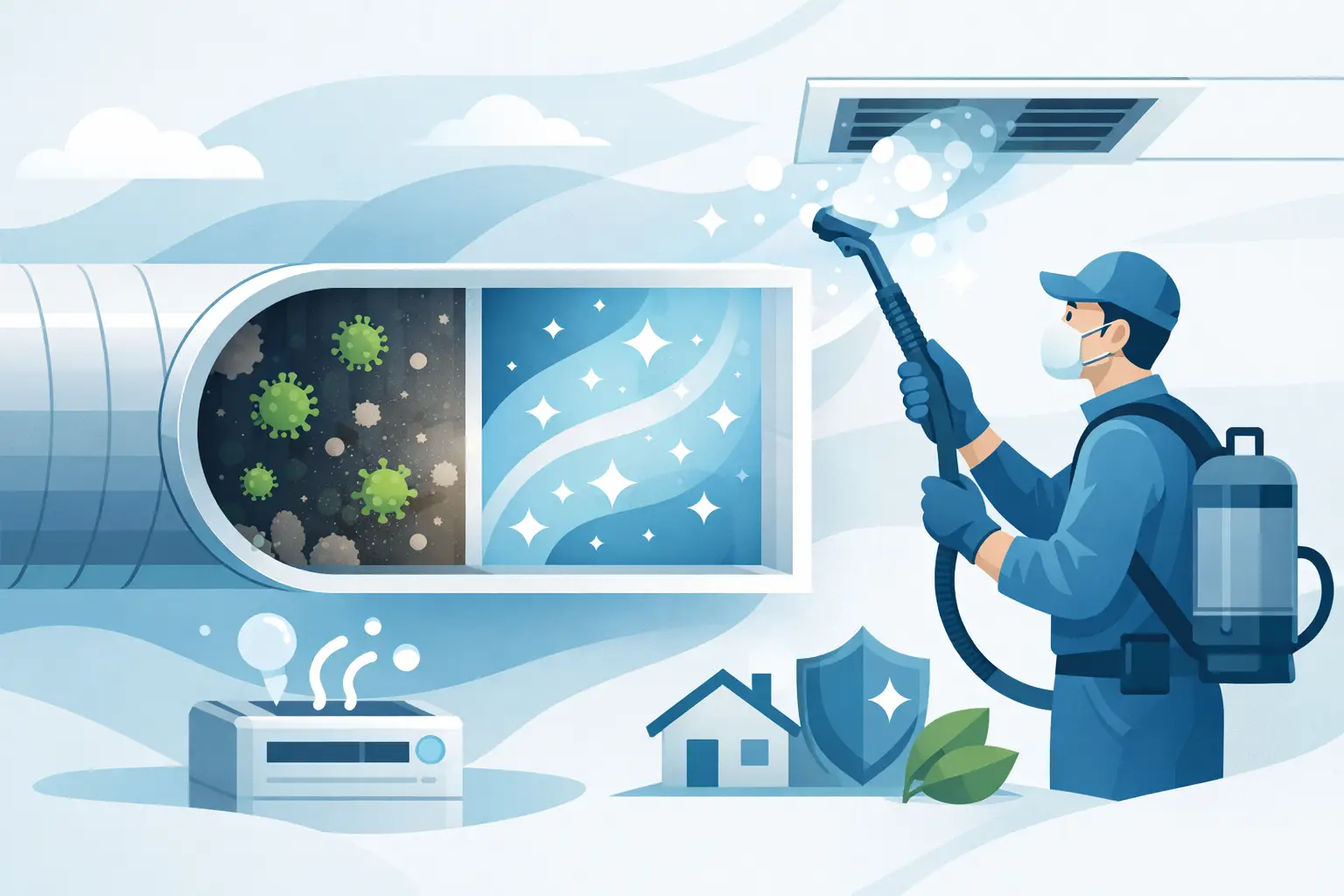
If your AC runs all day but the building still feels dusty, stale, or unevenly cooled, the problem may not start at the thermostat. In many Houston homes and commercial spaces, the air moving through the system picks up dust, moisture, and lingering odors inside the ductwork. That is where air duct sanitizing benefits become worth a closer look - not as a cure-all, but as one part of keeping indoor air and HVAC performance in better shape.
What air duct sanitizing actually does
Air duct sanitizing is the process of treating the interior surfaces of ductwork with products designed to reduce microbial growth and help address odor-causing contamination. It is not the same thing as duct cleaning, although the two services are often paired for a reason.
Cleaning removes built-up dust, debris, and loose contaminants. Sanitizing comes after that step and is meant to target what cannot simply be brushed or vacuumed away. If ducts are sanitized without being properly cleaned first, the treatment has less value because it is being applied over dirt and buildup instead of directly onto the duct surfaces.
That distinction matters for property owners who want practical results. Sanitizing is usually most useful when there has been visible contamination, musty odors, moisture issues, post-renovation dust, or concerns about what has been circulating through the system over time.
The main air duct sanitizing benefits for Houston properties
In the Houston area, HVAC systems work hard for long stretches of the year. Heat, humidity, and heavy cooling demand create conditions where air distribution problems show up fast. Sanitizing ductwork can help in several ways when it is done at the right time and for the right reasons.
It can improve indoor odor control
One of the most noticeable benefits is the reduction of stale or musty smells coming from vents. Ducts can hold onto odors from moisture, pet dander, smoke, cooking residue, and long-term dust buildup. If the smell gets stronger when the system kicks on, the duct network may be part of the issue.
Sanitizing can help reduce odor-causing particles that remain after a thorough cleaning. It is especially helpful when odor problems are tied to contamination inside the system rather than something in the room itself.
It may support healthier indoor air conditions
Duct sanitizing does not make indoor air perfect, and no honest HVAC company should promise that. What it can do is help reduce biological contaminants inside the duct system when microbial growth is present or suspected.
For households with allergy concerns, older adults, young children, or occupants sensitive to odors and airborne irritants, that can be a meaningful improvement. In small businesses, cleaner-smelling and fresher-feeling indoor air also affects employee comfort and the way customers experience the space.
It can help your HVAC system stay cleaner longer
When ducts are contaminated, the system keeps pulling and pushing particles through the air cycle. That can affect vents, grilles, coils, and filters over time. Sanitizing after cleaning can help limit how quickly some of that contamination returns to active circulation.
This does not replace regular filter changes or seasonal maintenance, but it can support the rest of your HVAC care plan. For owners trying to reduce repeat dust issues, every part of the system matters.
It can contribute to a more comfortable airflow experience
Comfort is not only about temperature. Air that smells clean and feels less stale creates a different indoor experience, even when the thermostat setting stays the same. In homes, that can mean bedrooms and living areas feel more pleasant. In commercial settings, it can help offices, waiting areas, and retail spaces feel more professional and better maintained.
That benefit is hard to measure on a utility bill, but customers notice it quickly.
When sanitizing makes sense - and when it may not
This is where experience matters. Air duct sanitizing is not a routine add-on every property needs on every service call. The best use case depends on the condition of the system.
Sanitizing often makes sense after confirmed duct contamination, after water intrusion or excess humidity in the system, after pest-related issues, during move-in or move-out transitions, or when a property has persistent vent odors that basic cleaning has not fully resolved. It can also be reasonable after major remodeling if fine particles and construction residue have moved through the ducts.
On the other hand, if ductwork is already clean, dry, and free from odor or contamination, sanitizing may add little value. It is also not a substitute for fixing the source of a moisture problem. If condensation, leaks, or poor insulation are feeding microbial growth, that root cause has to be corrected or the issue can come back.
Why cleaning and sealing often matter just as much
A lot of people search for air duct sanitizing benefits when what they really need is a broader ductwork solution. If ducts are leaking, pulling in attic dust, or holding heavy debris, sanitizing alone will not solve the bigger problem.
That is why a full evaluation matters. Cleaning removes the physical buildup. Sealing addresses air loss and helps prevent outside contaminants from entering the system. Sanitizing can then play a targeted role when contamination or odor is part of the picture.
For Houston properties, this combined approach usually makes more sense than treating one symptom at a time. High humidity and long cooling seasons put extra stress on duct systems, especially in older homes or commercial buildings with deferred maintenance.
What to expect from a professional recommendation
A trustworthy HVAC contractor should explain whether sanitizing is necessary, optional, or not recommended. That starts with inspecting the duct system, not leading with a sales pitch.
If sanitizing is advised, you should also hear why. Is there evidence of microbial growth? Was there water intrusion? Are there recurring odors tied to the ducts? Has the system been cleaned first? Clear answers matter because this service should be based on actual conditions, not assumptions.
You should also expect practical guidance on what sanitizing can and cannot do. It can help reduce contamination and odor issues within the ductwork. It cannot correct dirty coils, clogged filters, failing equipment, or humidity problems elsewhere in the building.
Residential and commercial benefits are a little different
For homeowners, the biggest wins are usually comfort, odor reduction, and peace of mind about what is moving through the vents. Families want the house to feel clean, especially when the AC barely gets a break for much of the year.
For landlords and property managers, sanitizing can be useful between tenants, after maintenance issues, or when preparing a unit for occupancy. It helps address smell complaints and supports a cleaner reset of the HVAC system.
For small businesses, the conversation often comes down to continuity. If the indoor environment feels stale or unpleasant, employees notice and customers do too. A cleaner air delivery system supports a space that feels cared for and ready for daily use.
Choosing the service at the right time
The right time to consider duct sanitizing is usually when there is a clear trigger, not just because the calendar says so. If you have had moisture issues, unusual odors, visible dust discharge from vents, or indoor air complaints that do not improve with filter changes, it is worth having the duct system inspected.
If you are already scheduling duct cleaning or system maintenance, that is also a smart time to ask whether sanitizing adds value for your specific setup. A local team familiar with Houston conditions can usually tell the difference between a service that helps and one that can wait. For property owners who want dependable guidance, Elisee HVAC and Home Services Houston approaches duct and HVAC care with that practical mindset.
Clean airflow is not about chasing perfection. It is about making sure the system that carries cooled or heated air through your property is not working against your comfort. When sanitizing is used in the right situation and paired with proper cleaning and system care, it can be a smart step toward a fresher, more dependable indoor environment.