
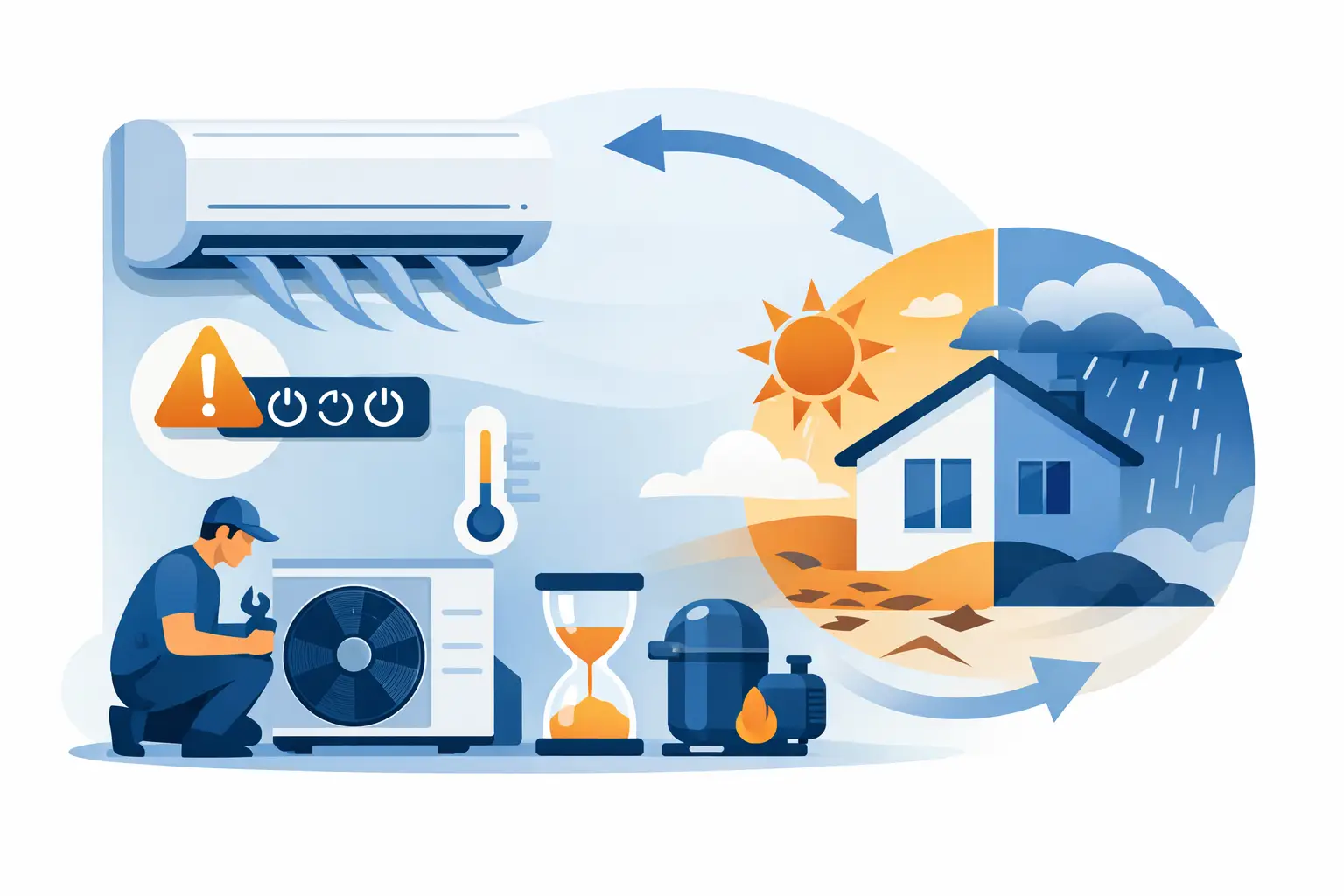
When your AC kicks on, runs for a minute or two, shuts off, and then starts right back up, that is not just annoying - it is one of the clearest signs something is off. Understanding air conditioner short cycling causes can help you catch a small issue before it turns into a major repair, a higher power bill, or a full system failure during a Houston heat wave.
Short cycling means the system is not completing a normal cooling cycle. Instead of running long enough to remove heat and humidity from your space, it turns on and off too quickly. In homes and small commercial properties across Houston, that usually shows up as uneven temperatures, sticky indoor air, extra wear on the equipment, and energy costs that climb faster than they should.
What short cycling does to your system
An air conditioner is designed to start, run long enough to cool the space properly, and then shut off until the thermostat calls for cooling again. When that cycle gets interrupted repeatedly, the system works harder while delivering worse results.
The problem is not only comfort. Frequent starts put stress on the compressor, fan motors, capacitors, and electrical components. Those repeated starts draw more power than steady operation, so the system may use more electricity while cooling less effectively. Over time, short cycling can shorten the life of the unit, especially in peak summer conditions when Houston systems are already working hard.
The most common air conditioner short cycling causes
A dirty air filter
This is one of the simplest problems and one of the most overlooked. A clogged air filter restricts airflow, which can throw off system pressure and temperature readings inside the unit. In some cases, restricted airflow can cause the evaporator coil to get too cold, which contributes to freezing and erratic operation.
If your filter is visibly dirty or has not been changed in a while, start there. For many homes, replacing the filter can improve airflow quickly. That said, if short cycling continues after a filter change, there is likely another issue behind it.
Thermostat problems
A thermostat that is reading the temperature incorrectly or installed in the wrong location can cause the AC to shut off too soon. If it sits near a sunny window, a supply vent, or a heat-producing appliance, it may think the room is cooler or warmer than it really is.
Wiring issues, weak batteries, calibration errors, or an aging thermostat can also create false signals. This is one of those issues that seems minor, but it can lead to constant cycling and frustrating comfort problems throughout the day.
Low refrigerant
Low refrigerant is a serious issue and a common reason for short cycling. Air conditioners do not consume refrigerant under normal operation, so if levels are low, there is usually a leak somewhere in the system.
When refrigerant drops, the system cannot absorb and move heat properly. Pressure imbalances can force the unit to shut down early, and the evaporator coil may begin to freeze. This is not a top-off-and-go situation. The leak has to be found, repaired, and the system charged correctly.
Frozen evaporator coil
A frozen coil can happen because of low airflow, low refrigerant, or sometimes a combination of both. When the coil freezes, the system cannot exchange heat the way it should, and performance drops fast.
You may notice weak airflow, warm air from the vents, or ice buildup on the indoor unit or refrigerant lines. If that is happening, turning the system off and calling for service is the safer move. Continuing to run it can put more strain on the compressor.
An oversized AC system
Bigger is not always better in air conditioning. If the unit is too large for the space, it may cool the area too quickly and shut off before completing a full cycle. That sounds efficient on paper, but it creates real problems in practice.
An oversized system often leaves humidity behind, which matters a lot in Houston. The house may reach the thermostat setting, yet still feel damp and uncomfortable. Repeated short runs also create more wear than a properly sized system that runs at normal intervals.
Electrical or control board issues
Short cycling can also come from failing relays, damaged wiring, a bad capacitor, or a malfunctioning control board. These issues can interrupt normal communication between components and cause the system to start and stop unexpectedly.
Electrical issues are not always visible to the property owner. You may only notice the symptom - the unit clicks on, runs briefly, then shuts off. Because these problems can affect safety and component life, they are best diagnosed by a licensed HVAC technician.
A dirty or blocked condenser unit
The outdoor unit needs proper airflow to release heat. If the condenser coil is packed with dirt, grass clippings, or debris, the system can overheat and shut down before a normal cooling cycle is complete.
Houston yards grow fast, and outdoor units often get crowded by landscaping, fencing, or buildup around the base. Keeping the area clear helps, but if the coil itself is dirty, a professional cleaning may be needed to restore proper performance.
Why short cycling is especially hard on Houston properties
In Houston, AC systems do more than cool the air. They also manage indoor humidity and protect day-to-day comfort during long periods of extreme heat. A short cycling system may still produce some cool air, which is why many people wait too long to address it. But the damage adds up quickly.
For homeowners, that can mean hot spots, sticky rooms, poor sleep, and rising utility bills. For small businesses, it can mean uncomfortable customers, disrupted staff productivity, and added strain on equipment that cannot afford downtime. A system that short cycles in mild weather may fail outright once summer demand peaks.
What you can check before calling for repair
There are a few practical things you can look at first. Check the air filter and replace it if it is dirty. Make sure supply and return vents are open and not blocked by furniture or boxes. Look at the thermostat setting, battery condition, and placement if it has recently been moved or replaced.
You can also inspect the outdoor unit from a safe distance. If it is surrounded by debris, vegetation, or obvious dirt buildup, that may be part of the problem. If you see ice on the indoor or outdoor lines, hear unusual clicking, or the issue keeps repeating after basic checks, it is time for professional service.
When short cycling points to repair versus replacement
It depends on the age of the system and the underlying cause. If the issue is a thermostat fault, clogged filter, capacitor, or dirty coil, repair is often straightforward. If the system has a refrigerant leak, compressor damage, or long-term sizing problems, the conversation may shift toward a larger repair or replacement.
For older units, repeated short cycling can be a sign that several components are wearing down at once. At that point, putting money into repairs may not give you the reliability you need through another Houston summer. A technician should look at repair cost, system age, refrigerant type, and overall condition before making that call.
How preventive maintenance helps stop short cycling
Many short cycling issues start with conditions that build up over time - airflow restrictions, coil dirt, electrical wear, low refrigerant from small leaks, and calibration drift in controls. Seasonal maintenance helps catch those problems earlier, when they are cheaper and easier to correct.
A proper tune-up is not just a quick visual check. It should include filter review, coil condition, refrigerant performance, electrical testing, thermostat verification, drain inspection, and system operation checks. For property owners who want fewer surprises and more predictable cooling costs, maintenance is one of the most practical investments you can make.
If your AC is starting and stopping every few minutes, waiting it out usually does not improve anything. It usually means more strain, less comfort, and a bigger chance of breakdown at the worst time. For Houston-area homes and businesses, fast diagnosis matters, and a local team like Elisee HVAC and Home Services Houston can help identify the cause and get your cooling back on track before the problem grows. A short cycle is your system asking for attention - listening early is often what saves you money later.