
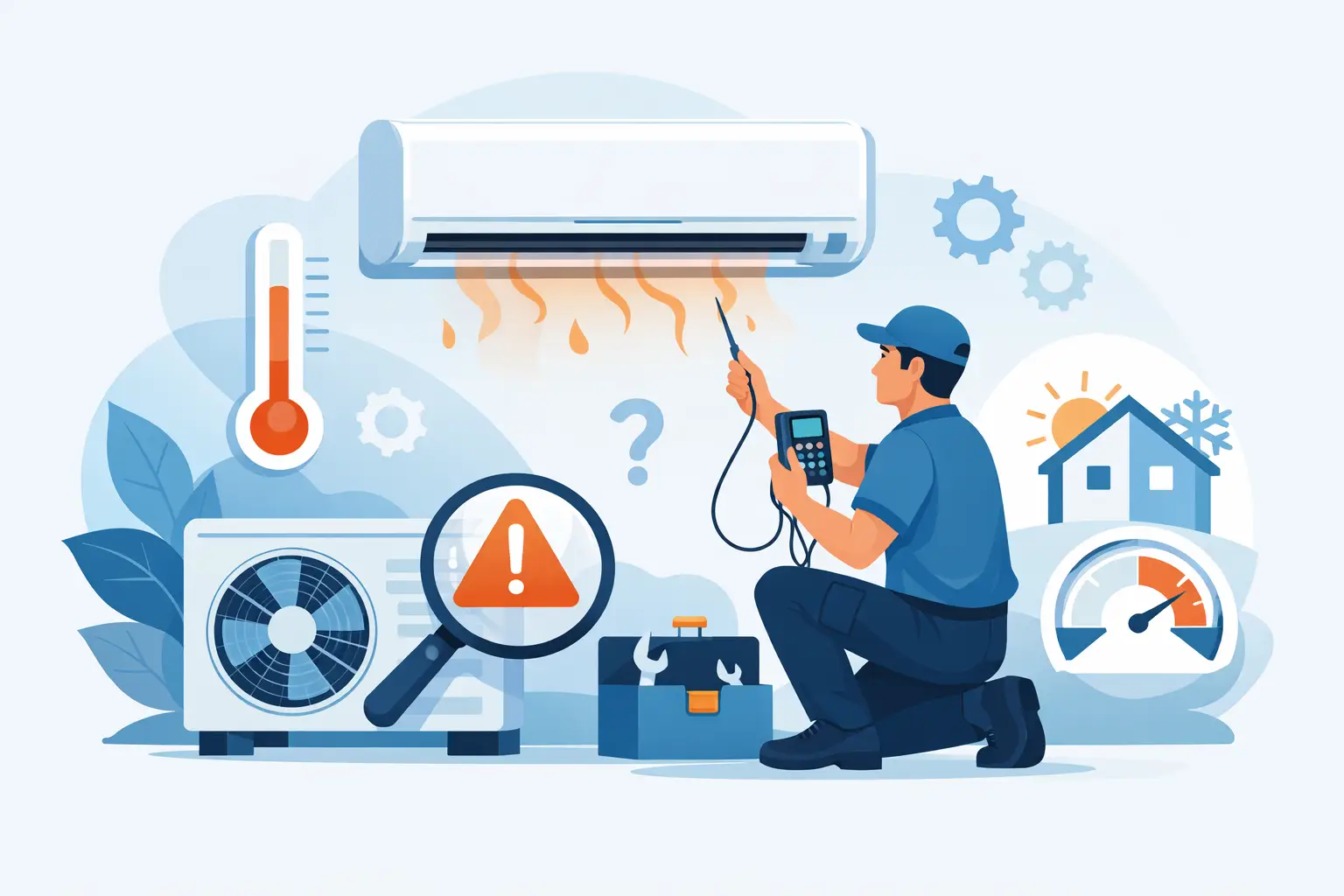
When your AC is running but the house still feels sticky, air conditioner not cooling troubleshooting becomes urgent fast - especially in Houston heat. A system that blows warm air, struggles to keep up, or cools unevenly can point to anything from a clogged filter to a failing compressor. The key is knowing what you can safely check yourself and what needs a licensed HVAC technician before the problem gets worse.
Start with the simplest cooling checks
A surprising number of no-cooling calls start with something small. Before assuming the system has failed, check the thermostat first. Make sure it is set to cool, not fan, and that the temperature setting is below the current room temperature. If the screen is blank or unresponsive, weak batteries or a thermostat power issue may be part of the problem.
Next, look at your air filter. A heavily clogged filter restricts airflow, which can make the system cool poorly and, in some cases, lead to an evaporator coil freezing over. If the filter looks dirty, replace it with the right size and type for your system. This is one of the fastest and least expensive fixes, and it also helps protect the equipment from extra strain.
Then check your circuit breakers. Sometimes the indoor unit and outdoor condenser are on separate breakers, and one may have tripped while the other still runs. If a breaker is tripped once, you can reset it. If it trips again, stop there. Repeated trips usually mean an electrical or mechanical issue that should be diagnosed professionally.
Air conditioner not cooling troubleshooting outside the home
Your outdoor unit needs open airflow to release heat. If the condenser is packed with leaves, grass clippings, cottonwood, or other debris, cooling performance can drop quickly. Turn the system off and inspect the area around the unit. There should be some clear space around it so air can move freely.
You can also look at the condenser coil from the outside. If it is visibly dirty, that buildup may be reducing efficiency. A gentle rinse can help in some cases, but aggressive cleaning, pressure washing, or bending the fins can create a more expensive repair. If the unit is very dirty or has not been professionally cleaned in a while, it is better to have it serviced correctly.
Listen to the outdoor unit while it is calling for cooling. If the indoor blower runs but the outdoor unit is silent, the issue could involve the capacitor, contactor, wiring, or compressor. If it starts and stops repeatedly, that short cycling can signal overheating, airflow issues, or electrical problems. Those are not good DIY territory.
What warm air from the vents usually means
Warm or room-temperature air coming from the vents does not always mean the same thing. Sometimes the thermostat fan is set to ON instead of AUTO, so the blower keeps moving air even when the system is not actively cooling. That can make it seem like the AC is blowing warm air when it is really just circulating indoor air between cycles.
If the air is consistently warm during a cooling call, refrigerant issues are one possibility. Low refrigerant can reduce the system's ability to absorb heat, but refrigerant does not get "used up" like gas in a car. If levels are low, there is usually a leak somewhere that needs to be found and repaired. Simply topping it off without addressing the leak is a short-term patch, not a real fix.
A failing compressor can also cause warm air, and so can a malfunctioning reversing valve on a heat pump. In older systems, repairs can become a judgment call. If the equipment is near the end of its service life and the repair is major, replacement may be the better long-term investment. It depends on age, condition, efficiency, and repair history.
If airflow is weak, look for restrictions
When an AC is technically cooling but barely pushing air, the problem often has more to do with airflow than temperature. Start with the basics: make sure supply vents are open and not blocked by furniture, rugs, or drapes. Check return grilles too. A blocked return can choke the whole system.
Dirty ductwork, disconnected ducts, blower motor problems, and frozen coils can all reduce airflow. In homes and small commercial spaces, duct leaks are especially common. Cool air may be getting lost in attic or crawlspace areas instead of making it into the rooms that need it. That can show up as hot spots, long run times, and higher utility bills.
If you see ice on the refrigerant line or indoor coil, turn the system off and switch the fan to ON to help thaw it. Do not keep running the AC in cooling mode with ice present. Frozen coils are usually a symptom, not the root cause. The cause may be restricted airflow, low refrigerant, or a blower issue, and the system should be checked before it is put back into normal operation.
Why your AC cools some rooms but not others
Uneven cooling is one of the most frustrating problems because the system seems to be working - just not where you need it most. In the Houston area, sun exposure, attic heat, duct design, insulation levels, and air leakage all affect room-to-room comfort.
Sometimes the issue is as simple as a closed damper or a dirty filter. Other times it points to undersized ductwork, poor balancing, or an AC system that is not properly matched to the space. Bigger is not always better, either. An oversized unit can short cycle, cooling quickly without removing enough humidity, which leaves the home feeling clammy.
This is where troubleshooting has to go beyond the thermostat. If the same rooms stay warm every summer, it may be time to evaluate duct performance, insulation, and overall system sizing instead of treating it like a one-time repair.
Warning signs that call for professional AC diagnosis
Some cooling issues should move straight from basic checks to a service call. Burning smells, buzzing, repeated breaker trips, ice buildup, water leaks around the indoor unit, and very high indoor humidity all suggest a problem that can escalate if ignored.
Commercial spaces and rental properties have even less margin for delay. A cooling issue can affect customers, employees, tenants, inventory, and equipment. Waiting too long can turn a manageable repair into a more disruptive shutdown.
A technician can test refrigerant pressures, electrical components, temperature split, blower performance, condensate drainage, and overall system operation. That matters because many symptoms overlap. Warm air can come from several different causes, and guessing wrong wastes time during extreme heat.
How maintenance reduces no-cooling breakdowns
The best air conditioner not cooling troubleshooting plan starts before the system fails. Seasonal maintenance helps catch worn capacitors, dirty coils, weak airflow, drain clogs, and refrigerant problems before they knock out cooling on a 100-degree afternoon.
Regular service also improves efficiency. A system that breathes properly and operates within spec usually cools more consistently and costs less to run. For homeowners, that means better comfort and fewer surprise repairs. For small businesses, it means better uptime and more predictable operating costs.
If your system has needed multiple repairs, struggles in peak heat, or drives up utility bills year after year, maintenance may also reveal when replacement makes more sense than continued patchwork. That is not about pushing a new unit when a repair will do. It is about making the decision with clear information.
When to call for fast HVAC help
If you have already checked the thermostat, filter, breaker, and visible airflow issues and the AC still is not cooling, it is time to bring in a licensed HVAC professional. The same goes for frozen coils, warm air, loud noises, electrical concerns, or any system that will not keep up during normal summer demand.
For Houston-area homes and businesses, fast response matters. Elisee HVAC and Home Services Houston handles AC diagnosis, repair, maintenance, system replacement, duct services, and emergency support when cooling cannot wait. A good service visit should leave you with more than a temporary fix - it should give you a clear picture of what failed, what it will take to restore comfort, and whether there is anything you can do to prevent the same issue next month.
Sometimes the problem is a quick correction. Sometimes it is a sign that the system has been struggling for a while. Either way, the goal is the same: get the cooling back on safely, get the airflow where it needs to go, and keep your home or business comfortable when the heat is not letting up.