
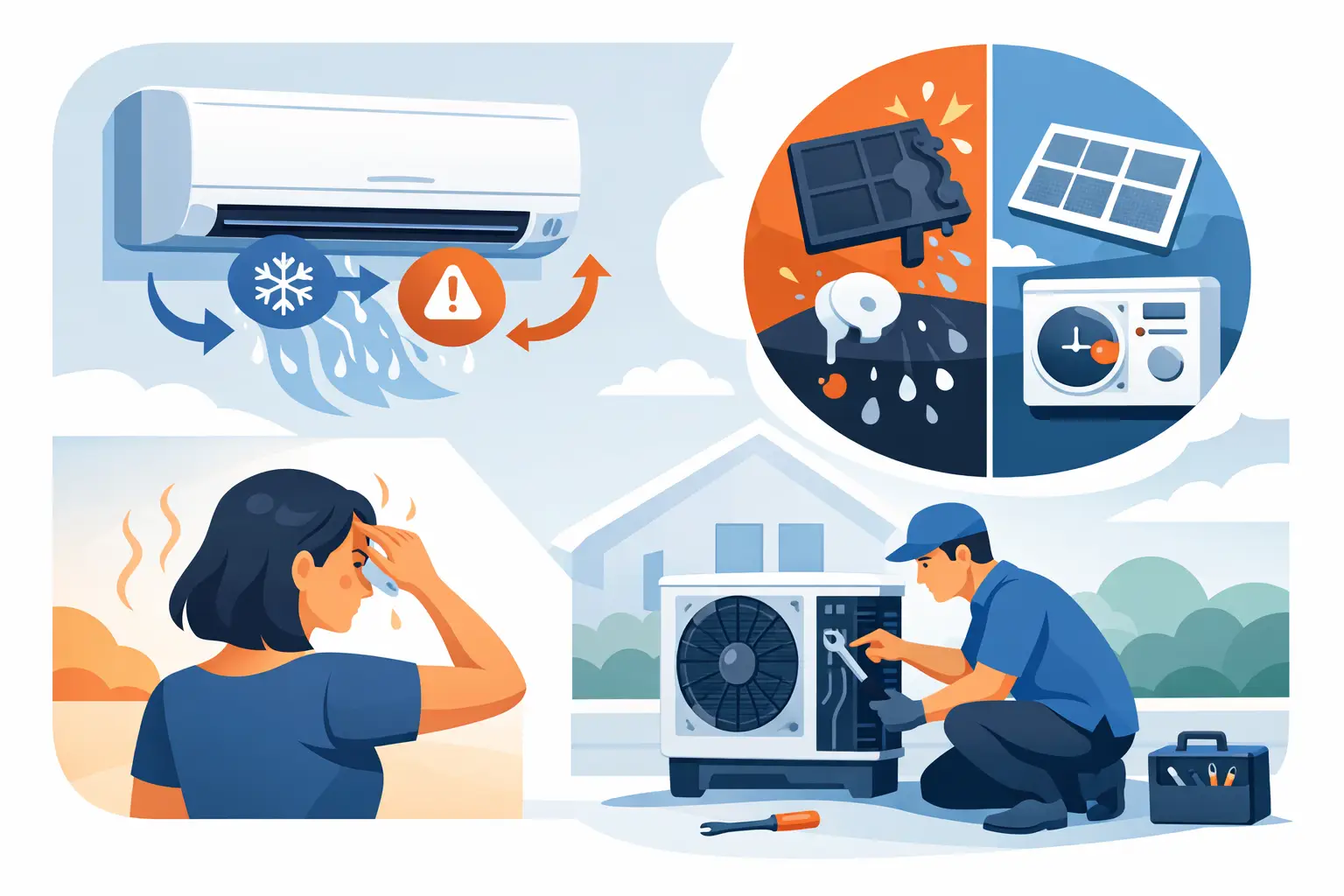
When your air conditioner kicks on, runs for a minute or two, shuts off, and then starts right back up, that is not just annoying - it is a warning sign. AC short cycling causes more wear on your system, drives up energy use, and can leave your home or business in Houston feeling humid and uncomfortable even while the unit seems to be working nonstop.
In a climate where cooling is not optional for much of the year, short cycling needs attention quickly. Sometimes the issue is simple, like a dirty air filter or a thermostat problem. Other times, it points to a refrigerant issue, electrical fault, or an oversized system that was never matched properly to the building.
What short cycling actually means
A normal cooling cycle lasts long enough for your system to remove heat and humidity before shutting off. With short cycling, the AC turns on and off too frequently, often before it completes a full cooling cycle.
That constant starting and stopping is hard on key components, especially the compressor. It also makes temperature control less consistent. You may notice hot spots, sticky indoor air, or utility bills that climb even though the thermostat setting has not changed.
The most common AC short cycling causes
Several issues can create the same symptom, which is why a proper diagnosis matters. The unit may be turning off because it is overheating, misreading indoor temperature, losing refrigerant pressure, or tripping a safety control.
Dirty air filter or blocked airflow
Restricted airflow is one of the most common and most preventable problems. When the filter is packed with dust, return vents are blocked, or the indoor coil is dirty, your system cannot move enough air across the evaporator coil.
That can cause the coil to get too cold and even begin to freeze. In other cases, poor airflow causes the system to overheat and shut down early. Either way, the cycle gets cut short. In homes and commercial spaces with pets, remodeling dust, or heavy daily traffic, filters can clog faster than people expect.
Thermostat problems
If the thermostat is miscalibrated, poorly placed, or starting to fail, it may tell the system to shut off before the space is actually cooled. A thermostat located near a sunny window, supply vent, or heat-producing equipment can get false readings.
Low batteries, loose wiring, or an aging thermostat can also create erratic signals. This is one of those issues that seems minor until it keeps the system from running correctly during the hottest part of the day.
Low refrigerant or refrigerant leaks
Your AC does not use up refrigerant under normal operation, so if levels are low, there is usually a leak. Low refrigerant changes the pressure inside the system and can trigger safety controls that shut the unit down early.
This problem usually comes with other signs, such as weak cooling, hissing sounds, ice on the line or coil, or longer run times mixed with sudden shutoffs. Refrigerant issues should be handled by a licensed HVAC technician. Topping it off without finding the leak is usually a temporary fix at best.
Oversized AC system
Bigger is not always better in air conditioning. An oversized unit can cool the thermostat area too quickly and shut off before the rest of the building is properly conditioned.
That may sound efficient, but it usually creates the opposite result. The AC cycles too often, does a poor job removing humidity, and wears out sooner because it starts and stops constantly. This is especially frustrating in Houston, where moisture control matters almost as much as temperature control.
Frozen evaporator coil
A frozen coil is often the result of airflow issues or refrigerant problems, but it deserves separate attention because it directly leads to short cycling. Once ice builds up, the system cannot absorb heat correctly.
The unit may shut down on a limit or control issue, thaw, restart, and repeat the same pattern. If you see ice on the indoor unit, refrigerant line, or around the coil area, turn the system off and have it checked before damage spreads.
Electrical and control board issues
Loose connections, failing capacitors, damaged contactors, or control board faults can interrupt normal operation. These are not always obvious from the outside. The system may start normally, then cut off because a component cannot maintain power or communicate correctly.
Electrical problems can be intermittent, which makes them easy to miss until they become a complete breakdown. In many cases, short cycling is an early warning that a part is failing under load.
Dirty condenser coil or outdoor unit problems
The outdoor unit needs to release heat efficiently. If the condenser coil is coated in dirt, grass, or cottonwood, or if the unit is crowded by debris and poor clearance, heat transfer suffers.
That can raise operating pressures and temperatures, causing the system to shut down to protect itself. In Houston's summer heat, even a moderate airflow issue outside can push a stressed system over the edge.
Why short cycling gets expensive fast
The biggest cost is not always the immediate repair. Frequent cycling increases strain on the compressor, which is one of the most expensive parts to replace. It also drives up power use because startup is one of the hardest, least efficient parts of AC operation.
There is also the comfort cost. A unit that short cycles may lower the temperature near the thermostat without running long enough to dehumidify the indoor air. That leaves the space cool on paper but clammy in real life. For businesses, it can also create an uncomfortable environment for staff and customers.
What you can check before calling for service
A few basic checks can help rule out simple causes. Start with the thermostat. Make sure it is set to cool, the batteries are fresh if applicable, and the programmed settings are correct.
Then check the air filter. If it looks dirty, replace it. Walk through the property and confirm that supply and return vents are open and not blocked by furniture, boxes, or rugs.
Take a look at the outdoor unit as well. Clear away leaves, grass, and debris around the condenser, and make sure there is reasonable airflow around it. If the system is iced over, turn it off and do not force it to keep running. That usually points to a larger issue that needs professional service.
When to call a professional
If the unit keeps short cycling after a filter change and thermostat check, it is time for diagnosis. Refrigerant issues, electrical faults, frozen coils, oversized equipment, and failing internal components are not problems to guess at.
A technician can test refrigerant pressures, inspect wiring and controls, measure airflow, and determine whether the issue is repairable or part of a larger system problem. For older systems, short cycling can be a sign that multiple parts are wearing down at once, and the best solution may depend on the unit's age, repair history, and efficiency level.
For Houston-area property owners, fast service matters because short cycling can turn into a full no-cool situation quickly. A responsive local team like Elisee HVAC and Home Services Houston can help identify the cause, make repairs, and recommend whether maintenance, component replacement, or system upgrades make the most sense.
How to prevent AC short cycling causes from coming back
Prevention usually comes down to maintenance and system matching. Seasonal tune-ups help catch clogged coils, weak electrical parts, airflow restrictions, and refrigerant problems before they trigger frequent cycling.
It also helps to make sure the system is properly sized for the building. If you are replacing an older unit, the right answer is not simply to match the old tonnage. Square footage, insulation, windows, duct condition, occupancy, and sun exposure all matter.
Routine filter changes are another simple habit that pays off. In many homes, every one to three months is reasonable, but high-use properties may need more frequent replacement. If indoor air quality is a concern, the filter type should be chosen carefully so it improves filtration without choking airflow.
A short cycling AC rarely fixes itself. The sooner the cause is identified, the better your chances of avoiding a bigger repair, a higher bill, or a total loss of cooling when you need it most.