
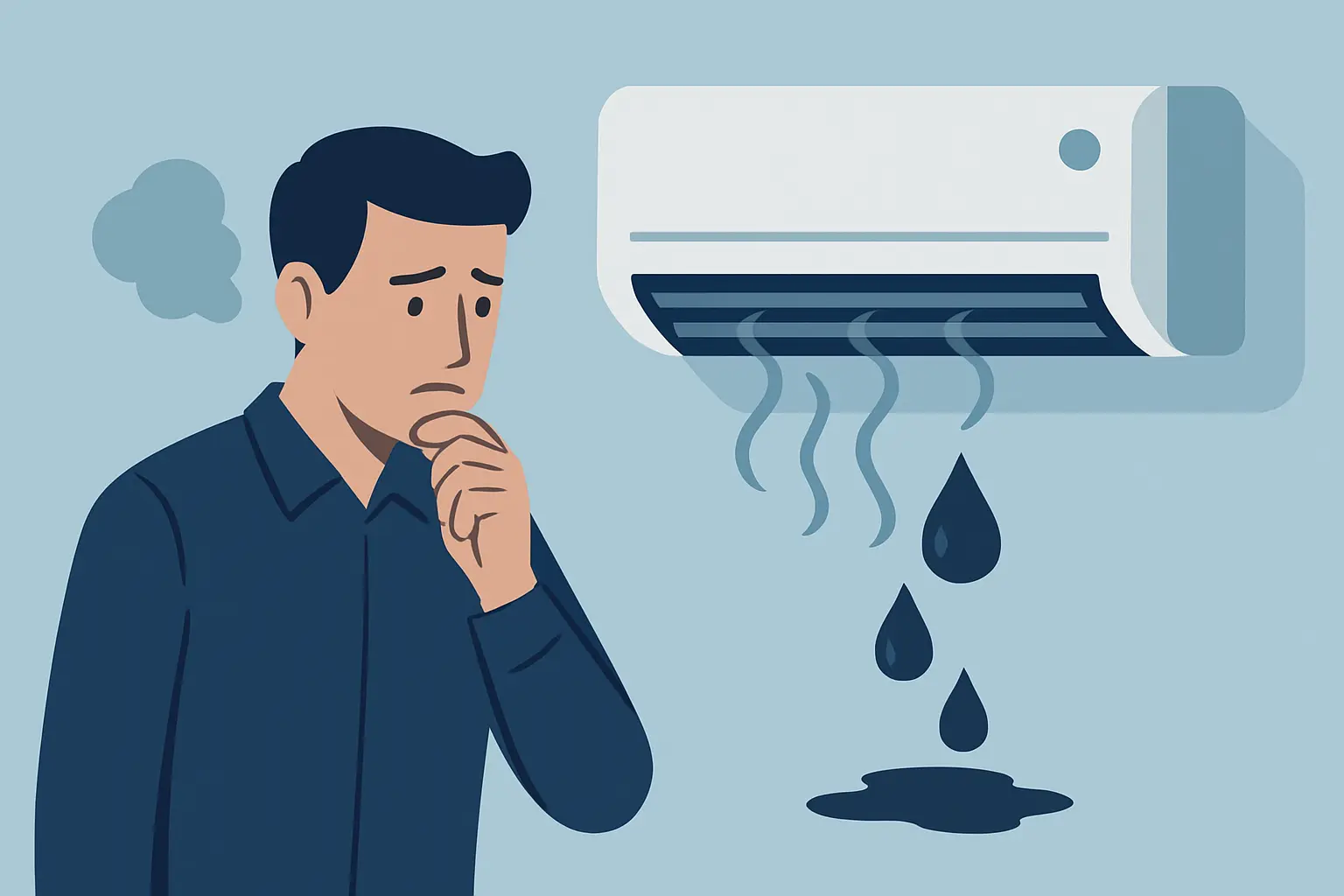
You set the thermostat to 74 and the house still feels sticky. The vents are blowing, the outdoor unit is running, and yet the rooms never quite get comfortable. In Houston heat, that pattern is more than annoying - it can be one of the clearest signs your system is low on refrigerant due to a leak.
Refrigerant does not “get used up” the way gasoline does. In a properly sealed air conditioning system, the refrigerant circulates in a closed loop for years. When it’s low, something made it escape. Catching ac refrigerant leak symptoms early can protect your compressor (the most expensive part of many systems), reduce humidity problems, and keep your energy bills from climbing.
Why a refrigerant leak changes everything
Refrigerant is the working fluid that absorbs heat indoors and releases it outdoors. Your AC’s evaporator coil inside the home needs the correct refrigerant charge and pressure to pull heat and moisture out of the air. When refrigerant is low, the coil can’t absorb enough heat, the system runs longer, and indoor humidity often rises.
The trade-off is that some symptoms look like other common Houston-area problems: dirty filters, clogged drain lines, duct leaks, or airflow restrictions. That’s why refrigerant issues need confirmation with proper gauges and leak detection, not guesswork.
AC refrigerant leak symptoms you can notice at home or work
The system runs постоянно but doesn’t cool
One of the most common signs is extended run time with poor results. You may see the thermostat stuck 2-6 degrees above setpoint during the afternoon, even though the equipment sounds “normal.”
It depends on outside conditions. On a 100-degree day, any AC will run longer. The red flag is when your system used to keep up and suddenly can’t, or it takes all night to recover after peak heat.
Warm air or “not cold enough” air from vents
A refrigerant leak can make supply air feel lukewarm. You might still feel airflow, but the air doesn’t have that crisp, cold temperature difference you’re used to.
This symptom overlaps with airflow problems. A failing blower motor, blocked return, or extremely dirty filter can also cause weak or warmer air. The difference is that with low refrigerant, the airflow can feel normal but the temperature split (return air vs supply air) is disappointing.
Ice on the indoor coil or refrigerant lines
Low refrigerant often causes the evaporator coil to run too cold. Moisture in the air freezes on the coil and can build into a solid block of ice. You may notice frost on the copper line near the indoor unit, ice inside the air handler, or water around the unit later when it melts.
If you see ice, don’t keep running the system and hope it clears. Continued operation can starve the compressor of proper cooling and lubrication. Turning the system off and letting it thaw is often the safest immediate step, but the underlying cause still needs diagnosis.
Higher humidity indoors
Houston homes and businesses rely on AC not just for temperature, but for moisture removal. When refrigerant is low, the coil may not operate in the ideal range to dehumidify effectively. The space can feel clammy, sheets feel slightly damp, and you might notice more condensation on windows or supply grilles.
Humidity complaints also show up with oversize equipment, duct leakage, or thermostat/fan settings. If indoor humidity suddenly worsens along with longer run times, low refrigerant becomes more likely.
Utility bills rise without a lifestyle change
When the system has to run longer to move the same amount of heat, energy use goes up. If your usage pattern hasn’t changed and your bill climbs, it’s a clue that something is forcing the AC to work harder.
A leak is one possibility, but not the only one. Dirty coils, failing capacitors, and duct losses can also raise costs. The key is treating a bill spike as an early warning, not just “summer prices.”
Hissing, bubbling, or whooshing near the equipment
Refrigerant escaping under pressure can sometimes be heard - especially near the indoor coil, outdoor coil, or service valves. A faint hiss or bubbling sound isn’t always present, but when it is, it’s worth taking seriously.
You may also hear airflow noise changes if ice is forming and restricting the coil. Either way, odd new sounds plus comfort problems are reason enough to schedule a diagnostic.
Short cycling or safety shutoffs
Some systems will cycle on and off more frequently when pressures aren’t where they should be. Others may eventually trip safeties, especially if ice buildup or compressor overheating becomes severe.
Short cycling can also come from thermostat issues, oversized equipment, or electrical problems. But if short cycling shows up after a gradual loss of cooling performance, a refrigerant leak is on the short list.
Musty smells after ice melts
This one is indirect. If low refrigerant causes freezing, you can end up with repeated thaw cycles and extra water in and around the coil and drain pan. That moisture can contribute to musty odors, especially if the drain is already partially restricted.
Odors don’t prove a leak, but they often show up alongside the conditions a leak creates.
What not to do when you suspect a refrigerant leak
The fastest way to turn a manageable repair into a major failure is to keep forcing the system to run under the wrong conditions.
Avoid topping off refrigerant without finding the leak. Adding refrigerant may temporarily improve cooling, but the refrigerant will escape again, and the system can still be operating outside its designed pressures. It also makes it harder to confirm the leak location later.
Avoid DIY sealants and “stop leak” products. They can contaminate equipment, clog metering devices, and complicate future repairs.
And if you see ice, don’t chip it off. You can damage the coil fins or tubing. Let it thaw naturally with the system off, and focus on getting the cause corrected.
How a technician confirms a refrigerant leak
A proper diagnosis is more than “it’s low.” A technician should verify system operation, airflow, and refrigerant charge conditions, then pinpoint where the refrigerant is leaving.
In practice, that often includes pressure readings, temperature measurements (superheat/subcooling), and leak detection methods appropriate for the system and the suspected area. Sometimes the leak is obvious - oily residue on a coil or fitting - and sometimes it takes more time.
It also depends on the type of system and refrigerant. Newer systems may use different refrigerants and have different expected operating ranges. Correct diagnosis means charging to manufacturer specifications, not a rule-of-thumb.
Common leak locations in Houston-area systems
Most leaks show up where vibration, corrosion, or manufacturing joints exist. Evaporator coils can develop leaks over time, outdoor coils can corrode, and service valves or Schrader cores can seep. In some cases, line set rub-through or poor brazed joints are the culprit.
If your system is older, repair decisions can be a little more nuanced. A small, accessible leak might be a straightforward fix. A coil replacement on an aging system might push the conversation toward repair vs replacement, especially if the unit is near end-of-life and efficiency has already declined.
When a refrigerant leak becomes an emergency
In Houston, “no AC” can quickly become a health and safety issue, especially for seniors, young children, and anyone working from home in the afternoon heat.
Treat it as urgent if the house won’t drop below the low 80s, if you see heavy ice buildup, if the system is tripping breakers or shutting down, or if a business space can’t maintain safe conditions for customers, staff, or equipment.
If you’re in the Houston metro and need fast help, Elisee HVAC and Home Services Houston can respond with 24/7 emergency service so you’re not stuck waiting through the hottest part of the week.
The real goal: comfort now, protection for later
Refrigerant leaks rarely fix themselves. The earlier you address ac refrigerant leak symptoms, the more likely the solution stays simple - and the more you protect the parts that keep your system running when Houston weather is at its worst.
If your AC is struggling, pay attention to the pattern: longer run times, weaker cooling, ice, and rising humidity are your system’s way of asking for help. Comfort should feel routine, not like a daily battle with the thermostat.