Houston heat has a way of turning a small AC issue into a full-blown emergency by mid-afternoon. One minute the system is running, the next the house feels sticky, vents are barely pushing air, and the thermostat seems stuck. When your AC is not cooling in the house, the right next step is not guessing - it’s narrowing down what’s actually happening so you can fix what’s simple and avoid damaging what’s expensive.
This guide is written the way a technician thinks on a service call: start with the easiest, safest checks, then move toward issues that typically require tools, parts, or a trained eye.
First, confirm what “not cooling” really means
Not cooling can look a few different ways, and each points to a different cause.
If the system is running constantly but the temperature won’t drop, that often suggests restricted airflow, low refrigerant, dirty coils, duct leakage, or a system that’s undersized or struggling in extreme heat. If the indoor blower runs but the outdoor unit is silent, you may be dealing with a tripped breaker, failed capacitor, contactor issue, or disconnect problem. If the outdoor unit runs but airflow inside is weak, think filter, blower, evaporator coil icing, or duct problems.
Also check the thermostat reading against a simple indoor thermometer. A thermostat that’s out of calibration or installed in a hot spot (direct sun, near a kitchen, near a return grille) can make the system behave like it’s failing when it’s actually reacting to bad information.
Quick checks you can safely do right now
These are the fastest wins and the most common culprits. They also don’t require opening the sealed refrigerant system or working inside electrical compartments.
Thermostat settings and power
Make sure the thermostat is set to Cool, not Heat or Auto with a high setpoint. Set the fan to Auto for normal operation. “Fan On” can make the home feel warmer by continuously moving air across a damp coil.
If the thermostat is blank or unresponsive, replace the batteries if it uses them. If it’s hardwired and dead, a tripped float switch (from a backed-up drain line) can cut power to protect your home from water damage. That protection is good, but it will stop cooling.
Air filter and return airflow
A clogged filter is one of the most common reasons an AC is not cooling in a house. It restricts airflow, which can cause the evaporator coil to get too cold and ice over. Once iced, it blocks air even more, and cooling drops fast.
Swap the filter with the correct size and orientation. If you’re using a high-MERV filter and your system wasn’t designed for it, airflow can suffer. For some homes, a moderate filter changed regularly is a better balance between air cleaning and system performance.
While you’re there, make sure return grilles aren’t blocked by furniture, rugs, or stacked boxes. The system can’t cool what it can’t pull back to the equipment.
Circuit breakers and outdoor disconnect
If the indoor unit runs but the outdoor unit doesn’t, check the breakers. HVAC systems typically have a breaker for the air handler/furnace and a separate breaker for the condenser outside. Reset once if a breaker tripped. If it trips again, stop there - repeated resets can worsen electrical damage.
Some homes also have an outdoor disconnect box near the condenser. If it’s off or partially seated, the unit won’t run.
Check for ice - then do the right thing
If you see frost on the copper line at the outdoor unit, ice on the indoor coil cabinet, or water around the air handler from melting ice, don’t keep forcing the system to run. Turn cooling off and set the fan to On to help thaw the coil. This can take a few hours.
Icing is usually caused by low airflow (dirty filter, blower issues, blocked return, dirty coil) or low refrigerant. The thaw gets you back to a testable baseline, but it doesn’t solve the underlying cause.
If it’s running but still warm, these are the usual suspects
Once the basics are covered, the next level is about heat transfer. Your system has to move heat from inside to outside. Anything that blocks that process will look like “it runs but doesn’t cool.”
Dirty outdoor coil in Houston conditions
Cottonwood, grass clippings, dust, and lint can clog the outdoor coil. When the coil can’t reject heat, head pressure rises and capacity drops. The home feels like it’s getting “almost cool” but never comfortable.
You can gently rinse the outdoor coil with a garden hose (with the power off at the disconnect). Avoid pressure washers - they can flatten fins and reduce performance. Keep shrubs trimmed back for airflow.
Refrigerant problems (low charge or a leak)
Refrigerant doesn’t get “used up.” If it’s low, there’s typically a leak. Low charge often shows up as longer run times, warm air, coil icing, and rising humidity indoors.
This is where DIY should stop. Refrigerant handling requires EPA-compliant practices, correct charging methods, and leak evaluation. Topping it off without fixing the leak usually buys a little time and then repeats the same failure.
Blower and airflow problems
A failing blower motor, slipping belt (on older systems), or incorrect blower speed can reduce airflow enough to kill cooling. Sometimes the system still sounds normal, but the air at the vents is weak.
If some rooms are fine and others are warm, it can also be duct-related. In many Houston-area attics, ducts take a beating from heat, aging insulation, and poor sealing. Leaky ducts can dump cooled air into the attic and pull hot, humid air into the system.
Drain line clogs and safety shutoffs
In our climate, condensate drains can clog with algae and sludge. Many systems have a float switch that shuts the unit down to prevent overflow. Homeowners often notice the thermostat is calling for cooling, but the system won’t run or keeps stopping.
Clearing and treating the drain line is a common maintenance item and one reason seasonal tune-ups prevent those “sudden” summer breakdowns.
When “ac not cooling in house” is actually a sizing or load issue
Sometimes nothing is technically broken - the system is simply outmatched.
If your AC runs all afternoon and only drops the temperature a couple degrees, that can happen during extreme heat if the home has high solar gain, poor attic insulation, leaky windows, or significant duct leakage. It can also happen if the system is undersized or if you’ve added square footage and the equipment never got upgraded.
There’s a trade-off here. Cranking the thermostat way down won’t make the system cool faster - it just makes it run longer. The better approach is reducing the cooling load (shade, insulation, sealing) and making sure the system is operating at its rated capacity.
Signs you should stop troubleshooting and call a technician
If you smell burning, hear buzzing at the outdoor unit, see repeated breaker trips, or notice refrigerant oil around the copper line connections, it’s time for professional diagnosis. The same goes for an iced coil that returns quickly after thawing, or a system that short-cycles (turns on and off every few minutes).
In Houston’s peak season, small electrical issues like weak capacitors can quickly become compressor damage if ignored. A compressor replacement is the kind of repair everyone wants to avoid, and early intervention is often the difference.
What a good service call should include
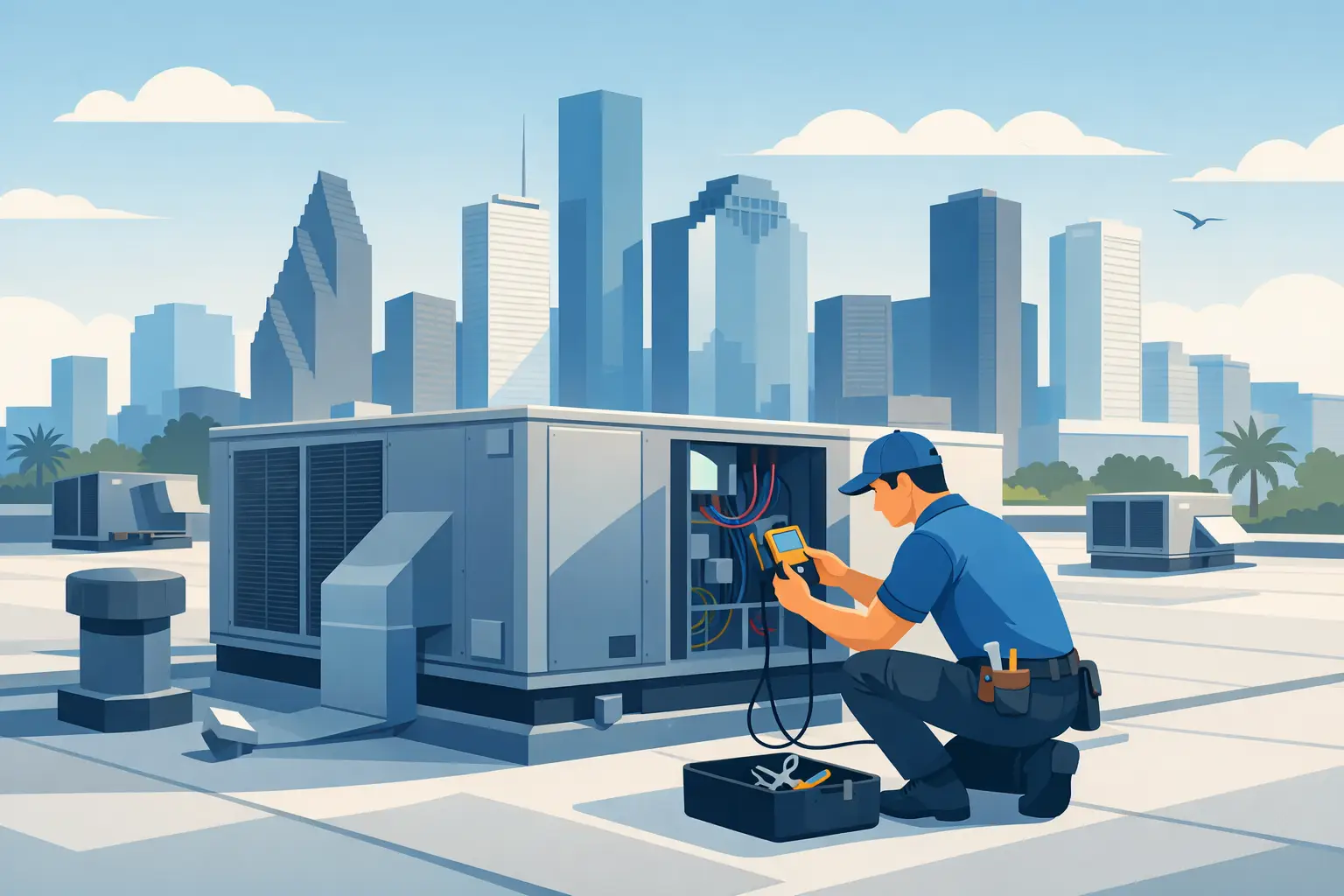
If you’re bringing in a pro, you should expect more than “add refrigerant and leave.” A technician should verify airflow, check temperature split, inspect the evaporator and condenser coils, test capacitors and contactors, confirm refrigerant readings, and look for the reason the problem started.
If the system is older and struggling, you should also get straight talk about repair vs. replacement. Sometimes a targeted repair and coil cleaning restores full performance. Other times, especially with repeated leaks or major component failures, replacement is the more predictable path - and financing can make that decision easier without waiting for the next breakdown.
If you’re in the Houston metro area and need fast help, Elisee HVAC and Home Services Houston can dispatch for urgent issues and also handle the longer-term fixes like duct sealing, duct cleaning, system optimization, and full replacements when repairs stop making sense (https://Eliseehomeserviceshouston.com).
A few habits that prevent the next cooling failure
Most no-cool calls trace back to maintenance that got delayed until the first heat wave. Changing filters on schedule, keeping the outdoor unit clear, and scheduling seasonal maintenance before summer demand spikes are the practical moves that keep a good system from getting stressed into failure.
If your home has persistent hot rooms, high humidity, or dust, it’s worth looking beyond the thermostat. Airflow, duct integrity, and insulation often decide whether your system feels strong or constantly behind.
When your comfort is on the line, the goal isn’t to “get by” until the weather changes. It’s to get your system back to stable, dependable cooling so the house feels normal again - even when Houston doesn’t.