If your AC is running but not cooling, or you hear a hum and then silence, you are probably thinking the same thing most Houston homeowners think in July: “How fast can someone fix this, and what is it going to cost?” One of the most common culprits is a failing capacitor. It is also one of the most common AC repairs we see during high-heat stretches because capacitors work hard every time your system starts.
AC capacitor replacement cost: the realistic range
Across the Houston area, the ac capacitor replacement cost typically lands in the $200 to $600 range for most residential systems when you factor in professional diagnosis, the correct part, installation, and testing. Some jobs come in lower if it is straightforward access and a standard single capacitor. Others climb higher when the unit uses a specific OEM part, access is difficult, or the system has additional issues that show up during troubleshooting.
If you are comparing numbers you saw online, be careful about “part-only” pricing. A capacitor itself might be priced far lower in isolation, but that is not the full picture. The real value of a professional repair is confirming the capacitor is actually the problem, replacing it safely, and verifying the system is running within specs so you are not paying twice.
What a capacitor does (and why Houston heat exposes weak ones)
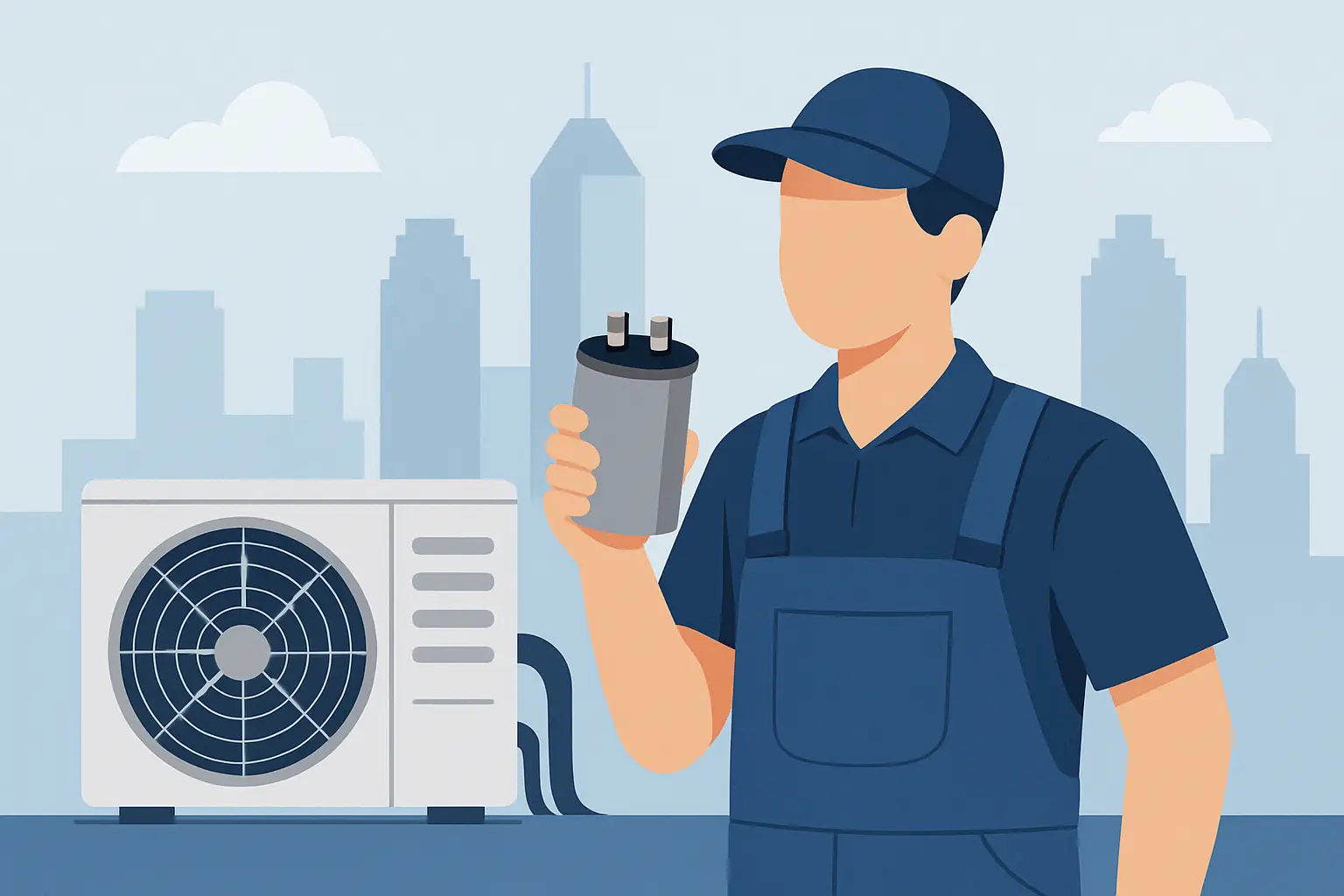
Your AC capacitor stores and releases energy to help the compressor and fan motor start and run. In simple terms, it is the push that gets the system moving. When it weakens, the system may struggle to start, run inefficiently, or shut down on protection.
Houston’s long cooling season is rough on electrical components. High outdoor temps, frequent cycling, and heat-soaked condenser cabinets all add stress. A capacitor can fail suddenly, but more often it degrades over time until the system cannot reliably start.
Signs you might need a capacitor replacement
Homeowners usually notice a capacitor issue as a “no cold air” or “it won’t turn on” problem, but there are a few patterns we see repeatedly.
Your outdoor unit may hum without the fan spinning. You might see the system try to start and then click off. Inside, you may have warm air coming from vents even though the thermostat is calling for cooling. You can also see higher electric bills because a weakening capacitor makes motors work harder and run hotter.
Capacitor failure can also mimic other problems. A bad contactor, a failing fan motor, a compressor issue, or low voltage can create similar symptoms. That is why diagnosis matters more than guessing.
What affects your total cost
There is no one flat price that fits every system, but the drivers are consistent. The total usually comes down to the part, the labor, and the conditions around the repair.
1) Type of capacitor and system design
Many systems use a dual-run capacitor that supports both the compressor and the condenser fan motor in one can. Others use separate capacitors. The voltage rating and microfarad (MFD) rating must match what the unit requires. Higher-end equipment or certain models may call for specific parts, and that can influence price.
2) Diagnosis and verifying the real failure
A technician should confirm the capacitor’s condition with proper testing, not just visual inspection. Some failed capacitors bulge or leak, but many look normal and still test weak. Good diagnosis also includes checking whether something else caused the failure, like an over-amping motor, pitted contacts, or electrical issues. Catching that early can prevent another breakdown a week later.
3) Access, safety, and time on site
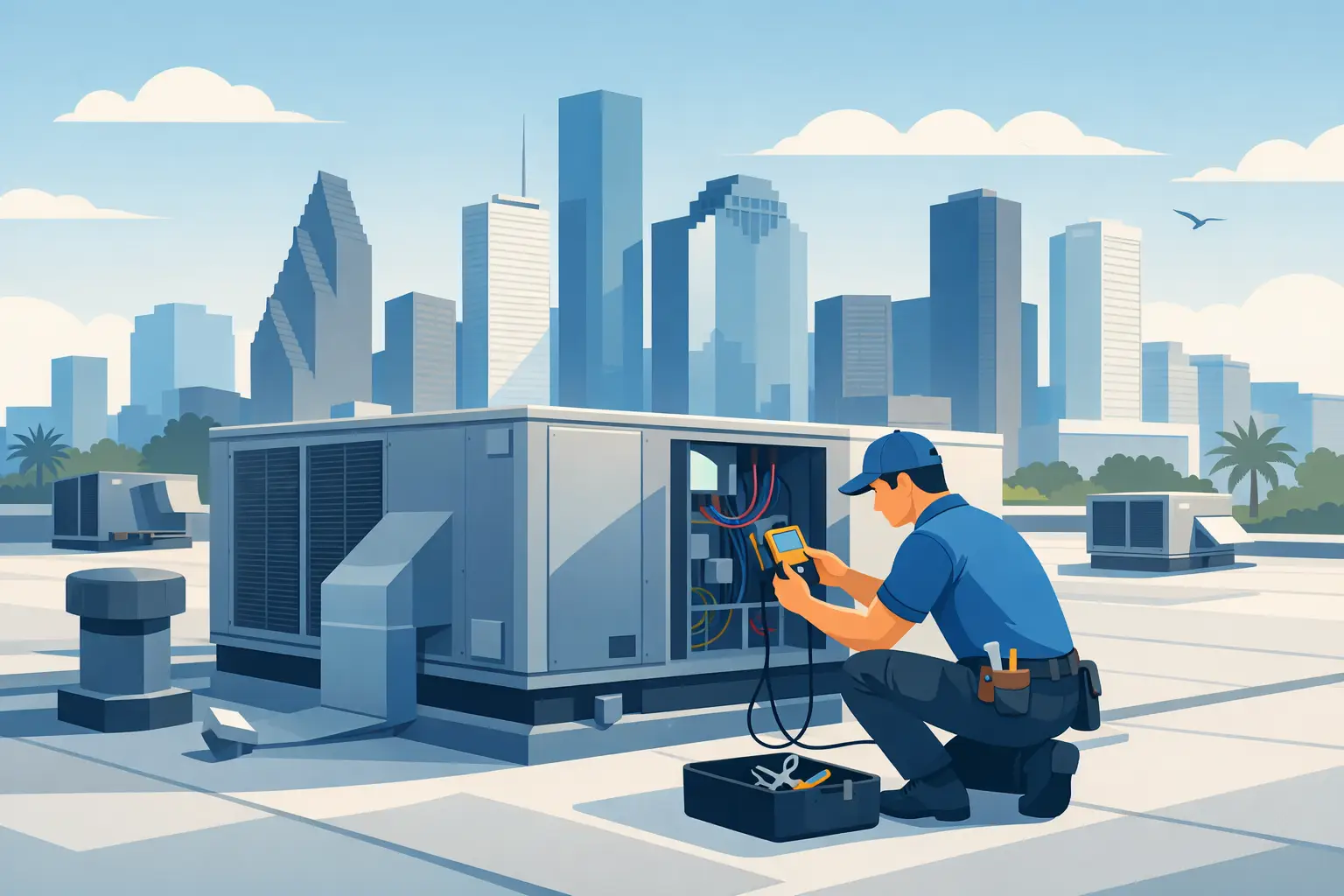
If your condenser is easy to access and the electrical compartment is clean, replacement is usually quick. Costs can rise when the unit is on a roof, behind fencing with limited clearance, in a tight mechanical closet, or when panels and connections are corroded and require careful work. Houston’s humidity and outdoor exposure can accelerate corrosion, especially near sprinklers or standing water.
4) Timing and urgency
When the AC is down during a heat advisory, urgency matters. Emergency service availability can affect pricing depending on the company, the time of day, and the workload. The flip side is that quick restoration can protect your home from rising indoor temps and reduce risk for kids, seniors, and pets.
5) Additional repairs discovered during testing
Sometimes a “capacitor problem” is also a fan motor drawing too many amps, a failing contactor, a loose electrical connection, or a damaged disconnect. In those cases, replacing only the capacitor may get you running temporarily, but it may not be a stable fix. A reputable contractor will explain what they found and why it matters, then let you decide how to proceed.
Repair vs. replace: when a capacitor is a warning sign
A capacitor replacement is often a clean, worthwhile repair, especially on systems that are otherwise in good condition. But it can also be an early warning, depending on the bigger picture.
If your system is older and has a history of electrical failures, repeated hard starts, or compressor strain, it is smart to ask whether additional protection is recommended. In some cases, a hard start kit or other corrective work can reduce stress on the compressor. The right answer depends on your equipment, your run time, and what the measurements show.
If the capacitor failed because the fan motor is failing, then replacing the capacitor alone may not be enough. If a motor is overheating, it can take the new capacitor with it. That is why amperage checks and a quick overall health assessment are worth the time.
Why DIY capacitor replacement is risky in Texas homes
Capacitors can hold a charge even when power is off. That is not a scare tactic, it is the reason technicians treat these parts with respect. Beyond safety, the larger issue is correct sizing and diagnosing the root cause.
Installing the wrong MFD rating can damage motors or prevent proper starting. Loose spade connectors or miswiring can burn terminals. And if the real issue is a failing motor or compressor, a DIY capacitor swap can delay the correct repair until the next failure, usually during the hottest part of the day.
If your goal is predictable cost and fewer repeat breakdowns, professional diagnosis and testing typically saves money over the season.
How to keep capacitor problems from turning into mid-summer outages
Capacitors do not last forever, but you can improve your odds.
Seasonal maintenance helps because it catches weak electrical components before they fail completely. During a tune-up, a technician can test capacitor strength, inspect electrical connections, measure motor amperage, and look for heat stress or contactor wear. Cleaning the outdoor coil also matters because high head pressure and high heat in the condenser section can increase strain on electrical components.
If your system short-cycles because of thermostat issues, airflow restrictions, or oversized equipment, that extra start-stop action can be harder on capacitors. Fixing the cause of short cycling often improves comfort and reduces electrical wear.
What to ask before you approve the repair
You should feel comfortable with what you are paying for. A solid contractor can explain the failure in plain language.
Ask what testing confirmed the capacitor is weak or failed, and whether they checked the fan motor and compressor draw to make sure the new capacitor is not being installed into an unsafe situation. Ask whether the part matches the manufacturer’s required ratings. And ask what they will verify after installation - for example, startup, amperage, and temperature drop at the air handler.
If the technician recommends an additional part, ask why it is needed now versus later. Sometimes “optional” work is truly optional. Other times it is the difference between a stable fix and another outage.
Houston-specific reality: speed matters, but so does doing it right
When it is 95 degrees outside and the indoor temperature is climbing, the temptation is to approve the fastest, cheapest option. We get it. But in Houston, a quick fix that fails again is more than an inconvenience - it can disrupt sleep, strain vulnerable family members, and put extra stress on the system.
A capacitor replacement done correctly is one of the better HVAC value repairs because it can restore normal operation without the cost of a major component. The key is making sure it is the right capacitor, installed safely, and supported by basic system checks that reduce repeat failures.
If you are in the Houston metro area and your system is struggling to start or the outdoor fan is not running, Elisee HVAC and Home Services Houston can help with responsive diagnostics and repair support, including emergency availability when the heat does not wait. You can learn more at https://Eliseehomeserviceshouston.com.
A helpful way to think about this repair is simple: the goal is not just getting cold air back right now, it is getting it back in a way you can count on tomorrow afternoon too.