Your AC clicks on, hums for a few seconds, and then nothing. Or maybe it does start, but the house never quite cools down the way it should. In Houston heat, that kind of behavior is more than annoying - it is often the early warning sign of a failing capacitor.
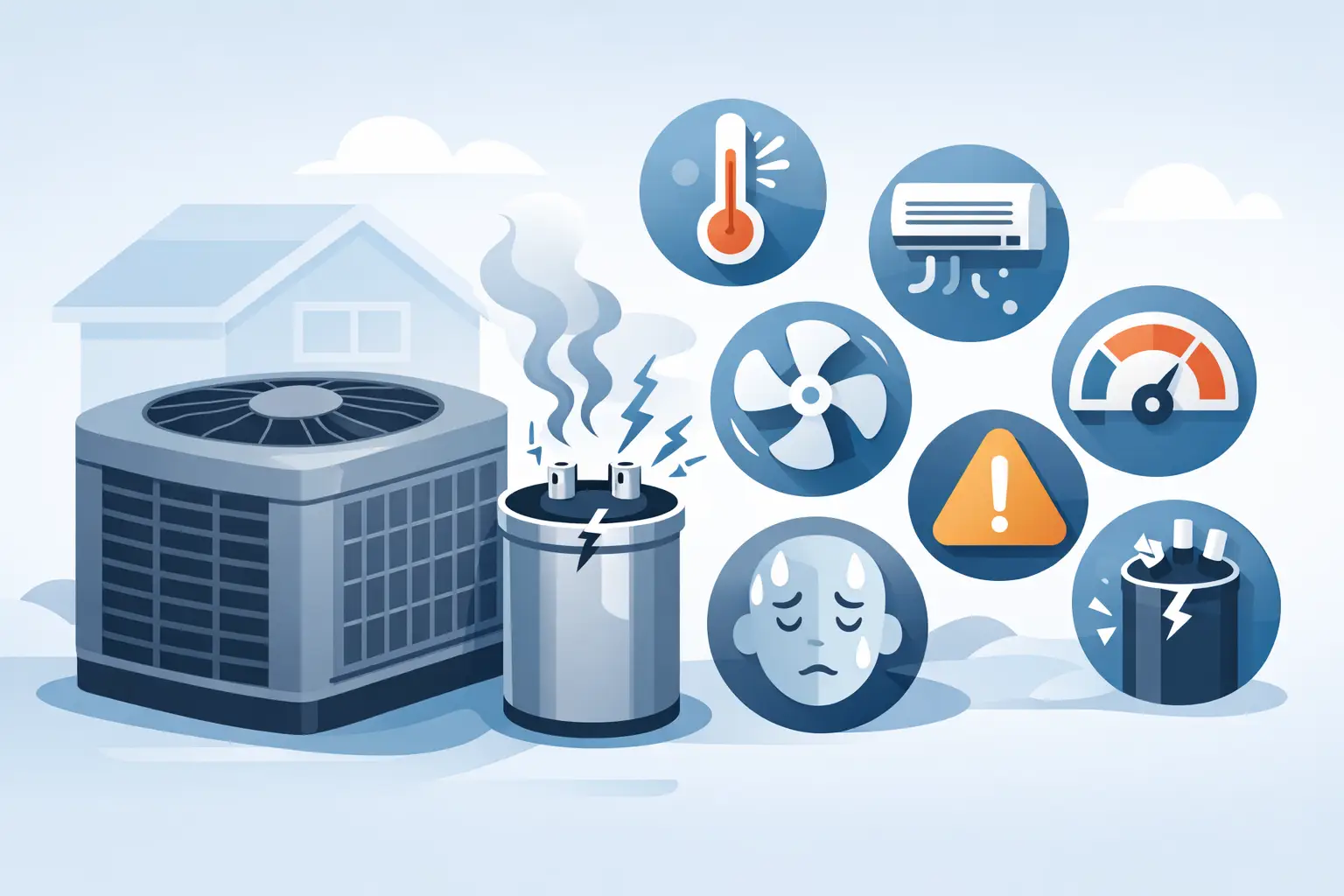
If you have been searching for AC capacitor failure symptoms explained, the short version is this: the capacitor helps your air conditioner start and keep key components running. When it weakens or fails, the system may struggle to turn on, short cycle, blow warm air, or stop working altogether. The good news is that these warning signs usually show up before a complete breakdown.
What an AC capacitor actually does
Inside your air conditioning system, the capacitor stores and releases electrical energy to help motors start and run properly. Most systems rely on capacitors to support the compressor and fan motors. Without that extra electrical boost, those components can have a hard time getting moving or staying efficient once they do.
There are different capacitor setups depending on the system. Some units use a start capacitor for the initial push, while others use a run capacitor to help maintain steady operation. Many residential systems use a dual run capacitor that supports both the compressor and the outdoor fan motor.
For most property owners, the key point is simple: if the capacitor is failing, the entire cooling process can become unreliable fast.
AC capacitor failure symptoms explained for Houston properties
Capacitor problems do not always look dramatic at first. Sometimes the system still runs, just poorly. That is why it helps to know what changes matter.
1. The AC struggles to start
One of the most common signs is an air conditioner that has trouble starting. You may hear the thermostat call for cooling, followed by a humming sound from the outdoor unit, but the system hesitates or never fully kicks on.
That hesitation often means the capacitor is no longer delivering the boost the motor needs. In early stages, the unit may eventually start after a delay. As the capacitor weakens further, it may stop starting altogether.
2. The outdoor fan is not spinning normally
If the outdoor unit is humming but the fan is not spinning, spinning slowly, or starting and stopping inconsistently, a bad capacitor is one possible cause. The fan motor depends on the capacitor to start and run correctly.
This symptom can overlap with a failing fan motor or contactor, so it is not always the capacitor alone. Still, it is a common enough issue that it should be checked quickly. Letting the system run in that condition can create larger problems, including compressor strain.
3. Warm air is coming through the vents
If your thermostat is set to cool but the air coming from the vents feels lukewarm or warm, capacitor trouble may be part of the problem. When the outdoor unit cannot fully operate, the system may move indoor air without properly removing heat.
Homeowners sometimes assume this means low refrigerant or a dirty filter. Those are possible, but a weak capacitor can produce similar comfort issues. That is one reason accurate diagnosis matters.
4. Your AC is short cycling
Short cycling means the system turns on and off more often than it should. A failing capacitor can contribute to this by interrupting normal startup or preventing components from running steadily.
This matters for two reasons. First, short cycling reduces comfort because your system is not running long enough to cool evenly. Second, repeated starts place more stress on electrical parts and motors, which can raise repair costs if the issue is ignored.
5. Energy bills climb without a clear reason
Capacitors do not always fail all at once. Sometimes they weaken gradually, and the AC keeps running in a less efficient state. That can mean longer cooling cycles, uneven performance, and higher electricity use.
If your utility bill jumps but your thermostat habits have not changed, it is worth looking at the system. In Houston, where AC demand stays high for much of the year, even a small drop in efficiency can show up on the monthly bill.
6. The unit shuts off on hot afternoons
Heat puts pressure on every part of an air conditioning system, especially older electrical components. A capacitor that seems fine in the morning may fail once outdoor temperatures climb and the system has to work harder.
This is a common pattern in Southeast Texas. The AC runs, outdoor temperatures peak, and then the unit suddenly stops keeping up or stops starting after a cycle. If that sounds familiar, the capacitor should be evaluated before the next high-demand day turns into a no-cooling emergency.
7. You hear humming, clicking, or irregular noises
Capacitors themselves are not usually noisy, but the components struggling because of a weak capacitor often are. A persistent hum from the outdoor unit, repeated clicking as the system attempts to start, or an unusual stop-and-start pattern can all point to electrical trouble.
Noise alone is not enough to confirm the diagnosis. Compressors, relays, and contactors can create similar sounds. But paired with poor cooling or startup issues, those noises are a warning not to wait.
Why capacitors fail in the first place
Capacitors are wear parts. They do not last forever, even in well-maintained systems. Age is one factor, but heat is another major one. Long cooling seasons, high outdoor temperatures, voltage fluctuations, and heavy run times all shorten capacitor life.
That is part of why this repair shows up so often in the Houston area. Systems here work hard, and the electrical load is constant through much of the year. If your AC is older, has not been serviced regularly, or has already had electrical issues before, capacitor failure becomes more likely.
Can you keep running the AC if the capacitor is weak?
Sometimes the system will keep operating for a while with a weak capacitor. That does not mean it is safe to ignore. A struggling motor draws more stress during startup and operation, and that can lead to bigger failures.
The biggest risk is compressor damage. Replacing a capacitor is typically a straightforward repair. Replacing a burned-out compressor is not. If your system is showing these symptoms, early service is usually the more affordable path.
What not to do
It may be tempting to open the panel and check the capacitor yourself after watching a quick video. That is not a good idea unless you are trained to handle HVAC electrical components. Capacitors can hold a charge even when power is off, and contact with stored voltage can be dangerous.
It is also easy to misread the issue. A bad capacitor can look like a motor problem, thermostat issue, or contactor failure. Replacing the wrong part wastes time and may leave the real problem unresolved.
When to call for AC service
If your system is humming without starting, blowing warm air, short cycling, or shutting down during peak heat, it is time to schedule service. Waiting usually does not improve the situation, and in hot weather it can turn a manageable repair into a same-day emergency.
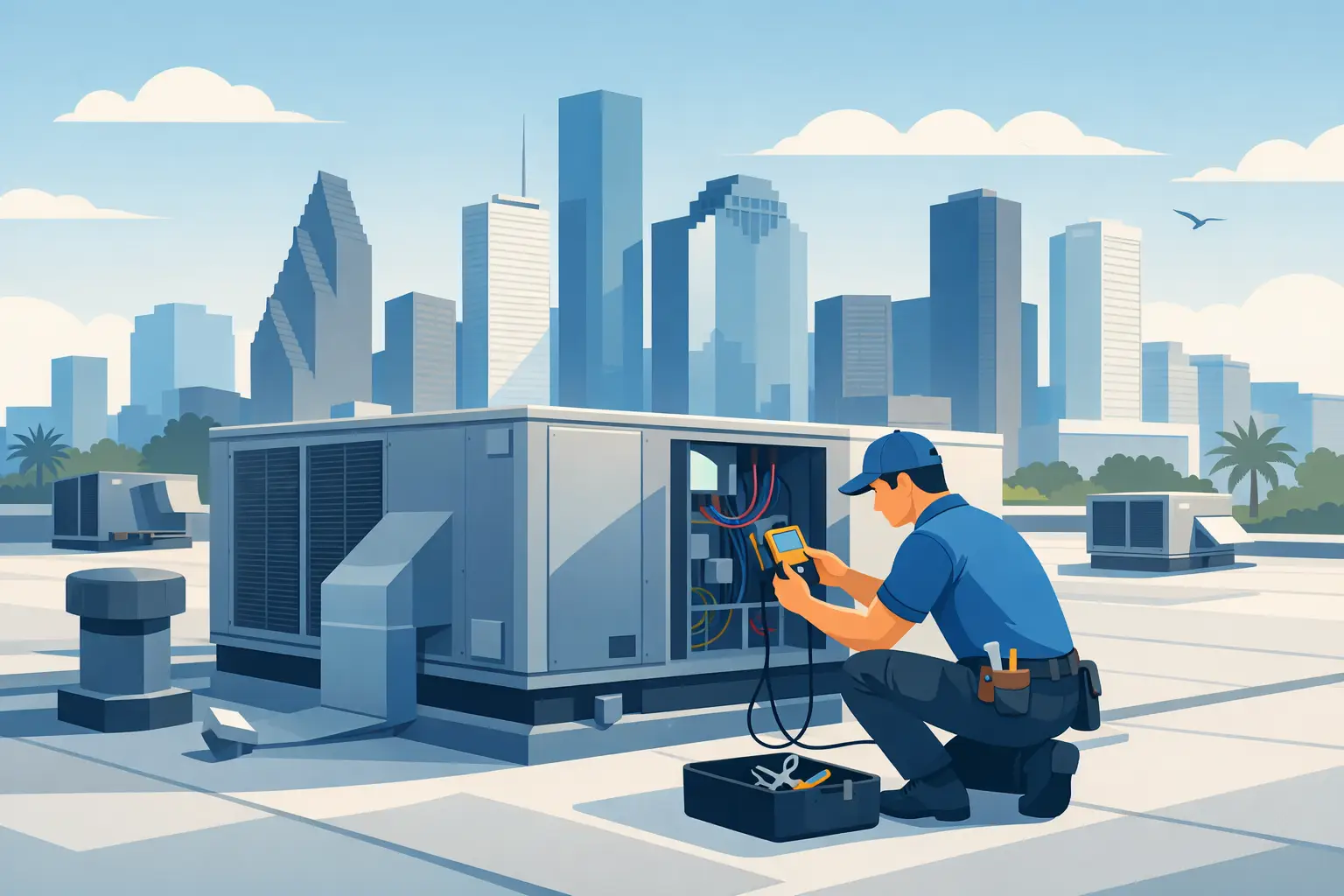
A technician can test the capacitor, inspect connected components, and confirm whether the issue is isolated or part of a larger wear pattern. That matters because sometimes a failed capacitor is the main problem, and sometimes it is a symptom of another electrical or motor issue developing in the system.
For homeowners, landlords, and small business owners, the goal is not just getting the unit back on. It is restoring reliable cooling without repeat breakdowns a few days later. That is where a thorough diagnosis makes a difference.
The value of preventive maintenance
Capacitors can fail without much warning, but regular maintenance improves the odds of catching weakness before total shutdown. During seasonal service, technicians can inspect electrical components, test performance, clean the system, and spot signs of stress that may not be obvious day to day.
That kind of preventive care matters when your comfort and uptime depend on the AC working every time the thermostat calls. For Houston-area properties, especially those with older systems or heavy summer usage, maintenance is often what separates a planned repair from an after-hours breakdown.
If you need fast help with an AC that will not start or is showing signs of capacitor trouble, Elisee HVAC and Home Services Houston can evaluate the issue and get cooling restored before the next heat spike puts more strain on the system.
When your air conditioner starts acting differently, trust that change. Small symptoms are often the system's way of asking for service before the bigger failure arrives.