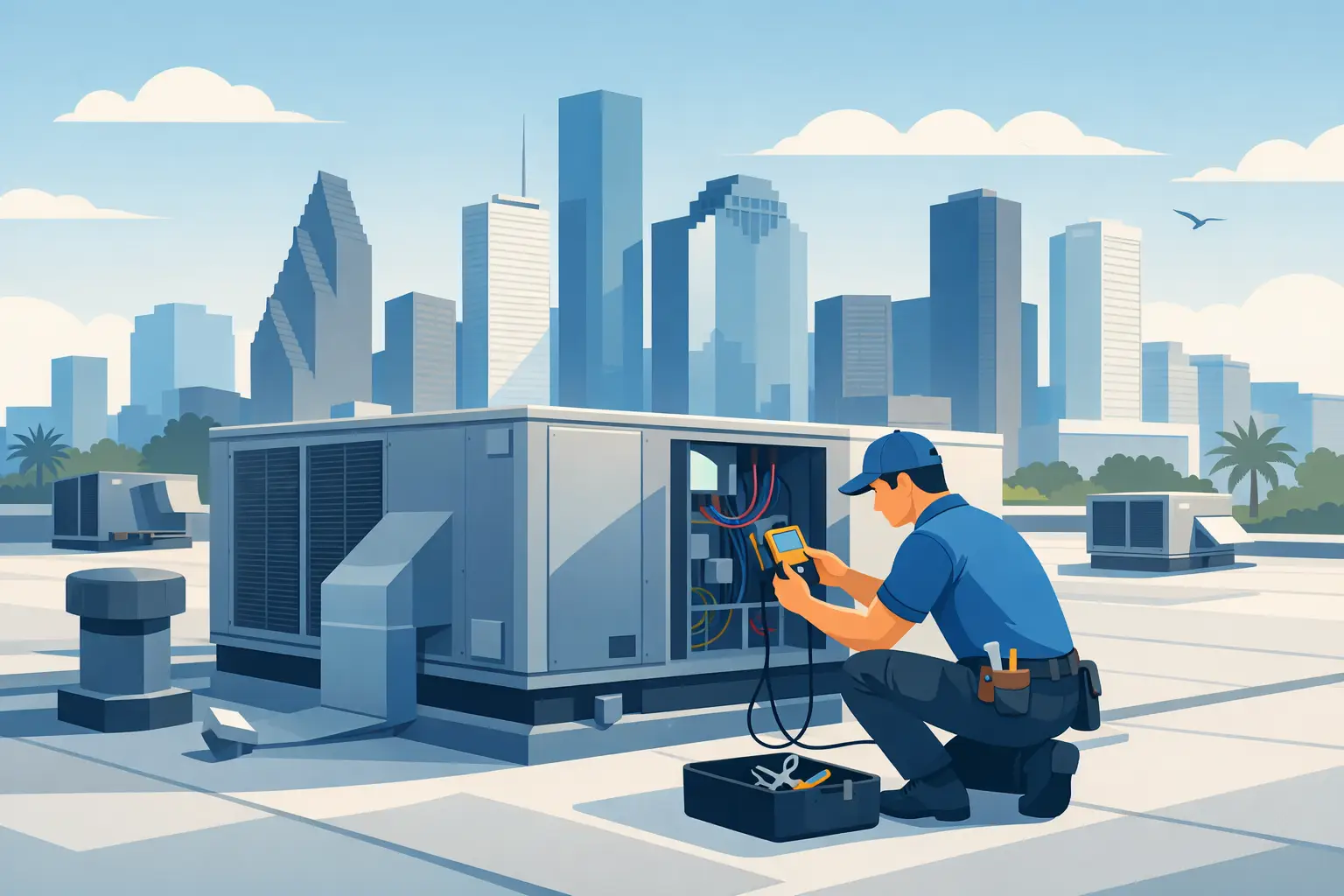
Houston heat does not wait for business hours. When your AC stops in the middle of the night, during a weekend, or right before your store opens, the problem moves from inconvenient to urgent fast. That is why 24/7 emergency AC repair in Houston matters. It is not just about getting cool air back. It is about protecting your family, your property, your equipment, and your day.
For homeowners, a sudden outage can make a house uncomfortable within hours, especially during high humidity and triple-digit heat indexes. For businesses, downtime can affect staff, customers, inventory, and operations. In both cases, fast response and accurate diagnosis matter more than temporary guesses or delayed callbacks.
Why 24/7 emergency AC repair Houston service is different
Not every AC problem is an emergency, but some clearly are. If your system quits entirely during extreme heat, starts blowing warm air with indoor temperatures rising quickly, trips breakers repeatedly, leaks heavily, or makes sharp grinding or burning noises, waiting until Monday is not always the best move. Those are situations where after-hours service can prevent a bigger repair, a safety issue, or a complete system failure.
Emergency repair is also different from a standard service call because the goal is immediate stabilization first, then full restoration. A skilled technician needs to assess whether the issue is electrical, mechanical, airflow-related, thermostat-related, or tied to refrigerant performance. The fastest repair is not always the smartest repair. In some cases, the system can be safely restored that same visit. In others, the right move is to protect the equipment, correct the root cause, and recommend the next step clearly.
That matters in Houston because cooling systems run hard for long stretches. Extended runtimes put stress on capacitors, contactors, motors, compressors, drain lines, and coils. A minor weakness that would go unnoticed in a milder climate often shows up fast here.
What usually causes an AC breakdown after hours
Most emergency calls are not random. They usually come from a handful of common problems that build over time. A failed capacitor is one of the biggest reasons a unit suddenly stops starting. Clogged drain lines can trigger float switches and shut the system down. Dirty condenser coils can cause overheating and poor cooling until the unit struggles or stops. Blower motor issues can leave you with little airflow even when the system seems to be running.
Low refrigerant or a refrigerant leak can also push a system into poor performance, icing, and compressor stress. Electrical problems are another major category, especially in older systems or properties with repeated power fluctuations. Sometimes the issue is simpler, like a failed thermostat or a tripped safety control. Sometimes it is more serious, like compressor damage or a failing air handler.
The point is this: the symptom you notice is not always the actual problem. Warm air, weak airflow, and a frozen line can all stem from different underlying issues. That is why emergency service should start with careful troubleshooting, not a rushed replacement recommendation.
What to do before calling for emergency AC service
There are a few practical checks that can save time and help your technician move faster once they arrive. Check the thermostat settings and make sure it is on cool with the temperature set below the current room temperature. Look at the air filter. If it is heavily clogged, airflow may be restricted enough to create bigger problems. Check the breaker panel for a tripped breaker, but if it trips again, leave it alone and call for service.
If you see ice on the refrigerant line or indoor coil area, turn the system off to avoid further strain. If there is water around the indoor unit, that may point to a clogged drain or condensate issue. If you smell burning, hear loud metal-on-metal sounds, or notice repeated electrical disruption, stop running the system and treat it as urgent.
These simple steps help, but they do not replace a proper diagnosis. Running a damaged system longer can turn a repairable problem into a much more expensive one.
What to expect from a good emergency repair visit
A dependable 24/7 emergency AC repair Houston provider should focus on speed, clarity, and competence. That starts with responsive scheduling and a realistic arrival window. Once on site, the technician should inspect the system, identify the cause, explain what failed, and outline what can be done immediately.
In many cases, the best service experience is not just a quick part swap. It is honest guidance. If the repair is straightforward and cost-effective, you should be told that. If the system is older and the failure points to broader wear, you should hear that too. Emergency service should solve the immediate problem without hiding the long-term picture.
This is especially important for property owners trying to manage costs. A low-cost repair is not always the lowest-cost decision if the unit is near the end of its life and showing repeated failures. On the other hand, not every older system needs replacement just because it breaks on a hot day. It depends on the age of the equipment, repair frequency, efficiency, refrigerant type, and the condition of core components.
Residential and commercial needs are not always the same
Homeowners usually want fast comfort restoration, predictable pricing, and confidence that the same problem will not come back next week. Business owners often have a broader set of concerns. They may need to protect customer-facing areas, server rooms, staff workspaces, or temperature-sensitive inventory. They also have to think about operating hours and minimizing disruption.
That is why local experience matters. A technician working across the Houston area sees how different property types behave under heat stress, from single-family homes and townhomes to retail spaces, offices, and light commercial buildings. The repair approach should match the property, the system design, and the urgency of the situation.
Why maintenance reduces emergency calls
Most emergency AC failures give warning signs before they become full outages. Reduced cooling, rising utility bills, short cycling, odd noises, inconsistent room temperatures, and weak airflow often show up first. Seasonal maintenance helps catch these issues before they become after-hours breakdowns.
Routine service can include checking refrigerant performance, cleaning coils, inspecting electrical components, testing capacitors, clearing drains, measuring airflow, and confirming thermostat operation. That kind of preventive care is not about adding extra services. It is about reducing the chance that your system fails when you need it most.
For many Houston property owners, maintenance is also a budgeting tool. Planned service is easier to manage than emergency downtime, spoiled comfort, and last-minute repair decisions made under pressure.
Choosing a Houston emergency AC repair company
When you are searching under stress, it helps to know what matters most. You want a company that handles diagnosis, repair, maintenance, and replacement, not just patchwork fixes. You want direct communication, practical recommendations, and technicians who understand both immediate repair needs and system performance over time.
You also want a provider that is local and built for this climate. Houston cooling demands are intense, and that changes the standard for responsiveness. If a company promotes emergency service, it should be prepared to act like it.
Elisee HVAC and Home Services Houston is built around that kind of support, with emergency availability, repair-to-replacement service, and long-term care options for homes and businesses across the region. Customers who need help now can also benefit from guidance on maintenance scheduling, efficiency improvements, duct service, and financing when a larger solution makes more sense.
When repair is enough and when replacement makes sense
There is no one-size-fits-all answer here. A newer system with a failed capacitor or clogged drain is often a clear repair case. An older unit with poor efficiency, frequent breakdowns, and major component wear may justify replacement, especially if cooling demand is high and reliability matters every day.
What matters is a clear explanation of the trade-offs. Repair may cost less today but lead to more service calls over the next season. Replacement costs more upfront but can improve comfort, reduce utility use, and lower the risk of repeated emergency issues. The right decision depends on your timeline, budget, and how critical uninterrupted cooling is for your home or business.
If your AC fails after hours, the priority is simple: protect the space, get an accurate diagnosis, and work with a team that treats urgency like urgency. In Houston, reliable cooling is not a luxury. It is part of keeping life and work moving.