

Last Tuesday, a family in Memorial discovered their living room had climbed to 84 degrees despite the thermostat being set to a crisp 70. It's a sinking feeling every neighbor in our community fears during a brutal Texas summer. You're likely wondering if you're facing a simple maintenance fix or a massive replacement bill. We understand that your home is your sanctuary, and when your ac not cooling house houston issues arise, that sense of peace quickly evaporates along with your comfort.
You deserve a space that stays pristine and dehumidified, even when the outdoor humidity hits 90 percent. We've created this expert 2026 troubleshooting checklist to take the guesswork out of your HVAC problems. By following these dedicated steps, you'll discover exactly why your system is struggling and how to restore that refreshing chill fast. We'll guide you through the meticulous details of your unit, helping you decide when to handle a quick fix yourself and when it's time to call in a trusted partner for professional care.
Key Takeaways
- Learn how Houston’s high humidity and "design temperature" limits affect your system’s ability to keep your sanctuary cool during a heatwave.
- Use our expert 10-point checklist to troubleshoot an ac not cooling house houston and identify quick fixes for your thermostat and air filters.
- Understand the warning signs of mechanical failure, from failing capacitors to the hidden dangers of temporary refrigerant recharges.
- Identify when it is safe to handle repairs yourself and when professional intervention is required to prevent a minor fix from turning into a major expense.
- Discover how meticulous, local expertise and transparent pricing can quickly restore comfort and efficiency to your family’s home.
Why Your AC Is Not Cooling Your House in Houston: The Humidity Factor
Living in Houston means your HVAC system faces a unique set of challenges that northern neighbors simply don't understand. When you notice your ac not cooling house houston temperatures effectively, it's often a battle against physics rather than a simple mechanical failure. You need to distinguish between two distinct problems: a system blowing warm air and a system that's running constantly but failing to lower the temperature. A system blowing warm air usually signals a specific component failure, such as a dead capacitor or a refrigerant leak. However, a system that just can't keep up often points to environmental factors or efficiency gaps in your home's envelope.
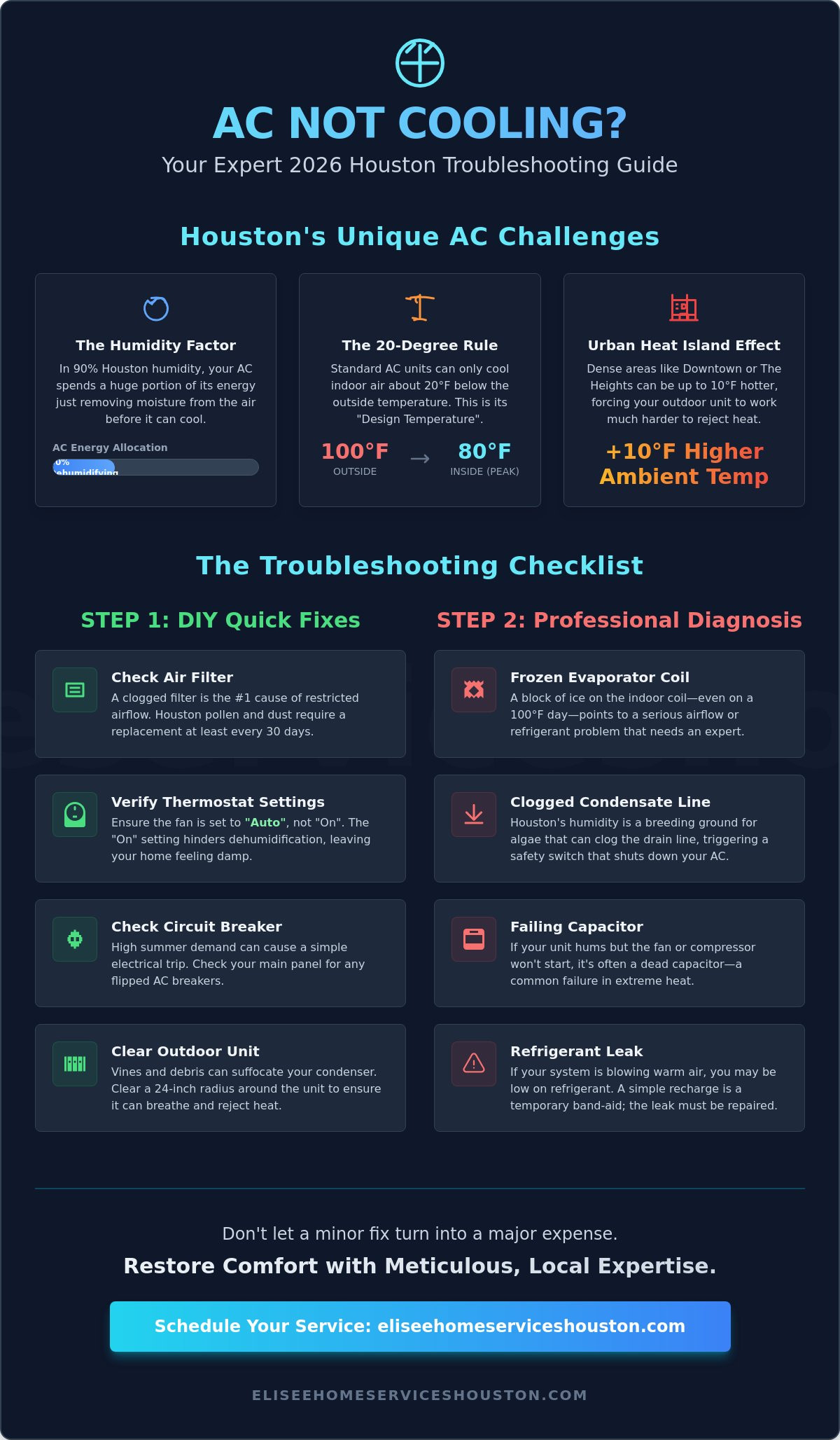
The "Heat Island Effect" complicates this struggle in neighborhoods like Downtown or The Heights. In these historic or densely packed areas, concrete and asphalt absorb solar radiation, keeping local temperatures up to 10 degrees higher than more rural suburbs. This means your outdoor unit sits in a pocket of stagnant, superheated air. It forces the compressor to work significantly harder to reject heat from your living space, leading to longer run times and higher energy bills. Our team sees this daily, where a perfectly functional unit simply cannot fight the radiant heat of the city without a meticulous maintenance plan.
The 20-Degree Rule in Texas Summers
Most homeowners feel frustrated when their thermostat stays stuck at 78°F while set to 70°F. It's vital to understand the "Design Temperature" concept. Standard residential units are engineered to create approximately a 20-degree temperature drop between the outdoor air and your indoor environment. On a 100°F July afternoon, your system is technically performing at its peak if it maintains 80°F inside. You can bridge this gap by focusing on attic insulation and energy efficiency. When your attic reaches 140°F, that heat radiates through your ceiling, fighting your AC every second of the day.
Dehumidification vs. Cooling
Houston’s 90% humidity creates a massive latent heat load. Your system spends roughly 30% of its energy simply pulling water out of the air before it can even begin to lower the actual temperature. Understanding How Air Conditioning Works helps clarify why moisture removal is the priority. If your air feels clammy or you notice a musty smell, your coils might be too dirty to effectively condense water vapor. Meticulous cleaning of these coils ensures your home feels like a sanctuary again, rather than a swampy enclosure. When your ac not cooling house houston needs are met with precision, you reclaim the comfort your family deserves.
The 10-Point AC Not Cooling House Houston Troubleshooting Checklist
When you realize your ac not cooling house houston sanctuary as it should, the heat feels personal. Before calling for a rescue, walk through these initial steps to restore your comfort. Houston pollen and dust levels reach high concentrations during the summer, often clogging a standard pleated filter in less than 30 days. Replace your filter immediately to ensure air flows freely through your system. A clean filter is the first step toward a pristine living environment.
Next, verify your thermostat settings. Ensure the fan is set to "Auto" rather than "On." While the "On" setting provides constant air circulation, it also prevents your system from properly dehumidifying. In a city where humidity levels frequently exceed 70 percent, this setting can leave your home feeling damp and sticky. Check your main electrical panel for a tripped breaker as well. High summer temperatures force systems to work harder, which sometimes leads to a simple electrical surge that shuts down the cooling cycle.
Outside, your condenser needs room to breathe. Houston vines and brush can grow several inches in a single week during the rainy season. Clear away any foliage within a 24-inch radius of the unit to prevent overheating. For a deeper look into common AC problems such as sensor issues or refrigerant leaks, the U.S. Department of Energy provides a technical breakdown of why systems fail under pressure.
Indoor Unit Vital Signs
Step into your attic or utility closet to inspect the evaporator coil. Even when it is 100 degrees outside, restricted airflow can cause the coil to freeze into a block of ice. Look for moisture or "sweat" on the unit casing. You should also check the condensate drain line for clogs. Houston's humid climate creates a perfect breeding ground for algae, which can block the line and trigger a safety shut-off switch. Listen for rattling or buzzing sounds that suggest a loose component or a failing motor. If the noise persists, it might be time to let the professionals at Elisee Home Services Houston restore the quiet peace of your home.
Outdoor Condenser Maintenance
Maintaining your outdoor unit is vital for long-term efficiency. Gently spray the outdoor coils with a garden hose to rinse away "Houston grime," which is a stubborn mix of urban dust and local pollen. Ensure the fan blades spin freely without obstruction from local foliage or debris. Finally, inspect the copper refrigerant lines for visible damage. If you see oily residue or crushed insulation, your system likely has a leak. Addressing these small details with a meticulous eye ensures your home remains a dedicated sanctuary for your family throughout the hottest months of the year.
Mechanical Reasons Your AC is Not Cooling in the Texas Heat
When your ac not cooling house houston temperatures effectively, the cause is usually hidden deep within the mechanical components. Houston's humidity and extreme heat put a relentless strain on every part of your system. Understanding these common mechanical failures helps you move from frustration to a cool, comfortable sanctuary for your family.
Many homeowners believe refrigerant is like gasoline that needs regular topping off. It isn't. Your cooling system is a closed loop designed to cycle the same refrigerant for years. If your levels are low, you have a leak. A simple "recharge" is a temporary fix that ignores the underlying hole in your lines. Even a small 10% loss in refrigerant can cause your utility bills to spike while your home stays stubbornly warm.
Frozen coils are another common culprit, even when it's 100 degrees outside. When airflow is restricted by dirty filters or blocked returns, the evaporator coil temperature drops below freezing. This creates a block of ice that prevents heat exchange. Following official maintenance guidelines regarding filter changes and coil cleaning is the best way to prevent this icy buildup during the peak of summer.
The Role of the Compressor and Capacitor
Think of the capacitor as the spark plug and the compressor as the heart of your unit. During a typical Houston heatwave, these parts work under immense pressure. A failed capacitor is the most frequent quick fix we perform. It's a small part that stores electricity to start the motors. If it's dead, your AC won't kick on. Signs of a dying compressor include loud grinding noises or a unit that hums but fails to circulate air. For total system failures that happen at the worst possible time, our team provides emergency AC repair to restore your peace of mind.
Airflow and Ductwork Issues
Your attic often reaches 140 degrees during a Texas July. Leaky ducts in this sweltering environment can cause you to lose 20% to 30% of your cooled air before it ever reaches your vents. This creates "hot spots" where some rooms feel like a sauna while others are chilly. We often find that professional air duct cleaning in Houston is the first step to reclaiming your home's comfort. Meticulous cleaning removes obstructions that force your fan to work harder than necessary.
Finally, consider the age of your equipment. Most systems are built to last 12 to 15 years. If your unit was installed before 2011, it lacks the efficiency of modern high-SEER models. An aging system eventually loses its ability to fight the Houston sun, no matter how many repairs you perform. We take pride in helping you determine when a system has reached its limit so you don't waste money on a failing machine.
DIY vs. Professional AC Repair in Houston
Dealing with an ac not cooling house houston during a humid July heatwave is incredibly stressful. You might feel tempted to grab a toolbox and start unscrewing panels, but your safety must come first. High-voltage electrical cabinets and pressurized refrigerant lines carry significant risks for anyone without specialized training. Opening an electrical panel without the proper equipment can lead to severe shocks; similarly, handling refrigerants like R-410A or the newer R-454B requires EPA Section 608 certification. These chemicals are under high pressure and can cause instant frostbite or respiratory issues if handled incorrectly.
The cost of waiting or attempting a complex fix yourself often outweighs the price of a professional visit. 2025 HVAC industry data shows that a simple $200 capacitor replacement, when ignored, frequently leads to the compressor overheating and failing. Replacing a compressor in a Houston home can easily exceed $3,000. By calling for help early, you're protecting your investment and your family's comfort. Our technicians perform a meticulous diagnostic that goes deep into the system's vitals. We don't just look for broken parts; we measure sub-cooling and super-heat to ensure the refrigerant charge is exact and check amp draws on motors to catch wear and tear before it turns into a breakdown.
When DIY is Safe (and Smart)
There are several tasks you can handle to help your ac not cooling house houston perform better. Start by replacing your air filters every 30 to 60 days; a clogged filter is the most common cause of restricted airflow. You should also clear away weeds, leaves, or debris from around your outdoor condenser unit and gently hose off the coils to remove dust. Check your thermostat batteries and ensure all supply vents are open and clear of furniture. For a detailed list of home care steps, refer to our AC maintenance guide for preventative strategies that extend your system's life.
Red Flags: Call Elisee Home Services Immediately
Some symptoms indicate a serious failure that requires an expert's touch to resolve. If you detect a burning smell, see sparks, or notice water leaking through your ceiling, shut the power off at the breaker immediately. These are signs of electrical faults or a clogged primary drain line that could cause structural damage. Short cycling, where the system turns on and off every few minutes, is another major red flag that suggests your system is struggling. If warm air continues to blow from your vents while the outside unit is running, you likely have a refrigerant leak or a failing component. We offer a dedicated guarantee on parts and labor, providing the peace of mind that your sanctuary will stay cool all summer long.
Reliable Solutions for an AC Not Cooling Your Houston House
Reclaiming your home as a sanctuary starts with a cooling system you can trust. When you face an ac not cooling house houston crisis, the heat does more than cause discomfort. It disrupts your family's sleep, productivity, and peace of mind. We understand that a Houston summer, with humidity levels often exceeding 90 percent, places extreme stress on your equipment. At Elisee Home Services, we don't just fix machines; we restore the comfort and safety of your living space.
Our approach is built on meticulous diagnostics and total transparency. We utilize flat-rate pricing to ensure you never face unexpected costs or hidden fees during a heatwave. By focusing on the unique architectural needs of Houston homes, from historic properties in the Heights to modern builds in Sugar Land, we provide tailored solutions that standard franchise companies often overlook. Our local expertise allows us to anticipate how local climate stressors affect specific components, ensuring a repair that lasts well beyond the current season.
Preventing the "Not Cooling" panic in 2027 and the years to follow requires a proactive strategy. Industry data shows that 85 percent of major AC failures are preventable through consistent maintenance. Our dedicated plans are designed to catch small issues, like a worn capacitor or a slightly clogged drain line, before they turn into a midnight emergency. We take pride in our craft, ensuring every system we touch operates at peak efficiency to keep your energy bills manageable while the Texas sun blazes outside.
Our Professional AC Repair Process
- Step 1: Comprehensive System Diagnostic. We perform a deep dive into your unit to find the root cause of the failure. We don't just replace a fuse; we find out why it blew to prevent a repeat performance.
- Step 2: Clear Communication. You receive a detailed explanation of your repair options. We provide upfront costs so you can make an informed decision for your family without any pressure.
- Step 3: Meticulous Repair. Our technicians use high-quality, long-lasting components. We treat your home with respect, ensuring the work area remains pristine while we restore your chill.
Ready to Feel the Chill Again?
Don't suffer through another humid night in a warm house. Your family deserves a cool, crisp environment where they can truly relax. We serve the entire Greater Houston area with prompt, neighborly service that puts your needs first. Our team is ready to demonstrate the meticulous care and professional integrity that defines our brand. Schedule your Houston AC repair with Elisee Home Services today!
Restore Your Houston Sanctuary to Pristine Comfort
Don't let the Texas heat turn your family sanctuary into a sauna. You've learned how Houston's average morning humidity levels of 90 percent force your system to work overtime and how our 10-point checklist identifies mechanical failures before they become emergencies. Understanding the difference between a simple filter swap and a complex refrigerant leak ensures your home remains a pristine retreat. As a locally owned and operated business, we specialize in high-humidity HVAC challenges unique to our Gulf Coast climate. We provide transparent flat-rate diagnostic fees so you always know exactly what to expect from our meticulous team. If you're struggling with an ac not cooling house houston weather demands a dedicated partner who treats your comfort with care. We take pride in delivering tailored solutions that keep your living space cool and your mind at ease. Get Your Houston Home Cool Again—Book Your AC Repair Now. Your comfort is our craft, and we're ready to help you reclaim your time in a perfectly chilled home.
Frequently Asked Questions
Why is my AC running but the house temperature is not dropping?
Airflow restrictions or a failing compressor are the most likely culprits for a system that runs without cooling. A 2023 Department of Energy report notes that improper refrigerant charge or duct leaks can reduce efficiency by 20 percent. Check your outdoor unit for debris that blocks heat transfer. If the fan spins but the air remains warm, your system might have a tripped breaker or a broken capacitor.
Can a dirty air filter really stop my AC from cooling?
Yes, a clogged filter restricts airflow and causes the evaporator coil to freeze. The EPA suggests changing filters every 90 days to maintain performance, though this timeframe drops to 30 days in a dusty environment. When air cannot pass through the filter, your ac not cooling house houston problem begins because the heat exchange process stalls completely. Replacing the filter restores the pristine airflow your family deserves.
How much does it cost to fix an AC not cooling in Houston?
Repair costs vary based on the specific component failure and the age of the unit. According to 2024 HomeAdvisor data, national average repairs range from 150 to 650 dollars. Simple fixes like a capacitor replacement cost less than a full compressor swap. We provide a meticulous assessment to ensure you receive a tailored solution without any hidden surprises or unnecessary expenses for your home.
Is it okay to run my AC if it isn’t blowing cold air?
You should turn off your system immediately if it stops blowing cold air to prevent permanent mechanical damage. Running a struggling unit can burn out the compressor, a part that costs between 1,000 and 2,500 dollars to replace according to industry standards. Shutting it down protects your investment. This simple step preserves the sanctuary of your home while our dedicated technicians identify the exact failure.
How do I know if my AC is low on refrigerant?
Hissing sounds or ice buildup on the copper lines indicate a refrigerant leak. Since AC systems are closed loops, any loss of coolant means there is a physical hole in the line. A 5 percent decrease in refrigerant can lead to a 20 percent increase in your monthly electricity costs. We use precision tools to locate these leaks and restore the comfort and peace of mind you expect.
What is the most common cause of AC failure in Houston summers?
Electrical component failure due to extreme heat is the leading cause of system breakdowns in Texas. The National Weather Service recorded 45 days above 100 degrees in Houston during 2023, putting immense strain on capacitors and contactors. These small parts often fail under constant high-voltage demand. Regular maintenance prevents these sudden disruptions and keeps your living space pristine even during the hottest months of the year.
How long should an AC unit last in the Houston climate?
Most air conditioning units in the Gulf Coast region last between 10 and 15 years. The high humidity and salt air in the Houston area accelerate corrosion compared to the national average of 15 to 20 years. Meticulous annual servicing can extend this lifespan toward the 15-year mark. We focus on dedicated care to help you maximize the value of your cooling system and protect your family's comfort.
Can I fix a frozen AC unit myself?
You can begin the process by turning the system off and switching the fan to the "on" position to melt the ice. This defrosting period typically takes 2 to 4 hours depending on the ice thickness. However, a frozen coil often signals an ac not cooling house houston issue rooted in a refrigerant leak or a faulty blower motor. Professional inspection ensures the root cause is resolved permanently for your home.